She’s finished!
I’ve just returned to Valencia into the hight of the Fallas and it is wild here! I’ll write more on that soon.
I spent Monday the 17th looking at the boat, and I’m super excited. I can’t stop staring, and sharing pictures. Here are the latest:
If you’re viewing this on your phone, turn to landscape to see the captions.
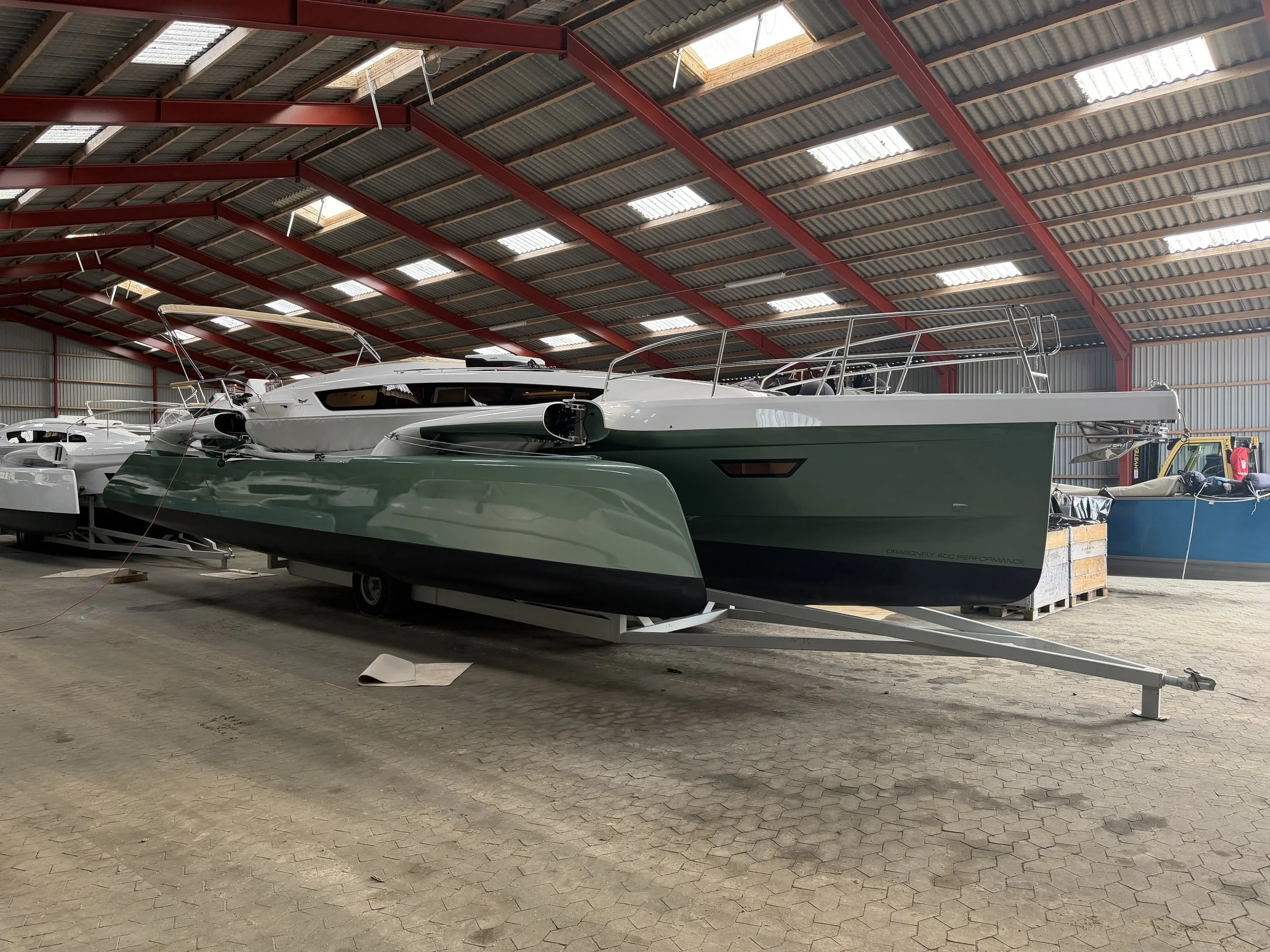
Waiting
Denmark is still too cold to launch, so she waits here for spring. And paperwork.
C is for Carbon
The Boswprit
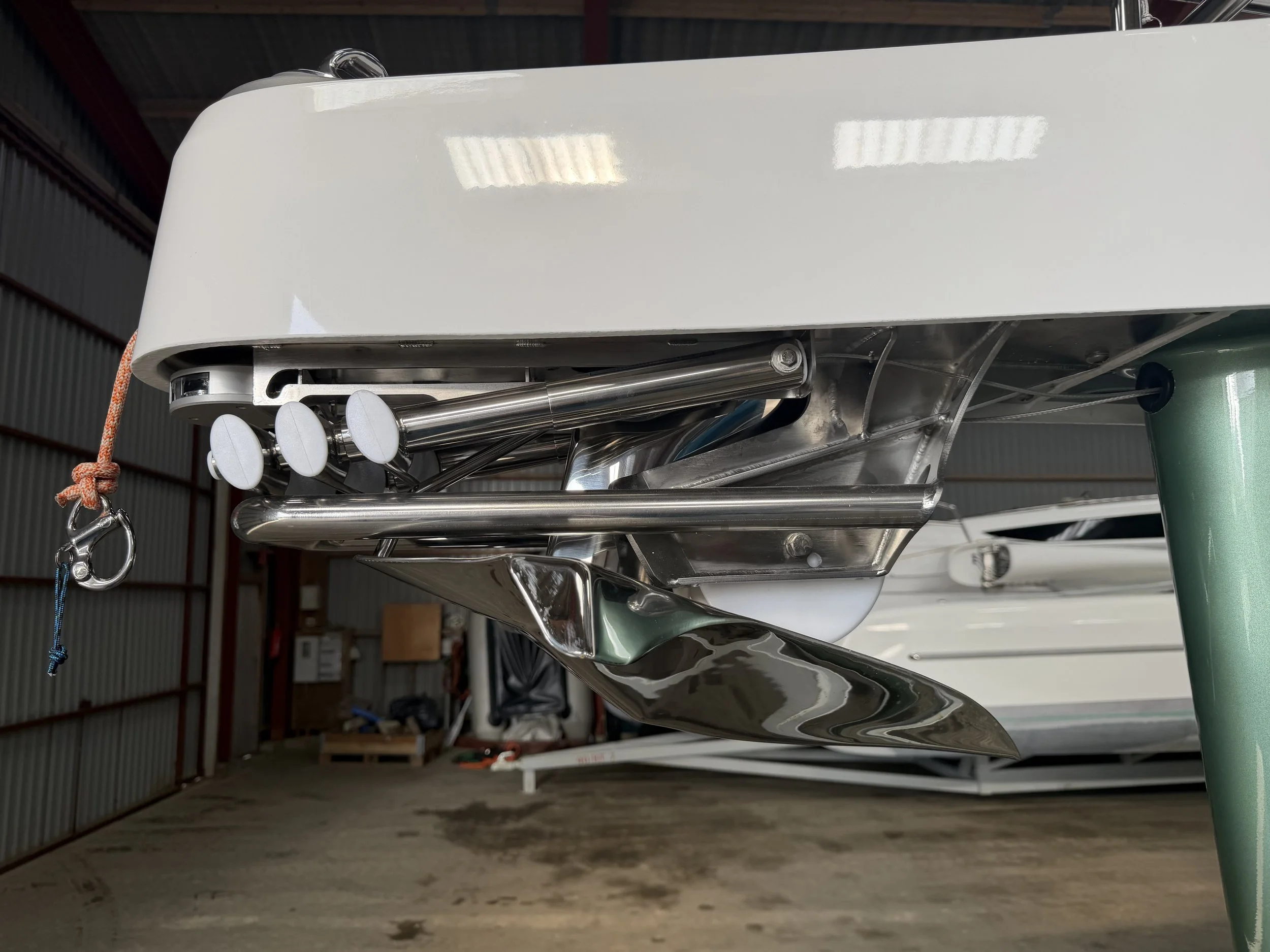
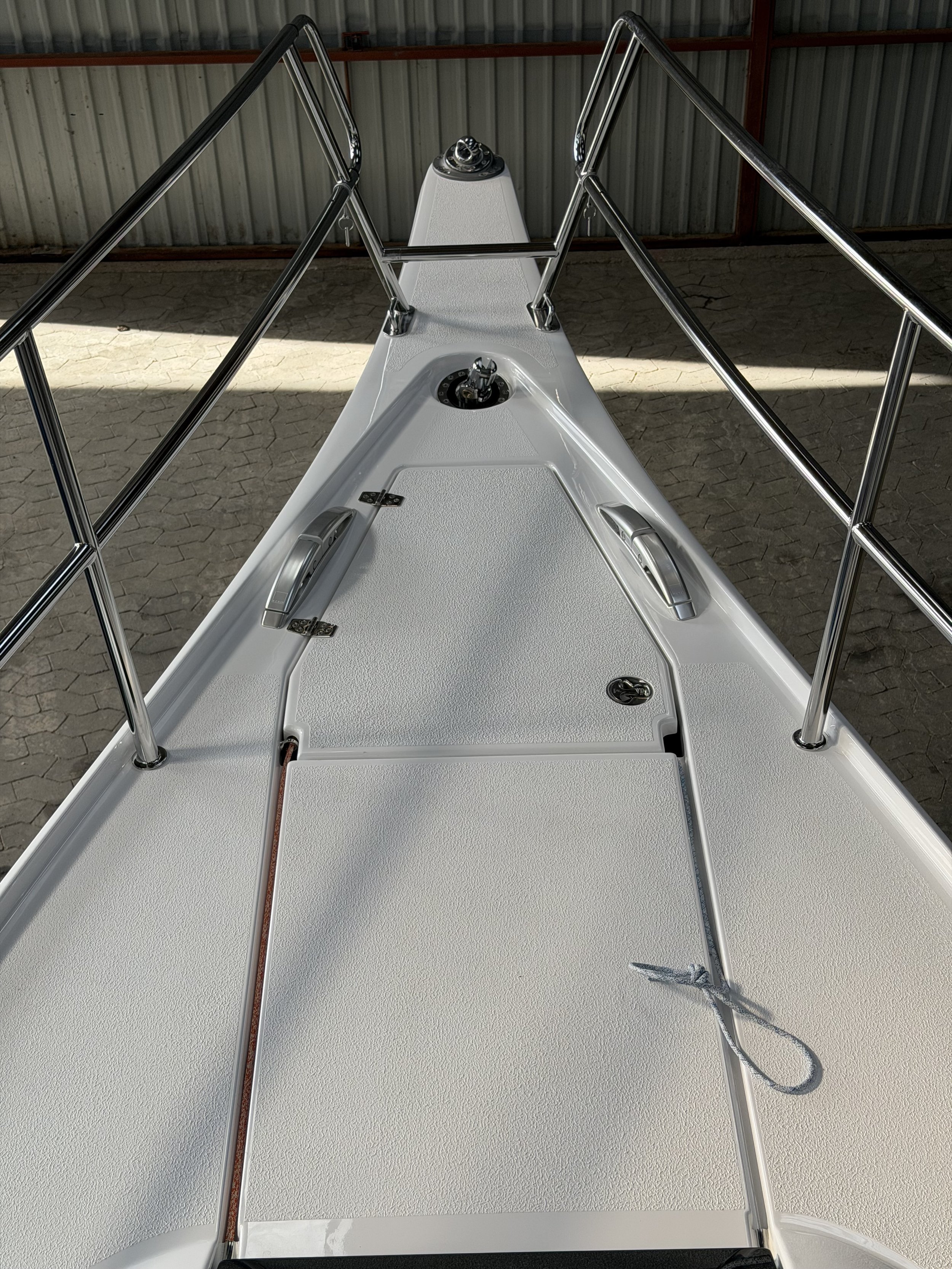
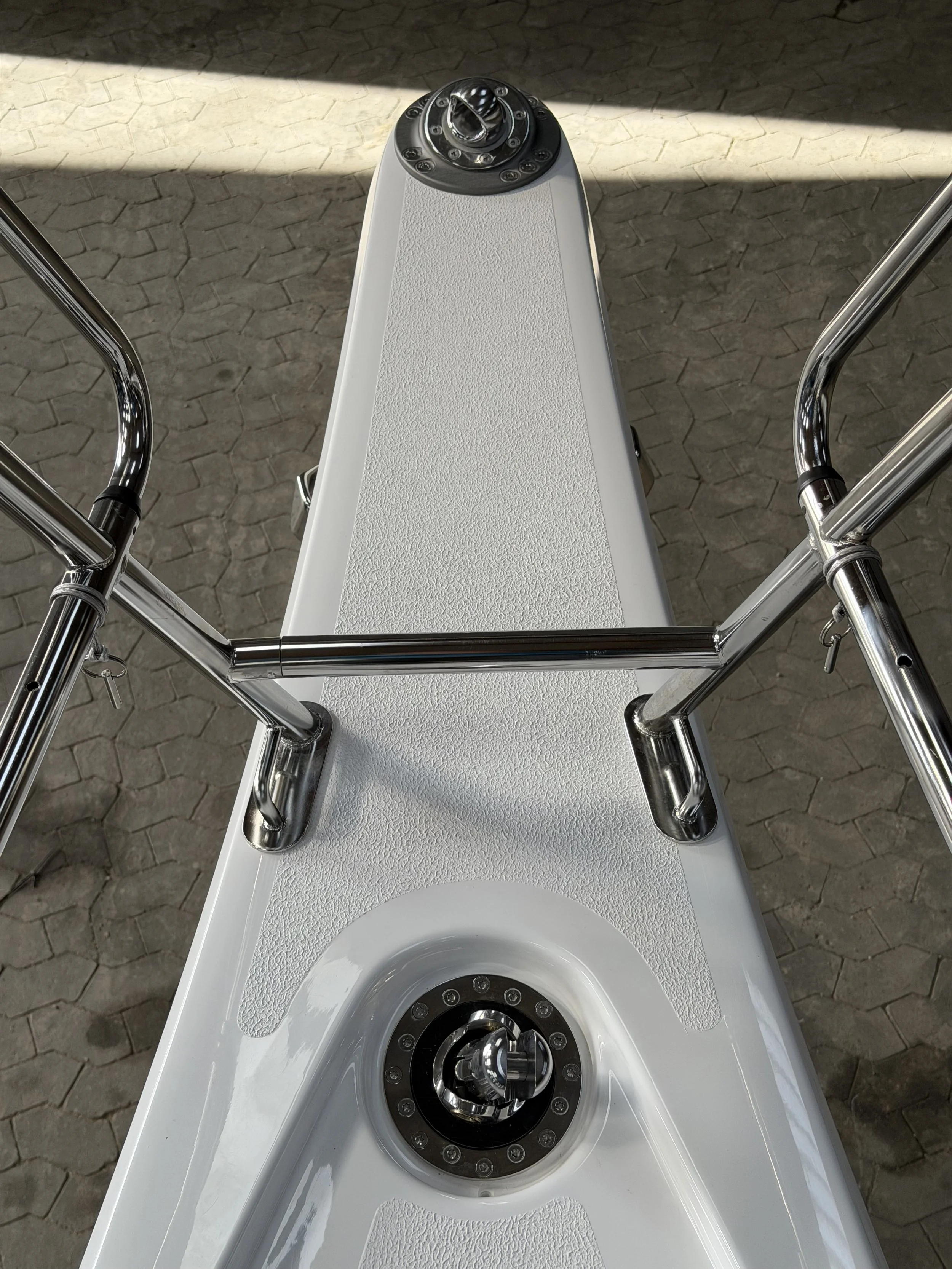
Dragonfly developed an integrated system at the bow. The anchor is ready to deploy, and the ladder is available for bow-in docking, which is common up there. The orange line is the tack line for the big asymetric spinnaker.
Ultra
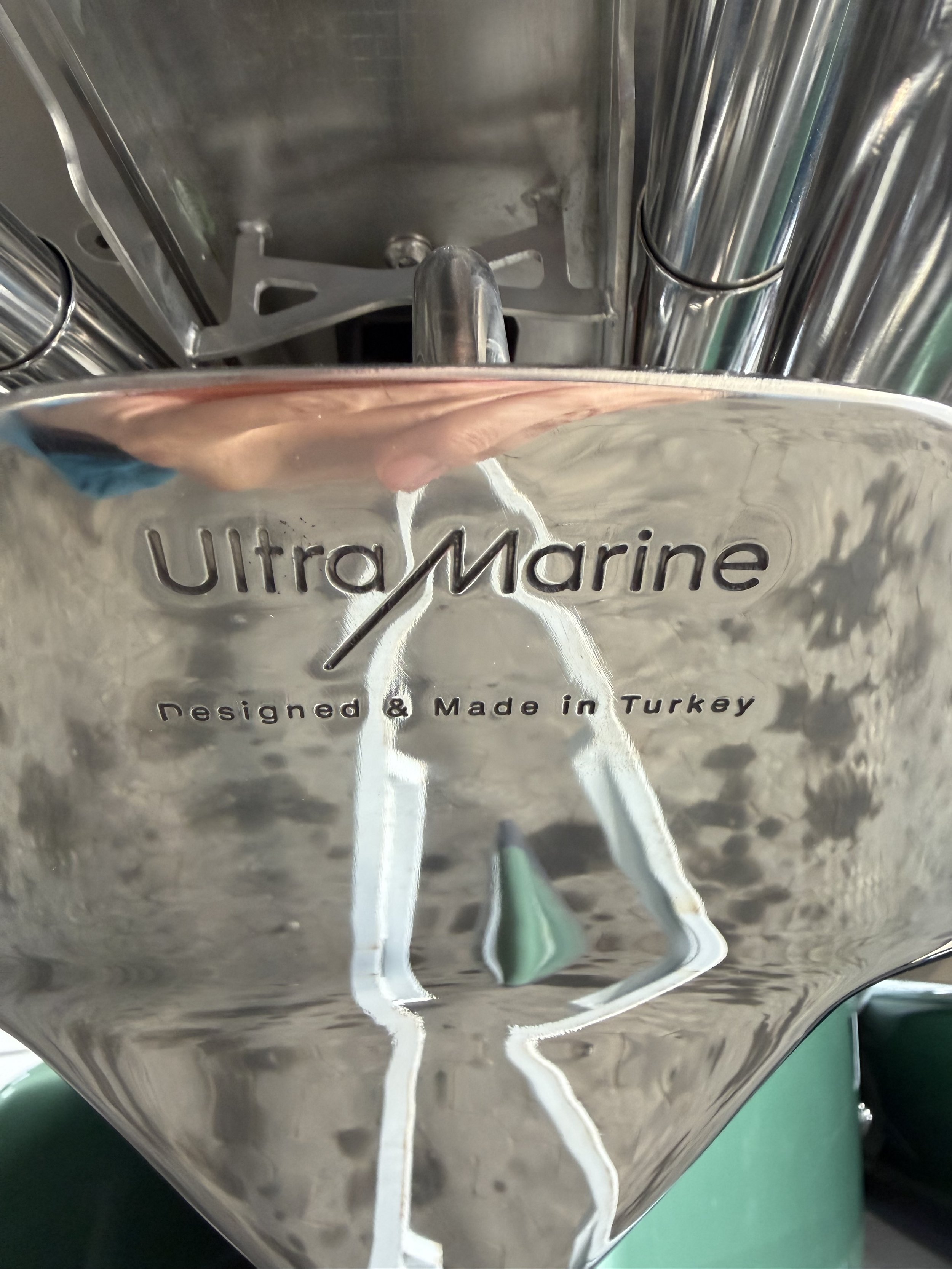
The Ultra anchor is stainless and weighs 21kg.
Transom
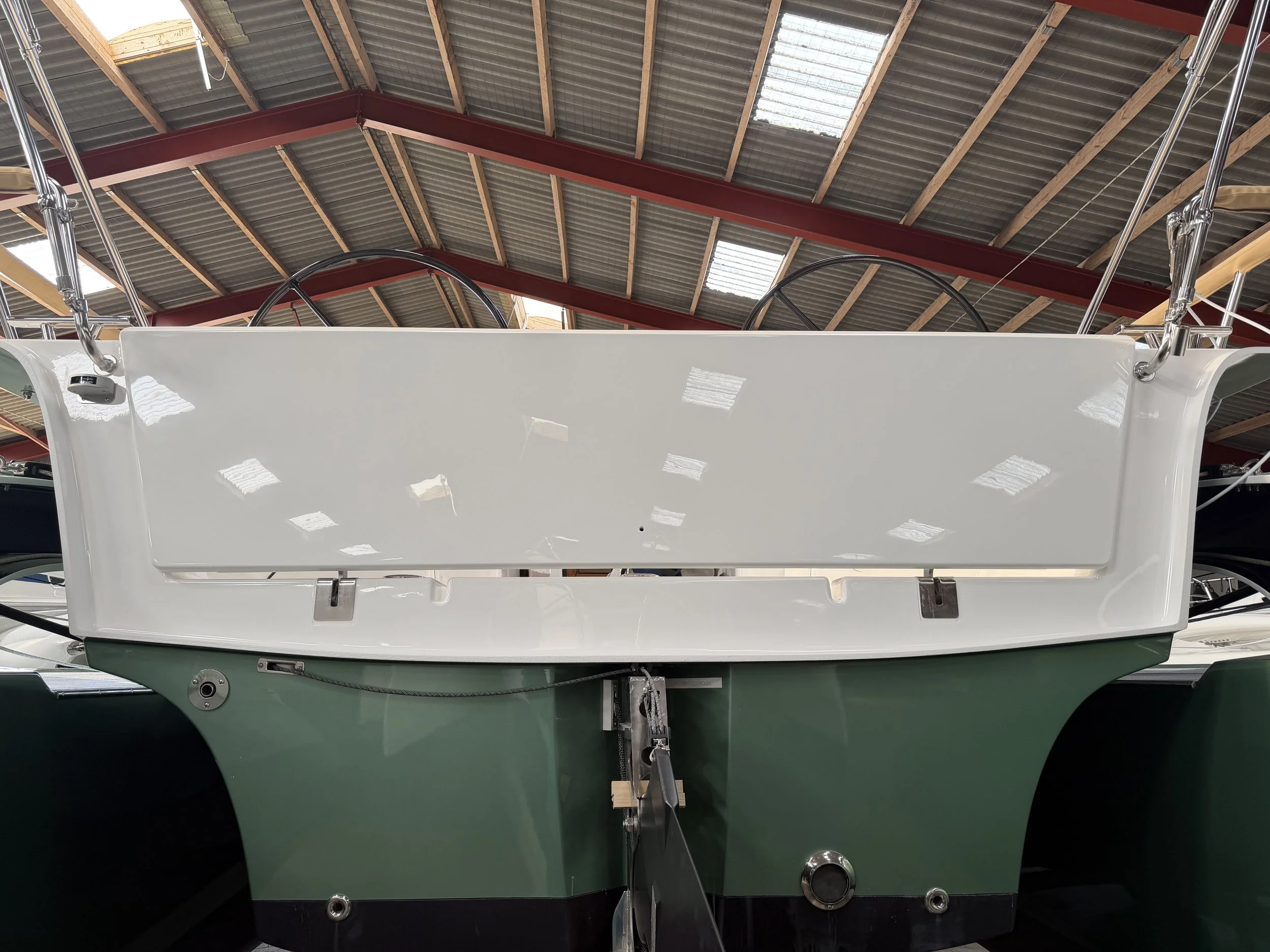
The closed transom is an option on the DF40, with many owners opting for open with lifeline closure. I opted for the closing and folding transom, which will make med mooring easier when we move the boat to Spain.
Rudder
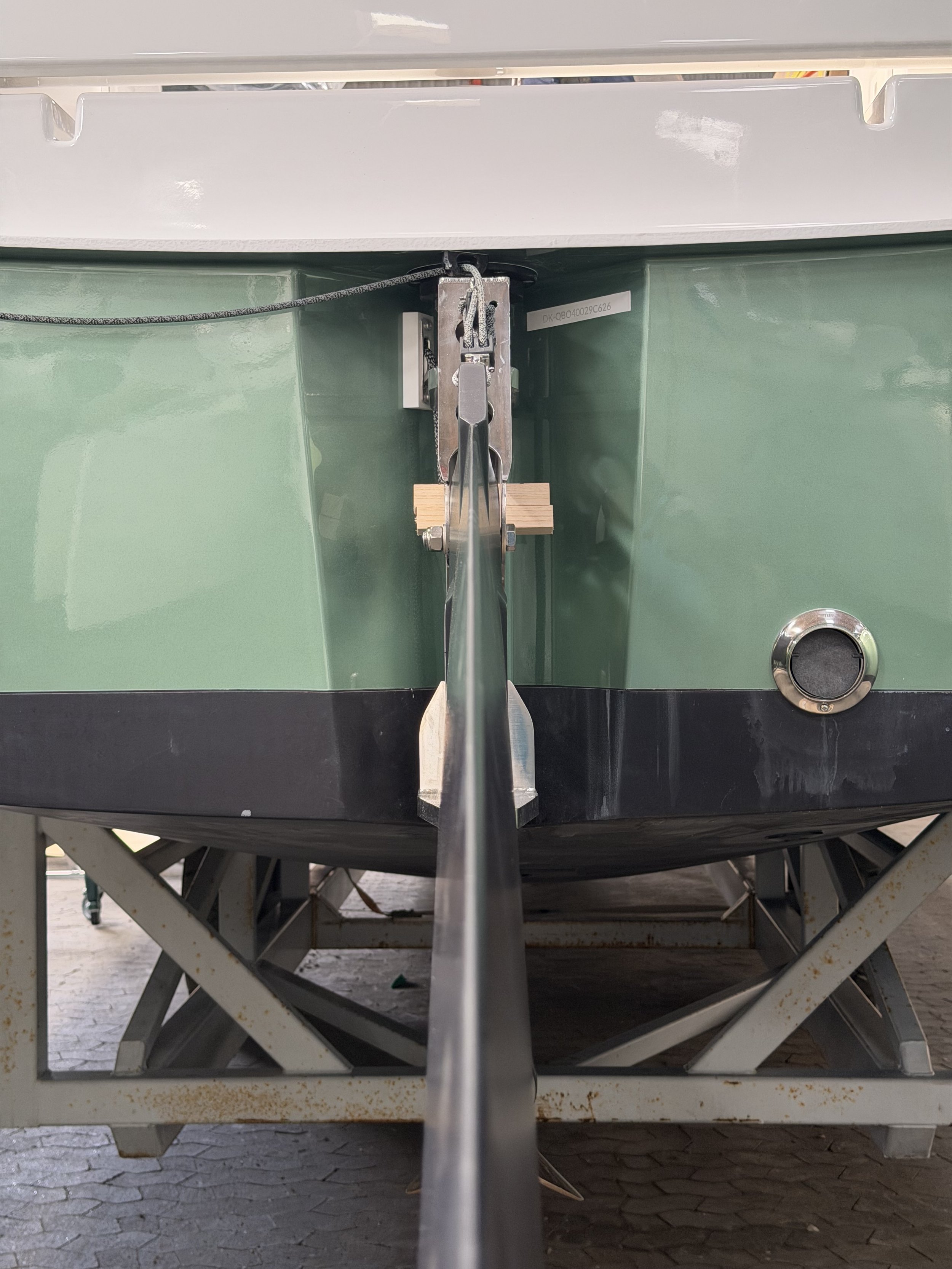
The rudder blade is long and, as with the centerboard, folds up for access to very shallow water and beaching or “drying out” the boat.
Rudder
The rudder is transom hung but indented so it’s under the deck.
Rudder
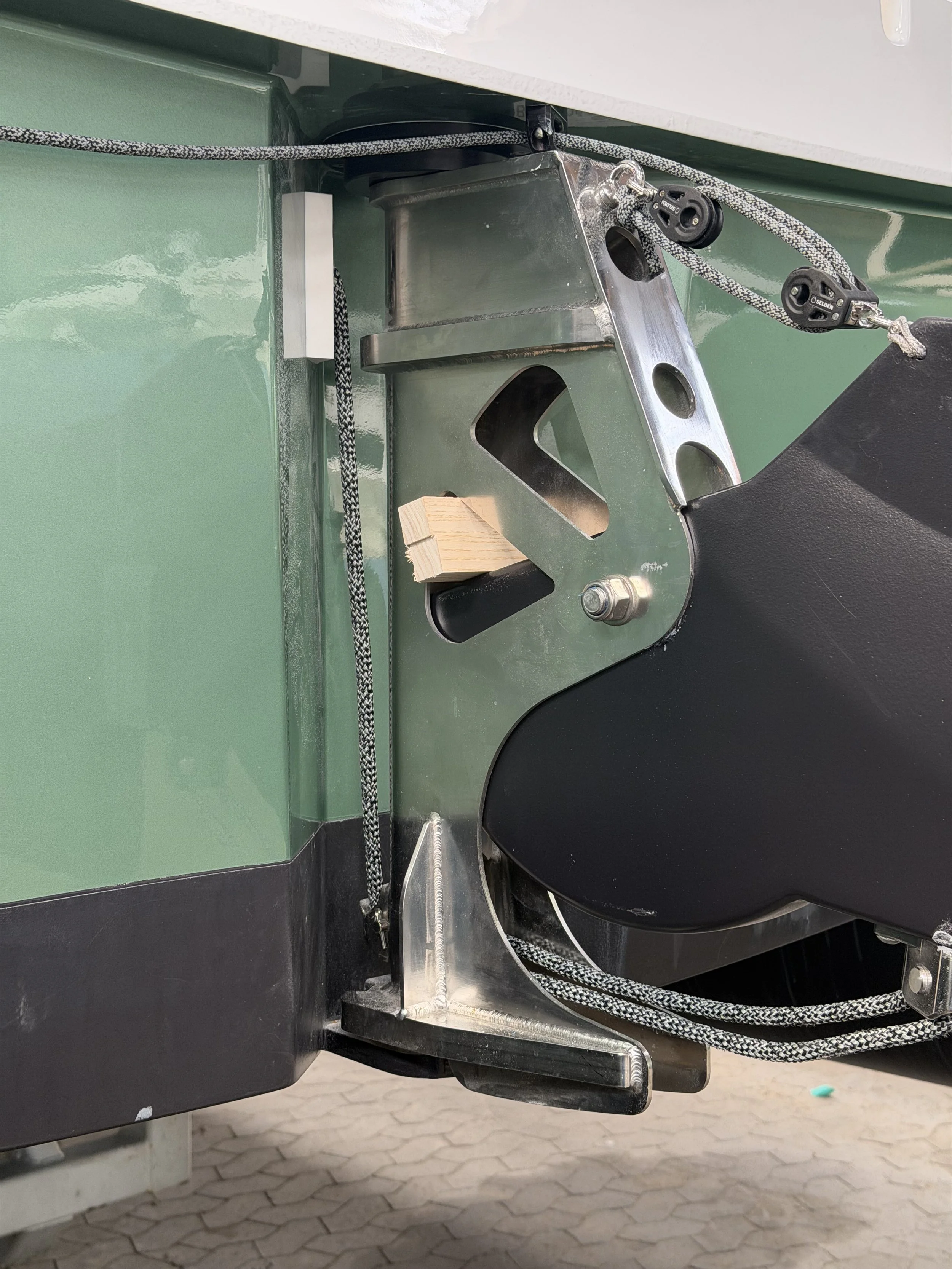
A detail of the raising mechanism for the rudder, which is controlled by lines in the cockpit.
toasty
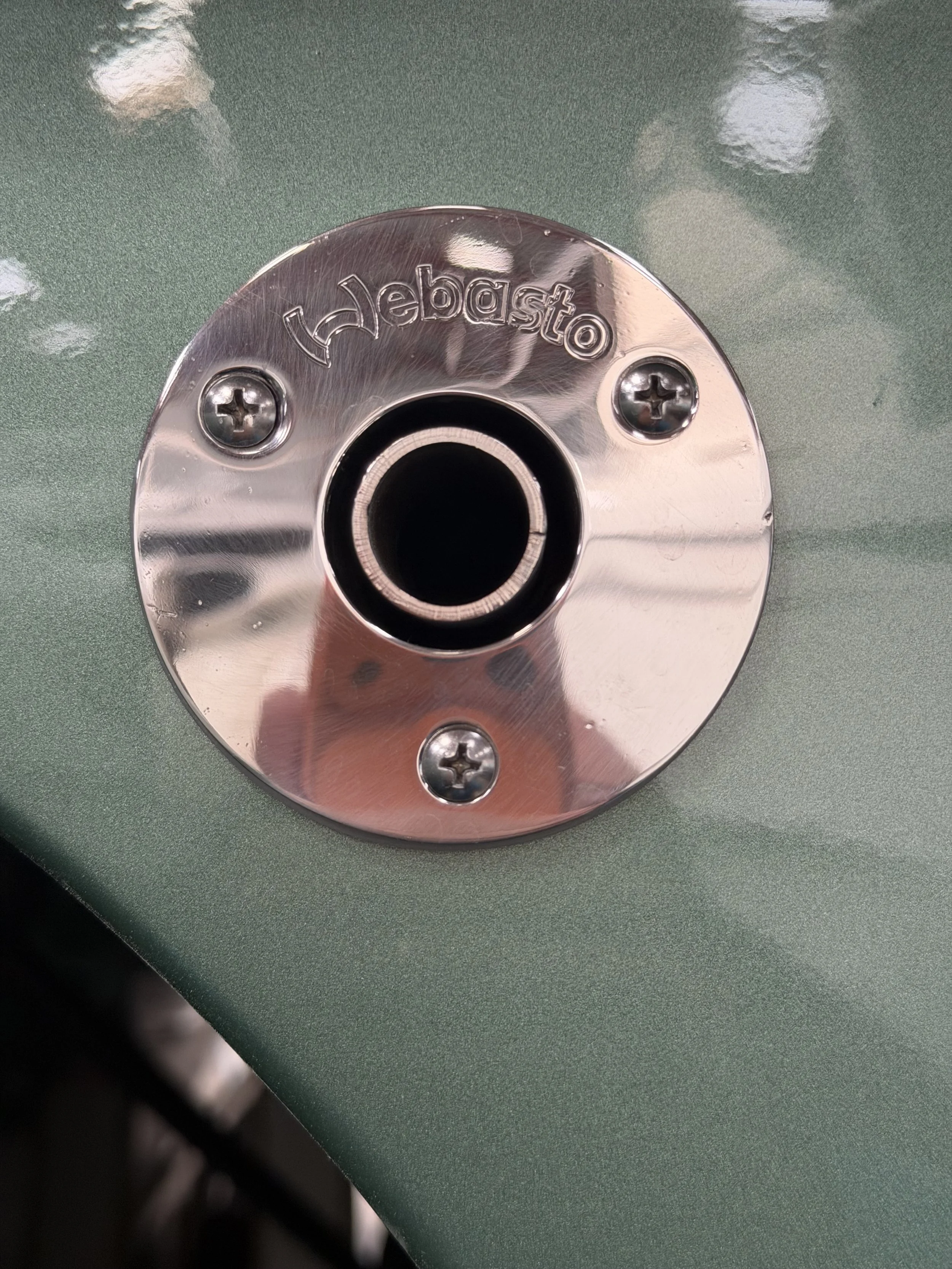
Orizuru is equipped with a Webasto diesel heater to keep the cabin toasty in the cold Baltic nights. This is the exhaust port on the transom for the combustion gasses.
Port Ama
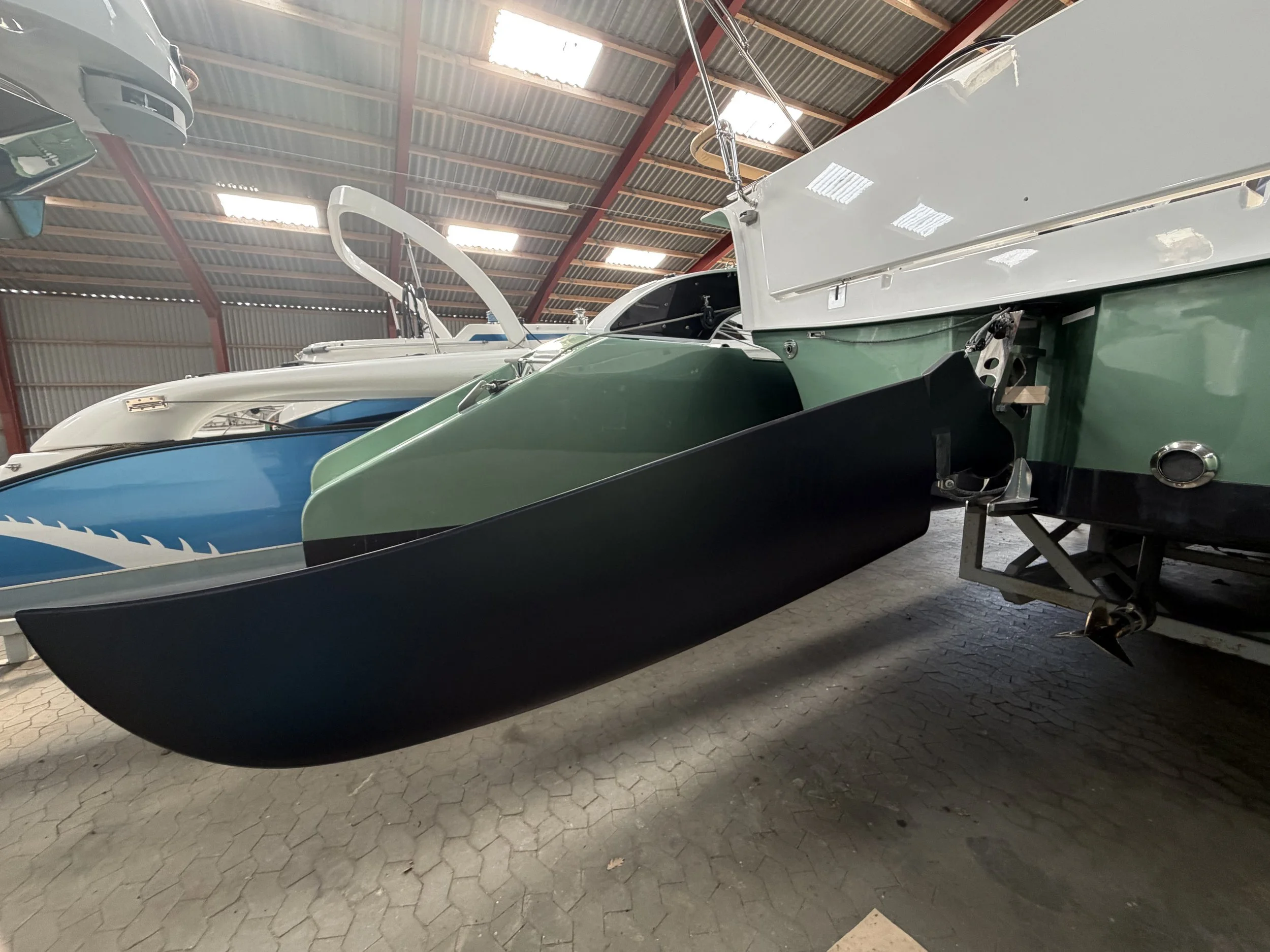
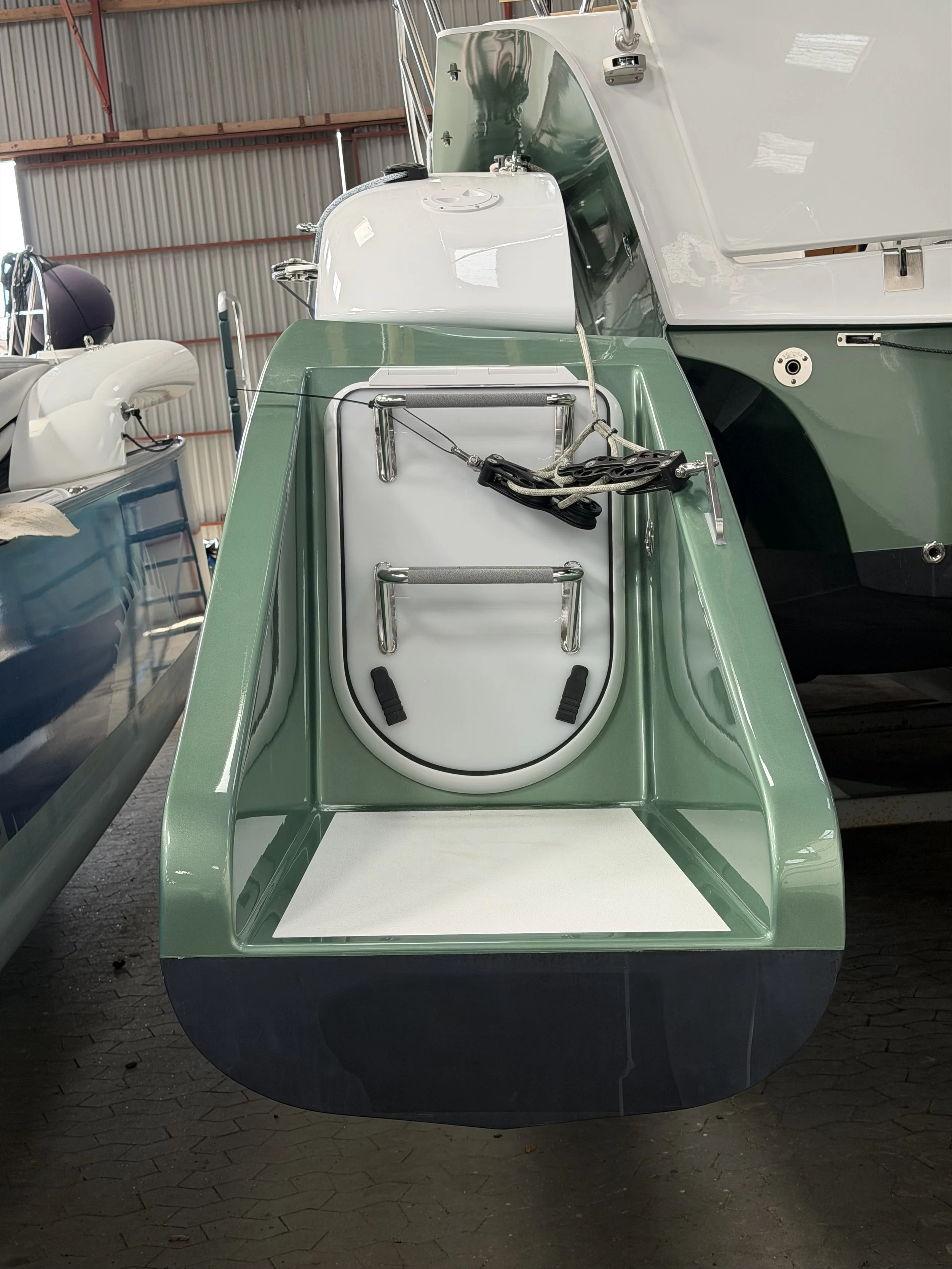
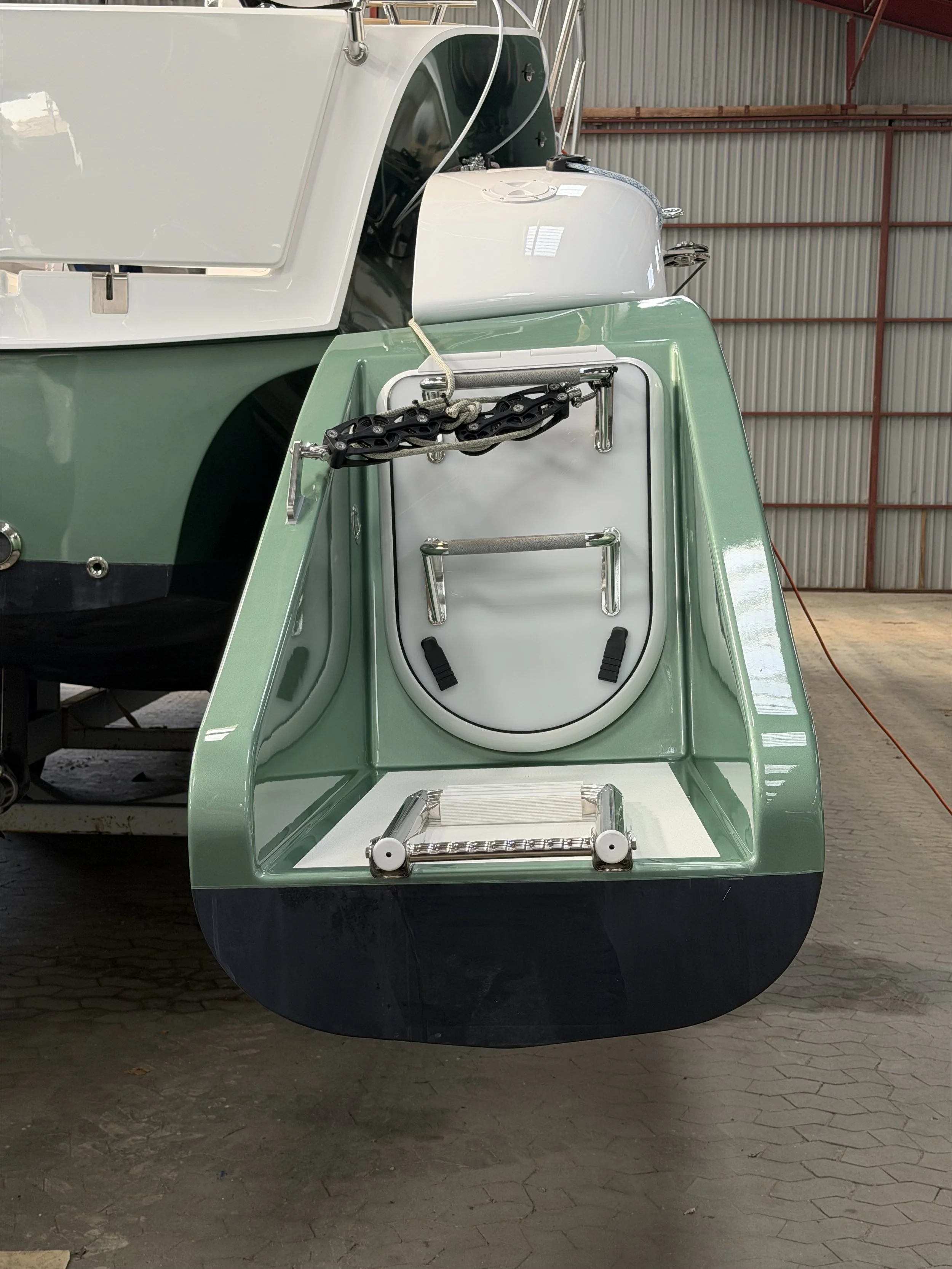
The Amas or Floats are carbon fiber for lightness. The backstays/shrouds are attached here. We had them add these optional hatches to the transoms of the amas for storage of water toys.
Starboard Ama
this side includes the folding boarding ladder for taking a swim.
The hinge
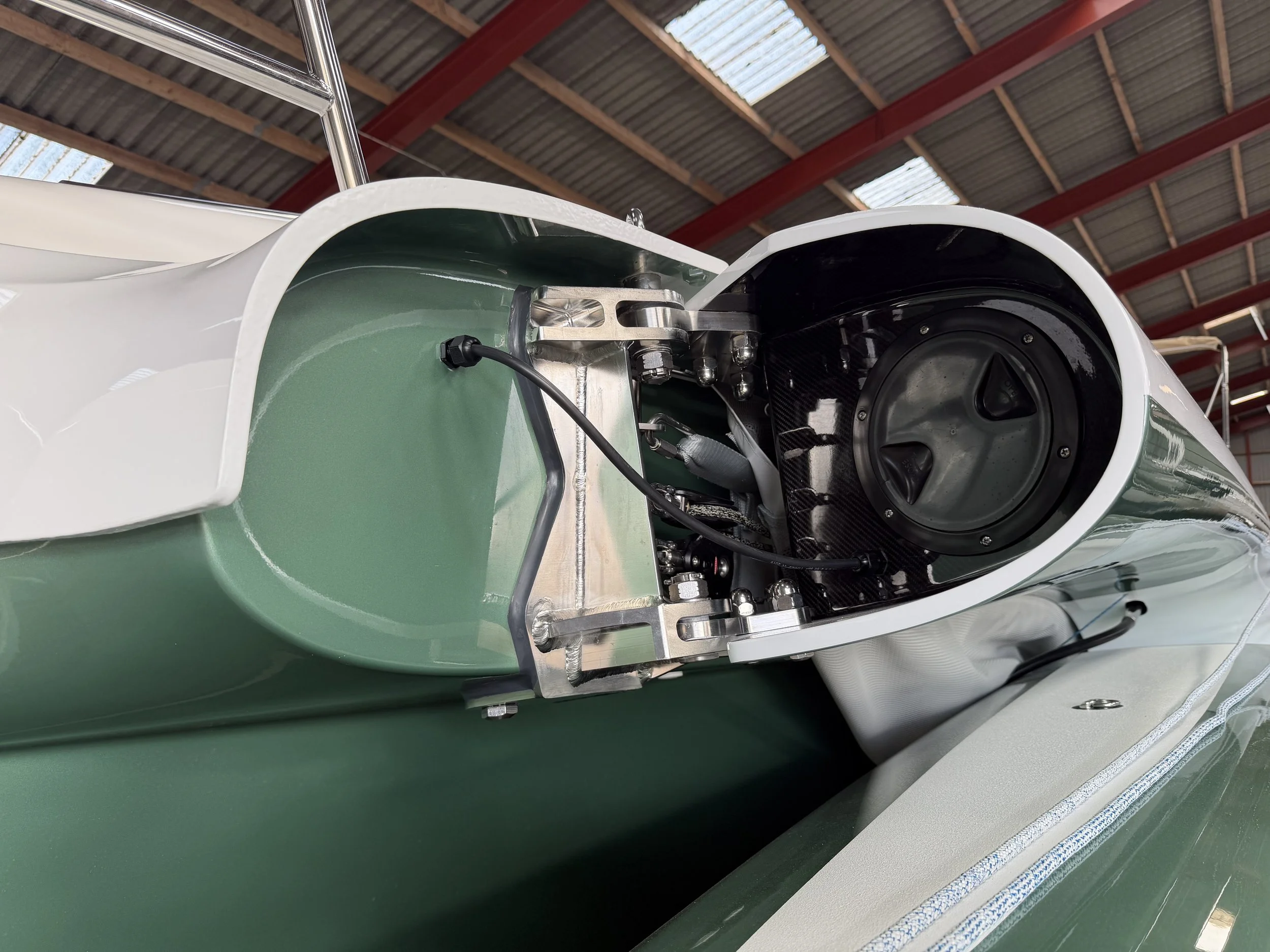
When the Amas are folded you can see the hinge mechanism well. The wire is for the solar panels, and you can clearly see the carbon fiber weave of the beam. When unfolded the boat is 8 meters wide, but folded up she’s a slim 4 meters.
Propellor
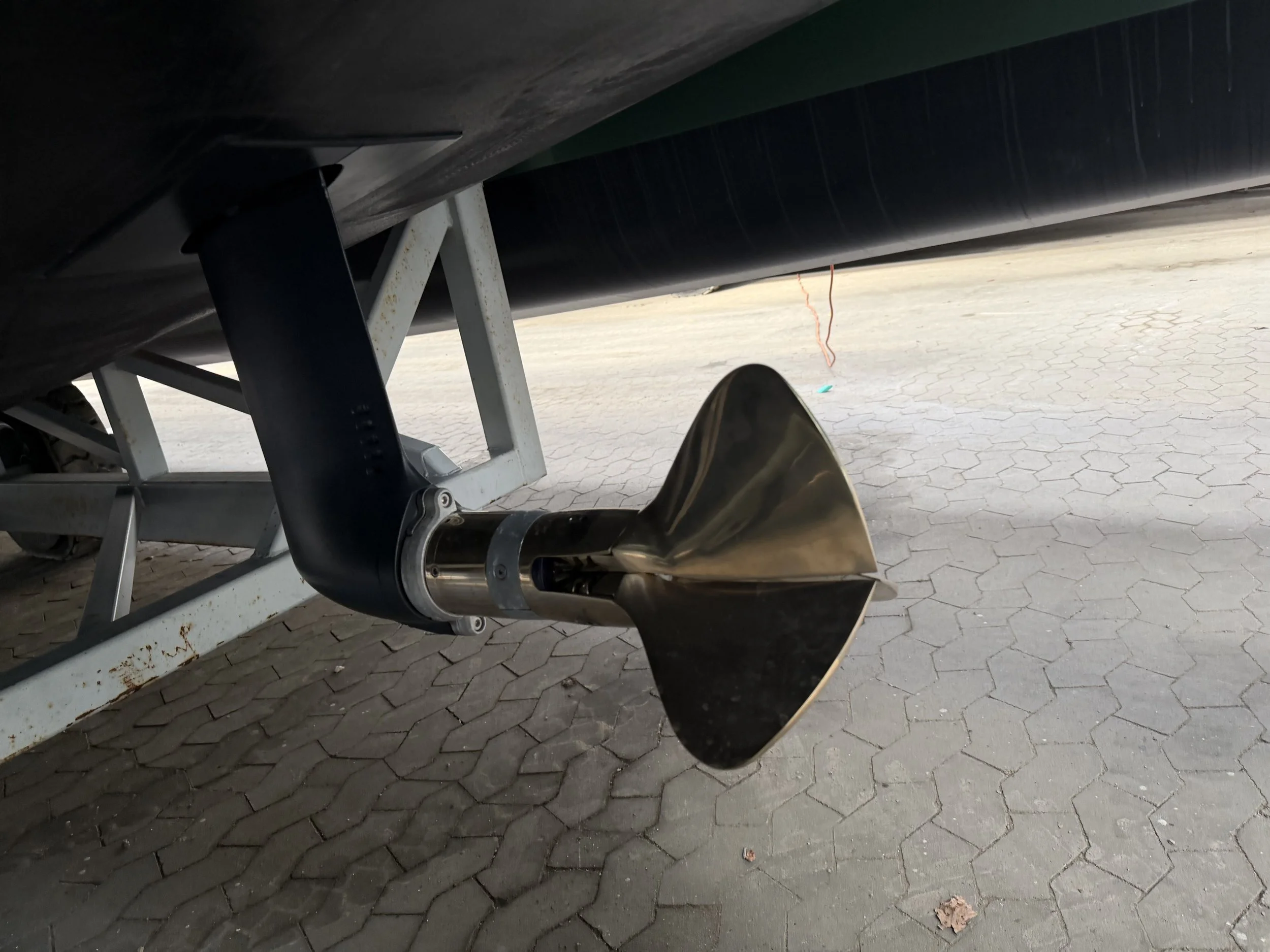
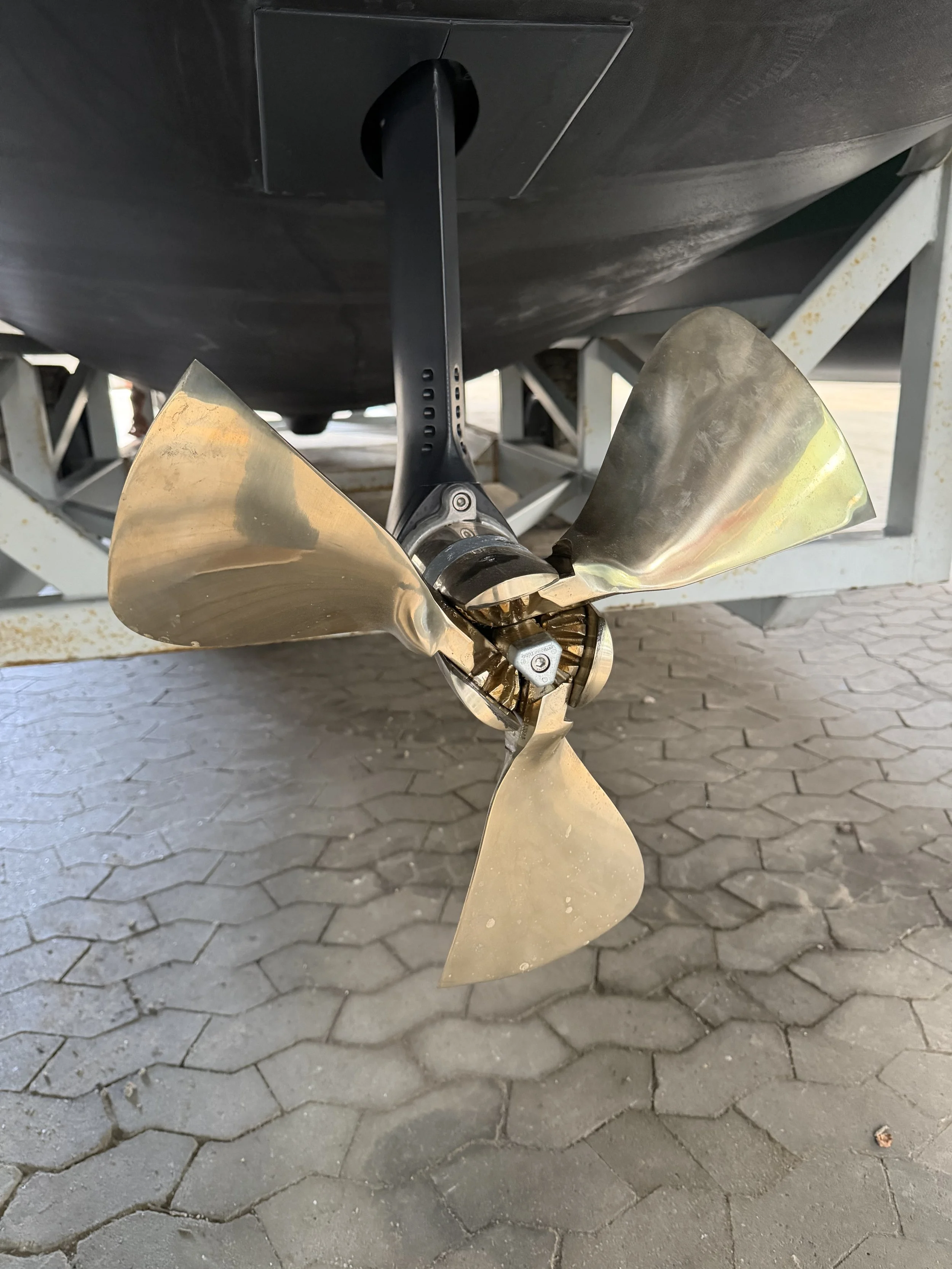
We have fitted the boat with a Gori 3 blade folding propellor, which will reduce drag.
Gori unfolded
The Gori unfolds one way when in Forward, then flips around for reverse. There is also an “overdrive” function which I’m very curious to try.
Foredeck
Up on the foredeck. Dragonfly has added a clever feature to the bow pulpits: they extend forward so that if you are docked bow to the dock you have handrails as you climb down to the dock. They are retracted in these photos.
Furlers
Electric furlers for both the Genoa and the Code 0.
Anchor locker
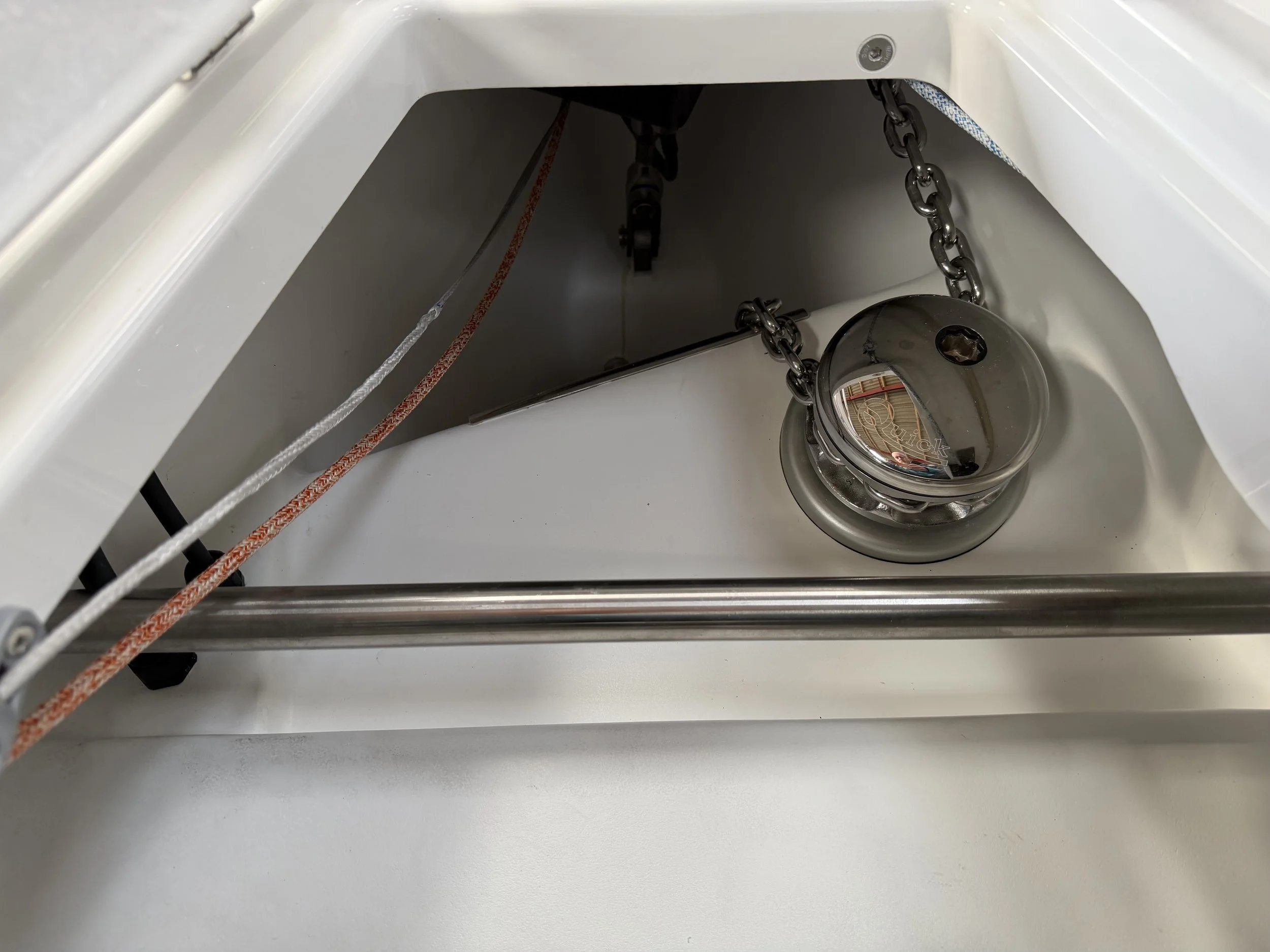
The anchor locker is deep, and comes equipped with a shelf and a Quick vertical windlass.
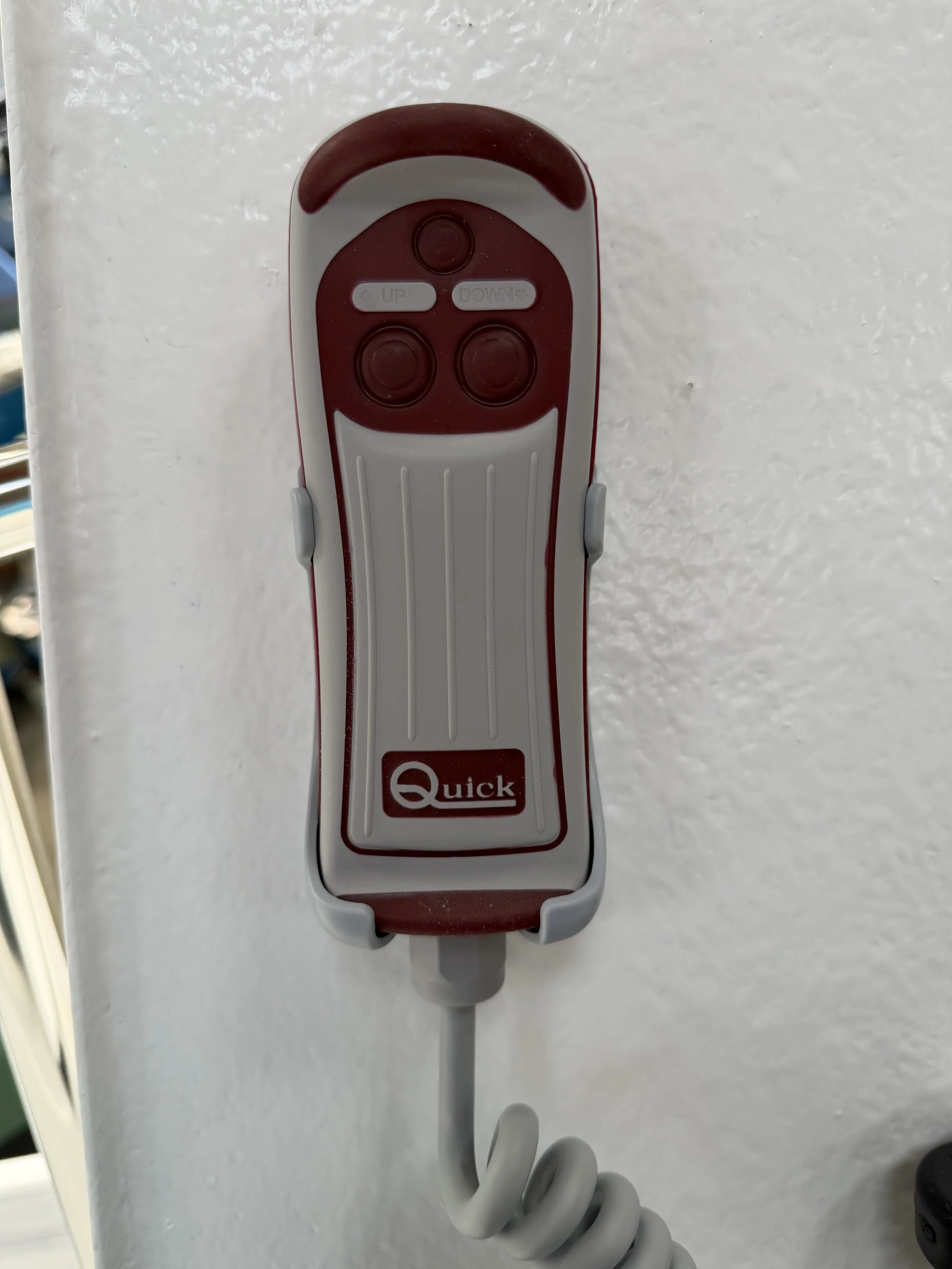
Windlass Remote
A wired remote for the windlass is inside the lid of the anchor locker.
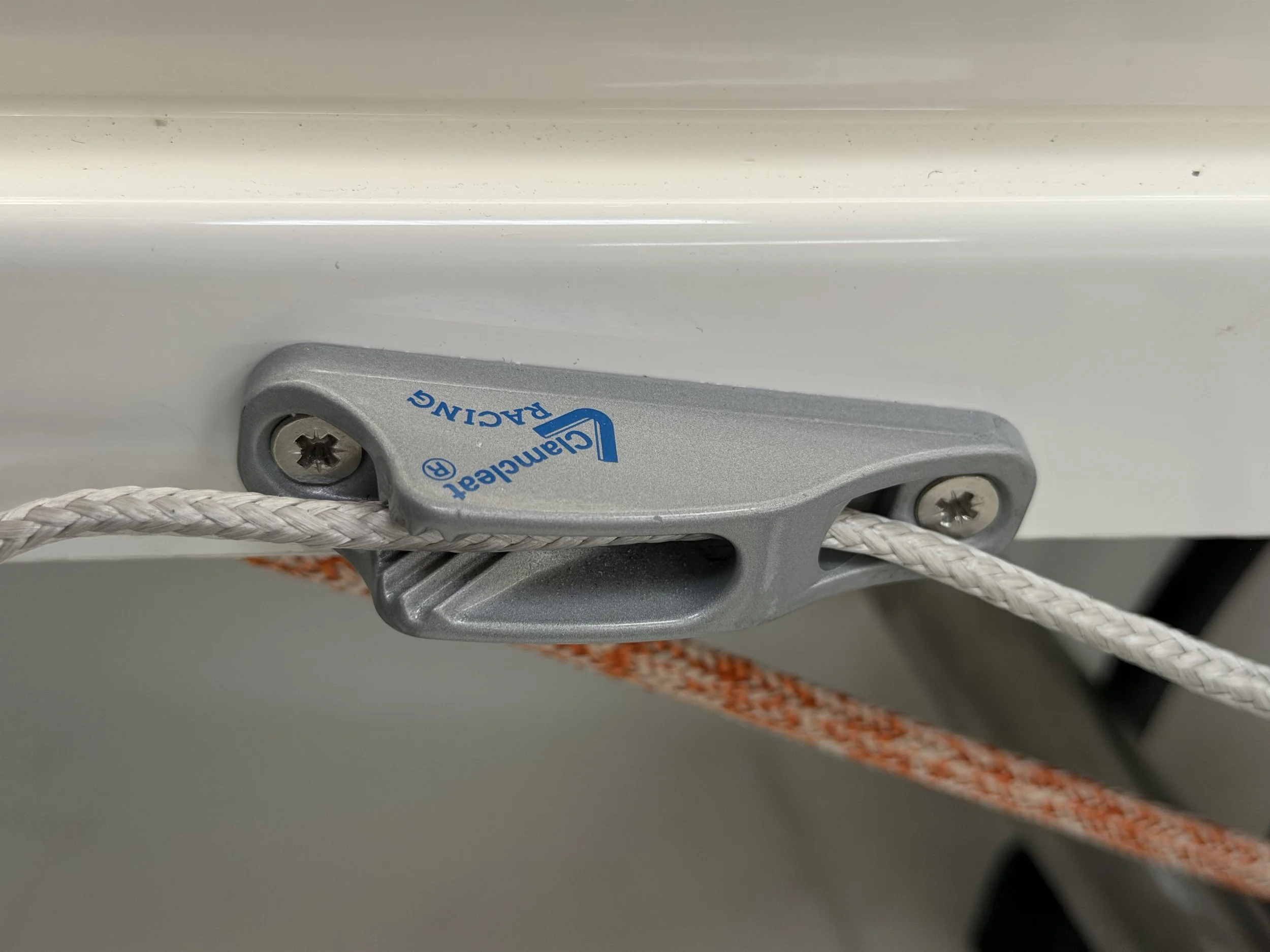
interesting
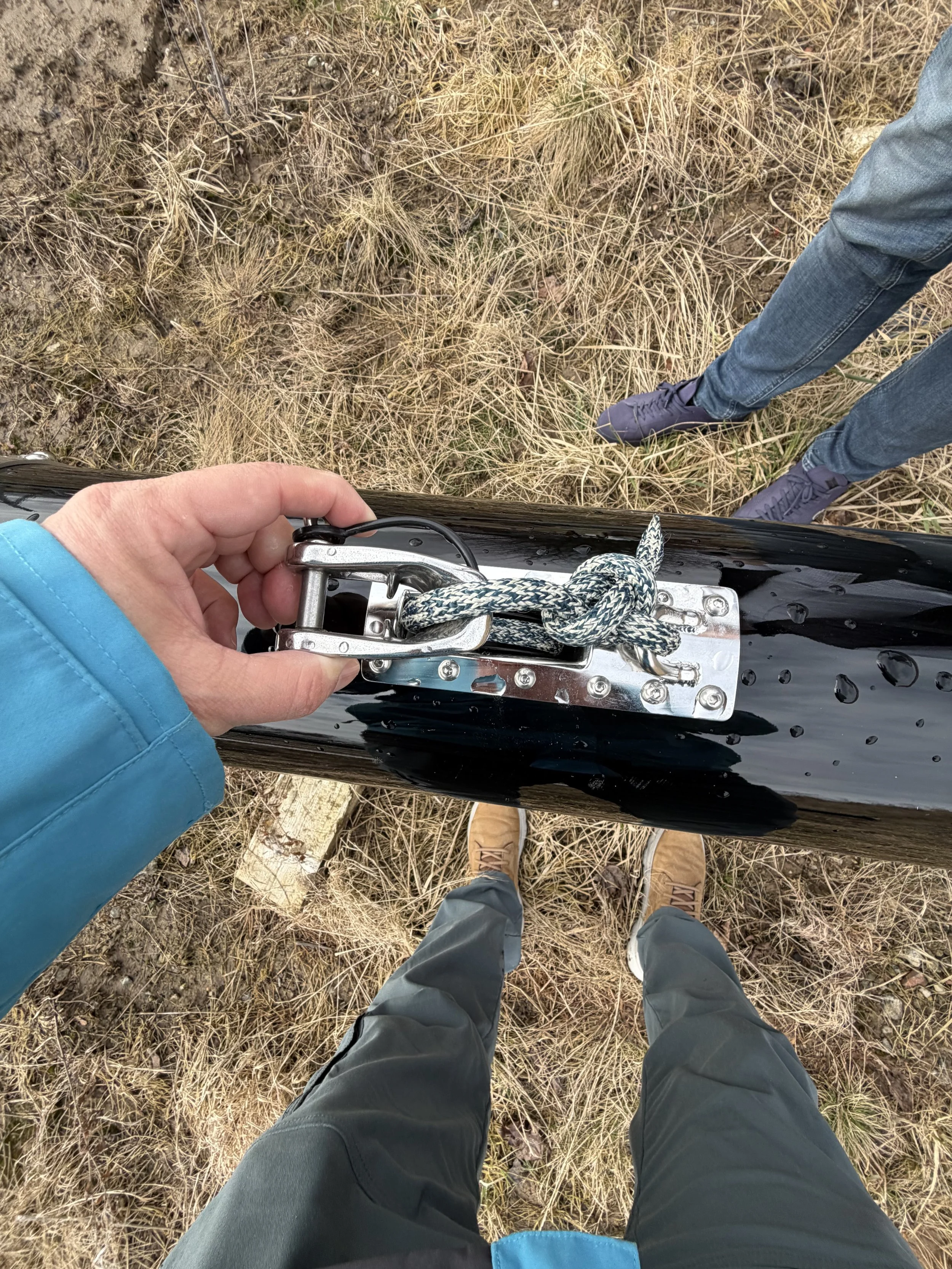
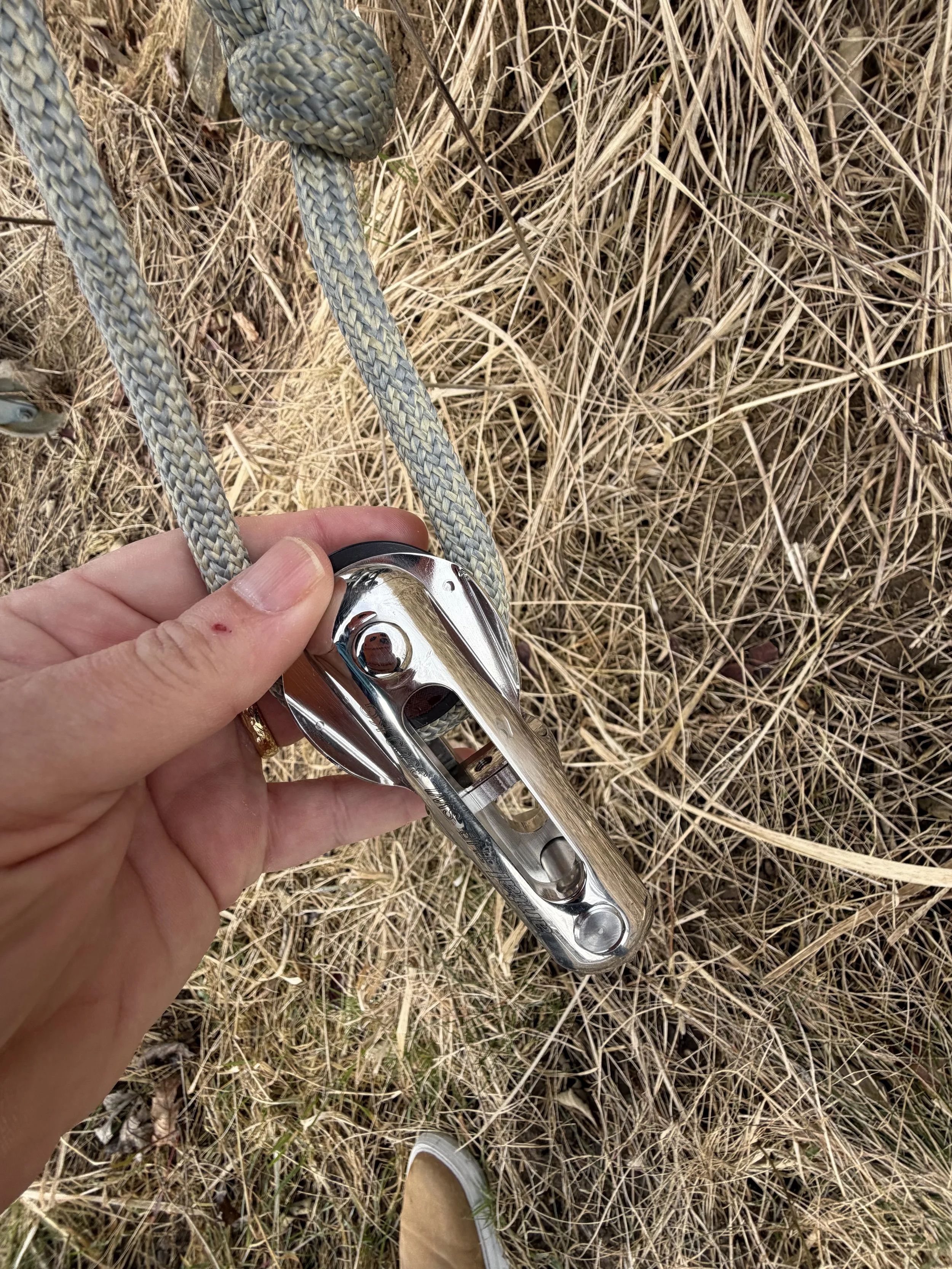
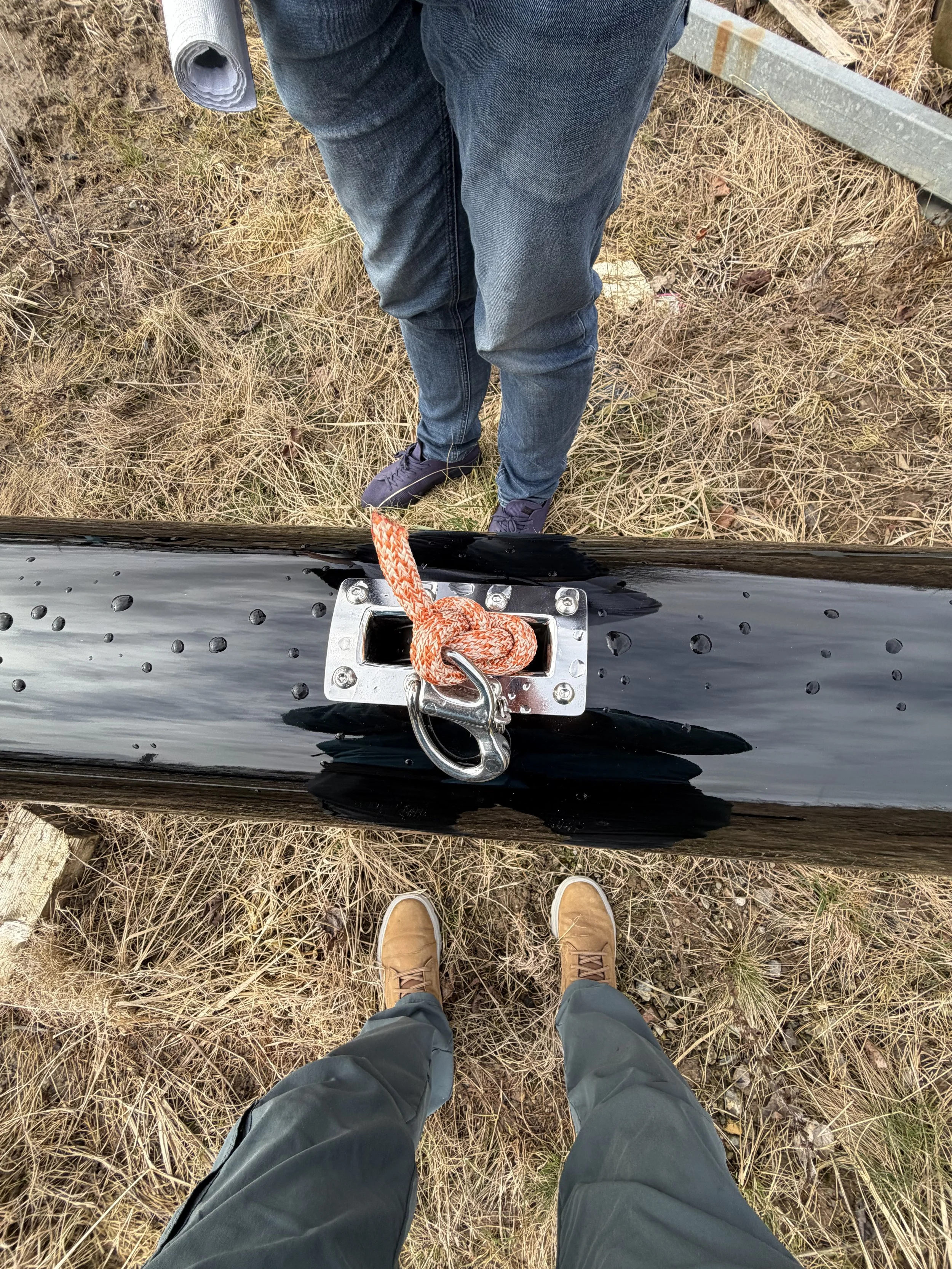
The orange line is the spinnaker tack line which goes out the front of the bowsprit and is led all the way back to the cockpit under the deck. The grey line in the clam cleat is for retracting the bow ladder without having to lean over the bowsprit. Very clever.
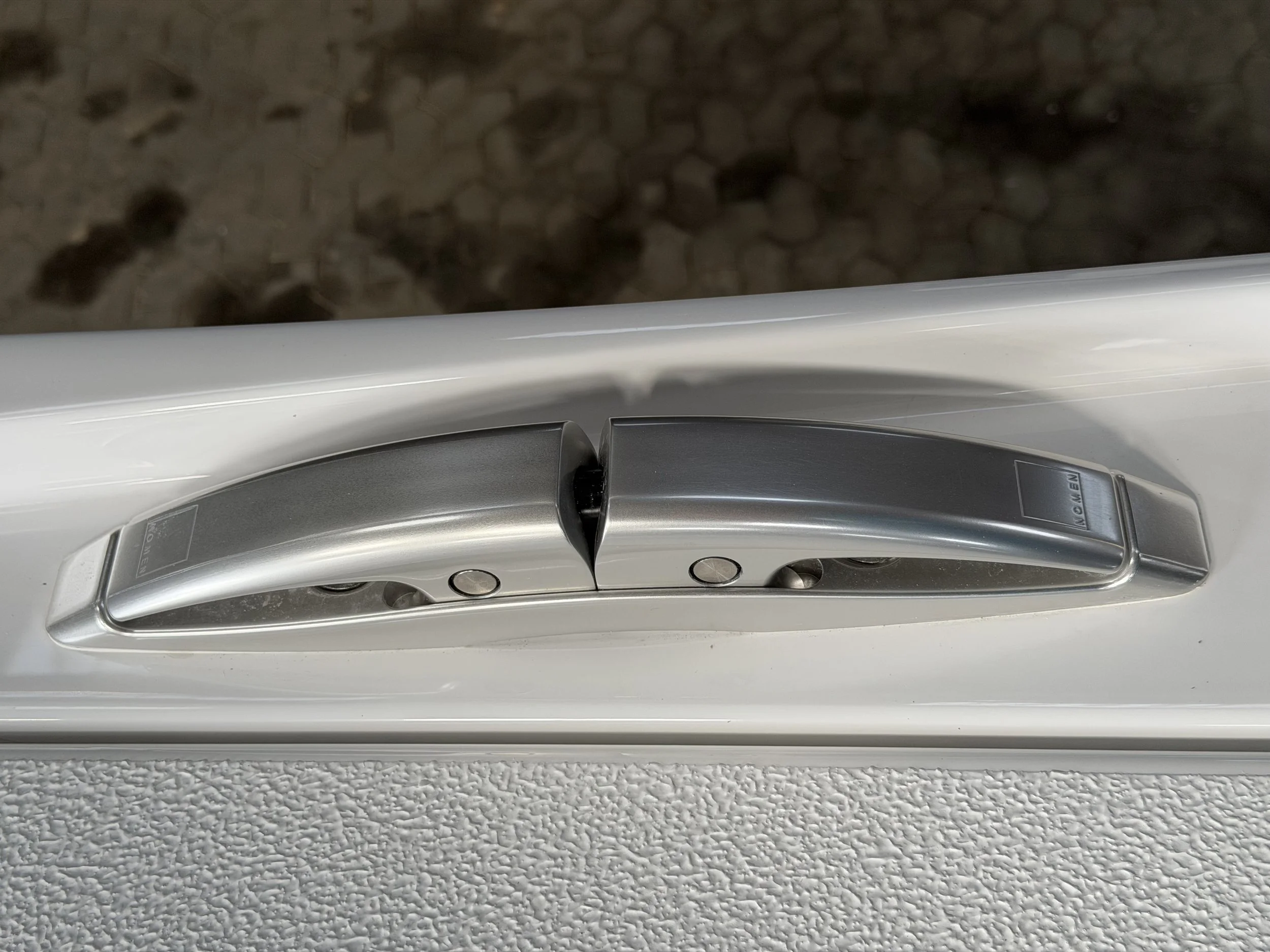
More cleverness
In order to keep lines and sails from getting hung up, the bow cleats fold up to lie almost flat on deck.
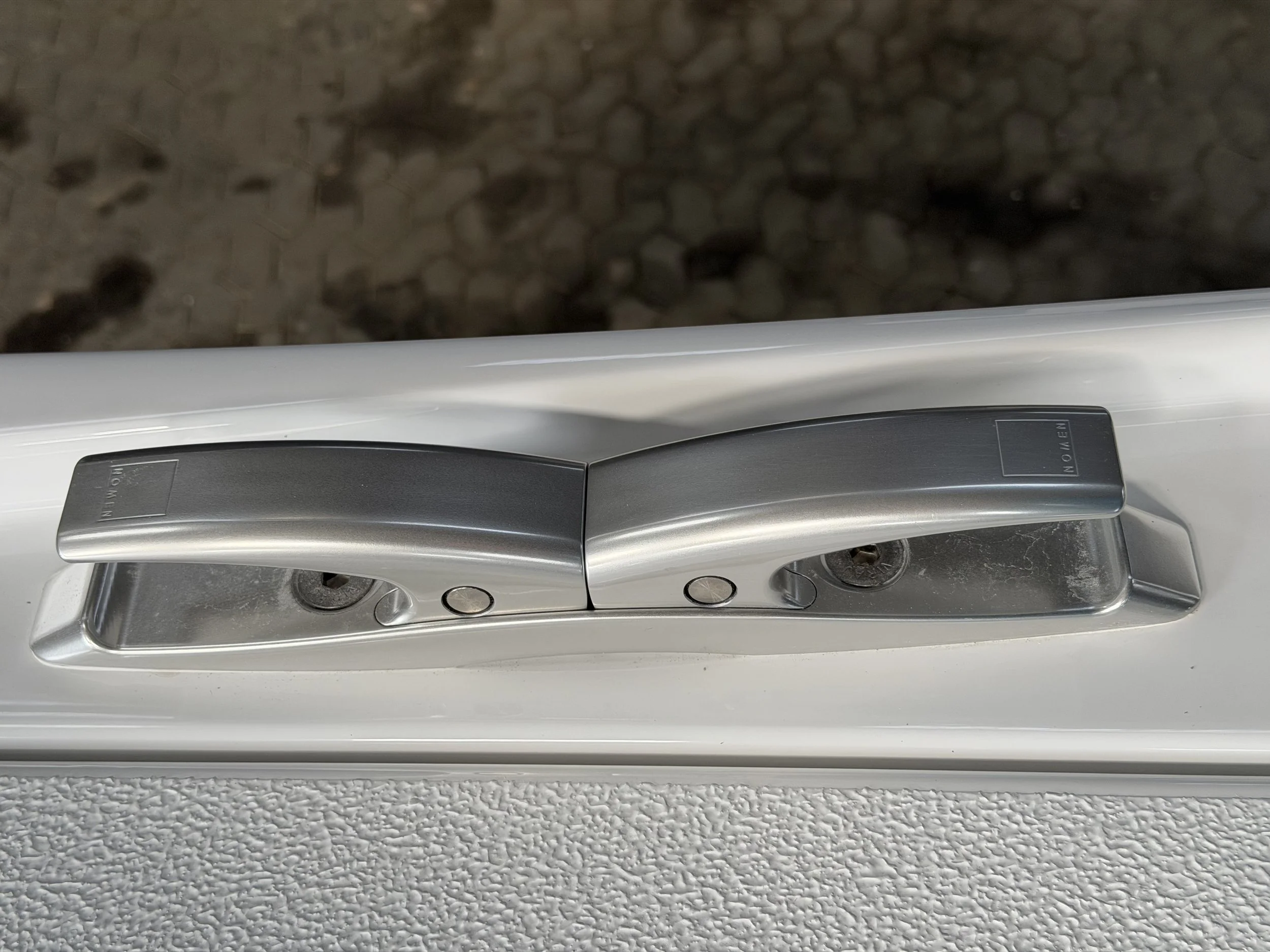
More Cleverness, cont'
Here’s what the cleats look like when ready to use.
Foredeck
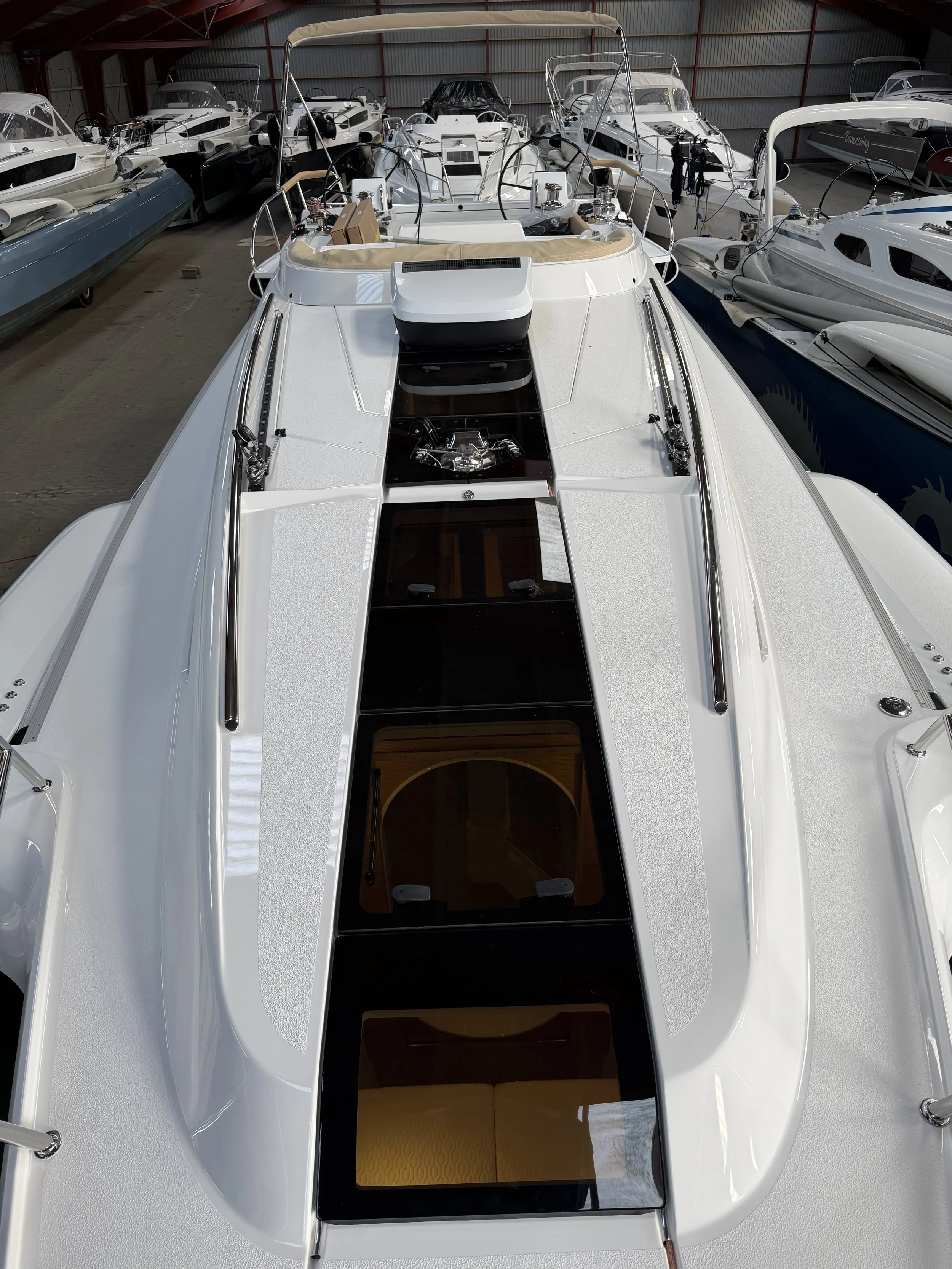
Turning around we look back over the deck. The stainless mast base is visible, with the channels for routing halyards under the deck to the back of the cockpit. The control lines for the centerboard come up via the mast compression post and are routed back to the back of the cockpit.
The cockpit
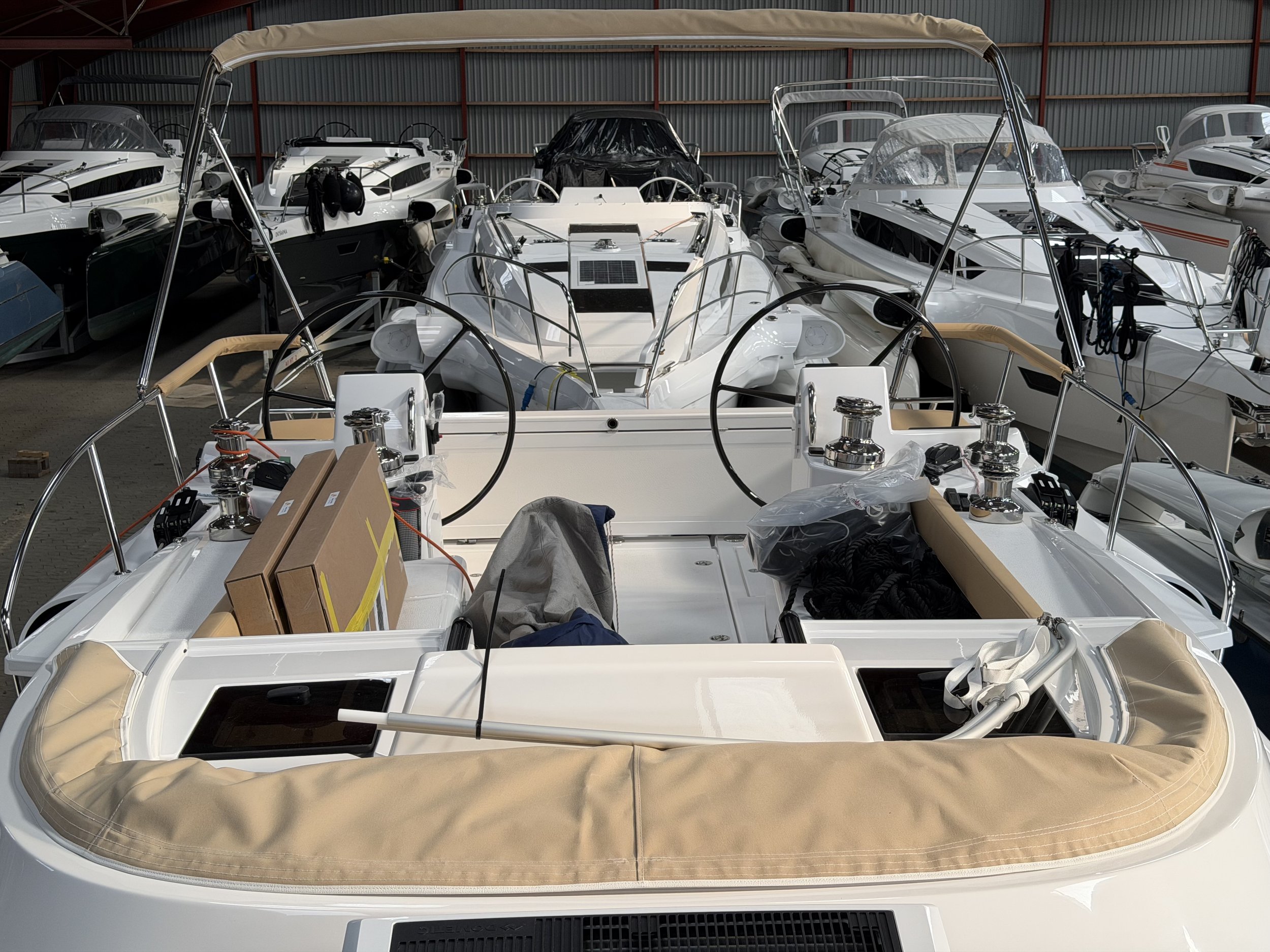
There are two wheels, keeping the center of the cockpit clean and open. at each wheel there are two electric winches for Genoa sheets, and the mainsheet, as well as one manual winch for the barber hauler system, which allows better trim of the jib and code sails when reaching. The two boxes are foldable solar panels, which can be deployed when anchored for more charging. The big grey back is the cockpit table, which can be removed and stashed in an ama or left in place when sailing. The spray hood is folded up under the tan cover at the bottom of the picture, and the Bimini is folded under its tan cover at the top of the picture. There is also an extension for the spray hood that can be added for extra shade when needed.
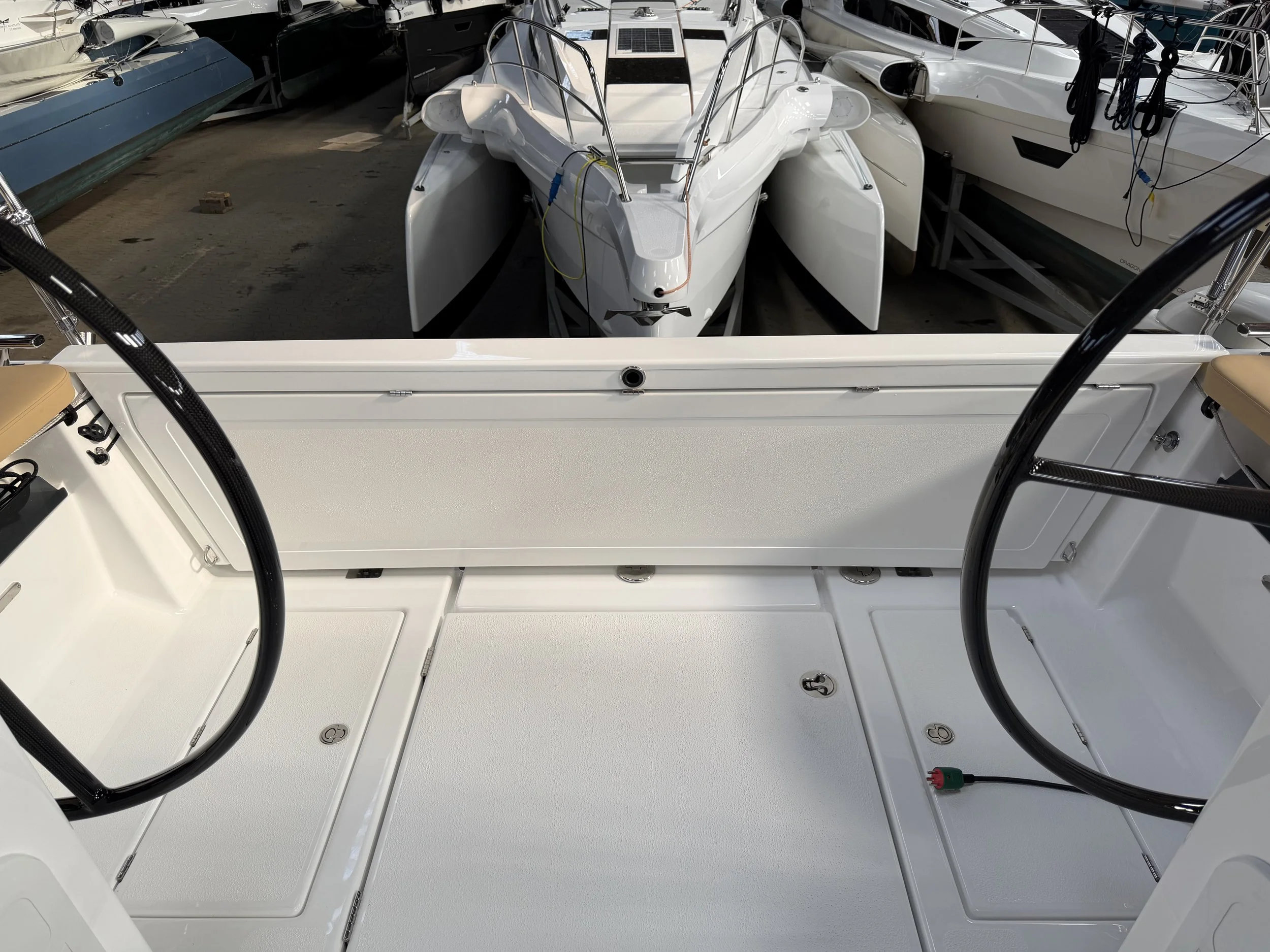
Transom and cockpit aft
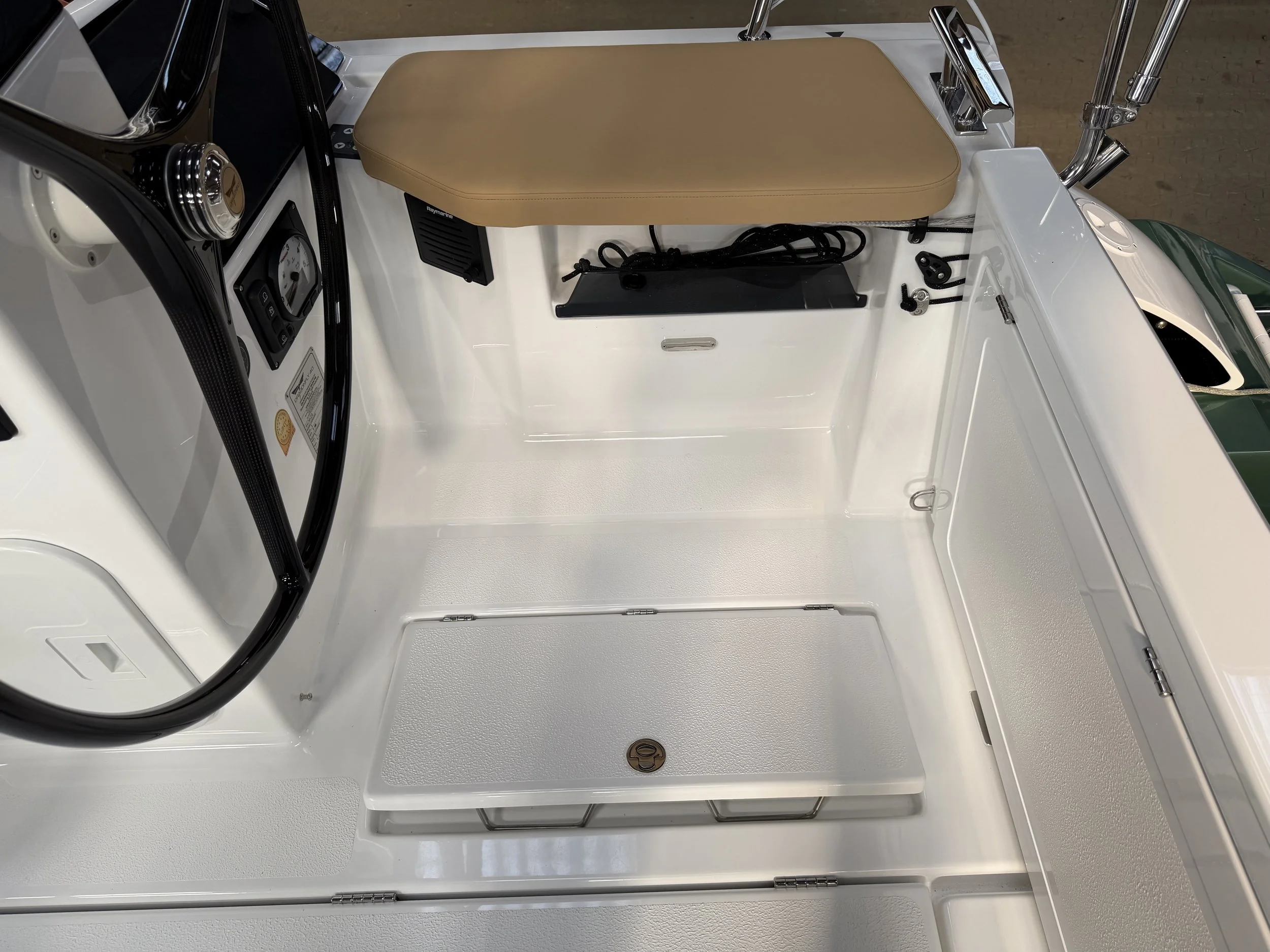
The transom can be lowered to extend the floor of the cockpit aft when anchored or at the dock. The large hatch in the center of the cockpit is the engine room access. The two smaller hatches are draining lockers.
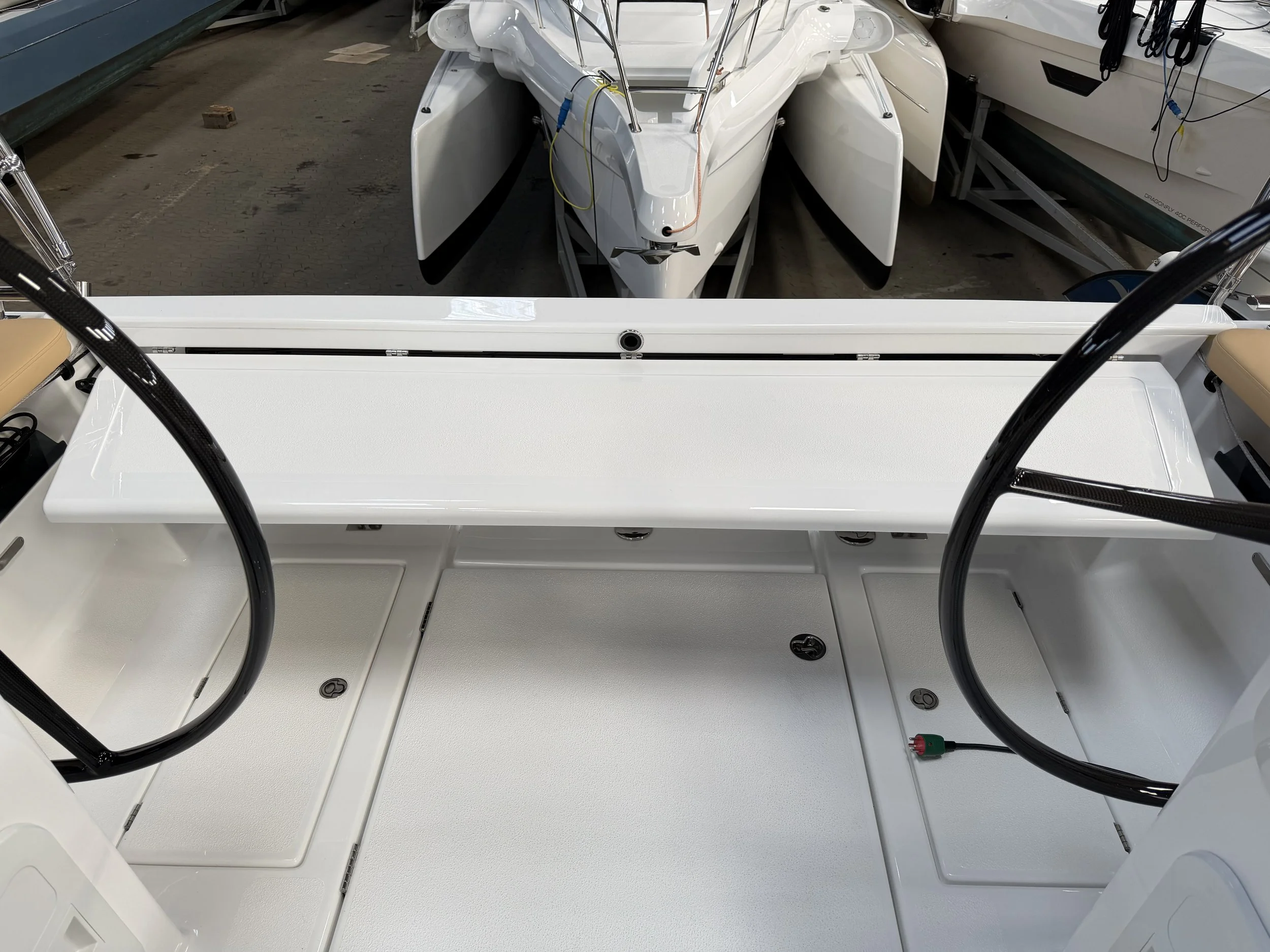
Extra seating
The transom has a seat that can be raised up when the transom is closed, allowing the helms person to face forward, and to have friends. Inside the transom, under that seat, is a carbon fiber passarelle for getting off the boat when moored stern to the pier.
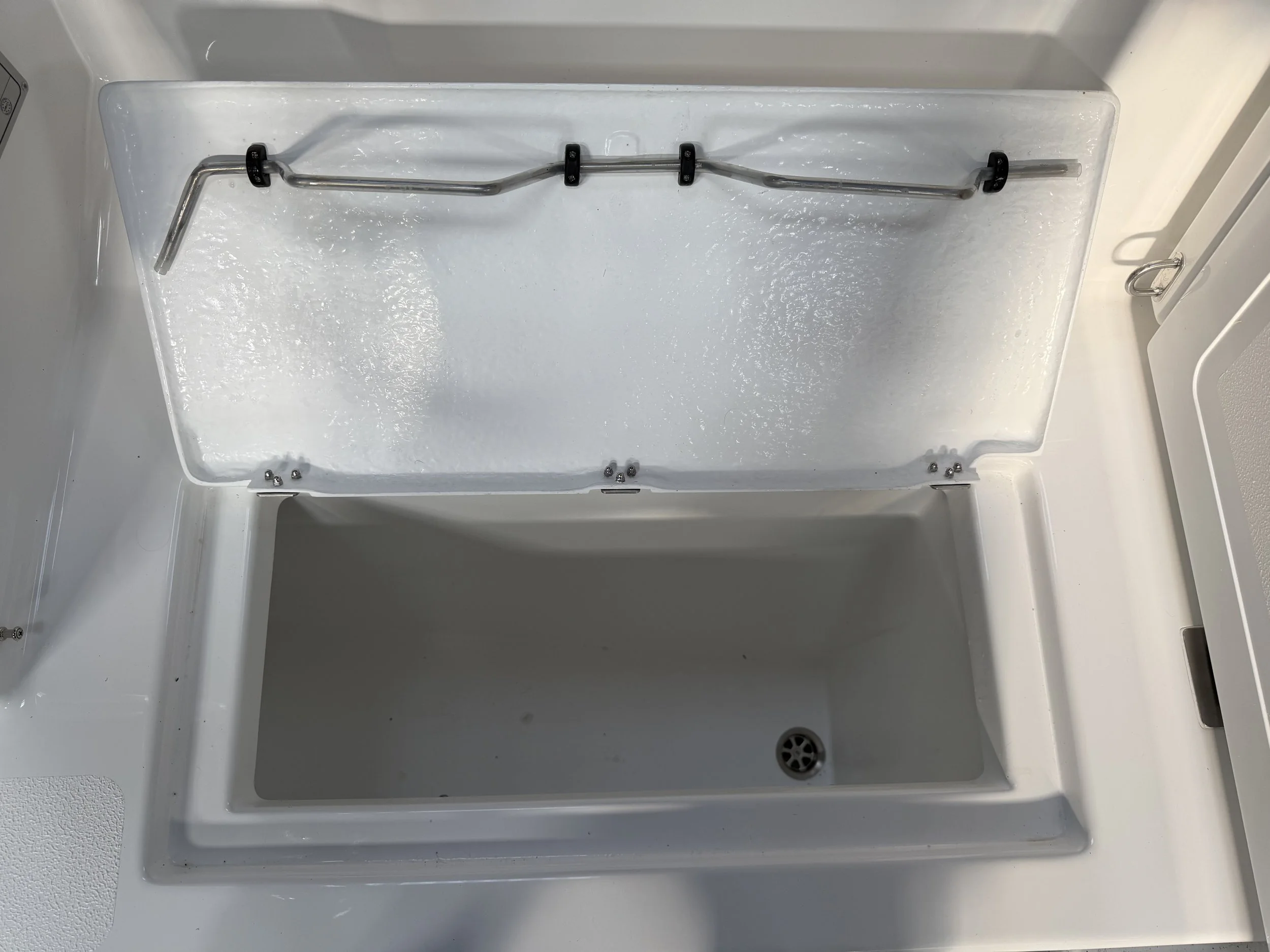
The draining lockers
The draining lockers are surprisingly deep. Plenty of room for fenders and/or mooring lines, or ice and beer.
Even more cleverness
The locker can be propped open to give a footrest for the helms person. Even though a trimaran won’t heel like a monohull, it can lean just a little, and having a little footrest could add to the comfort.
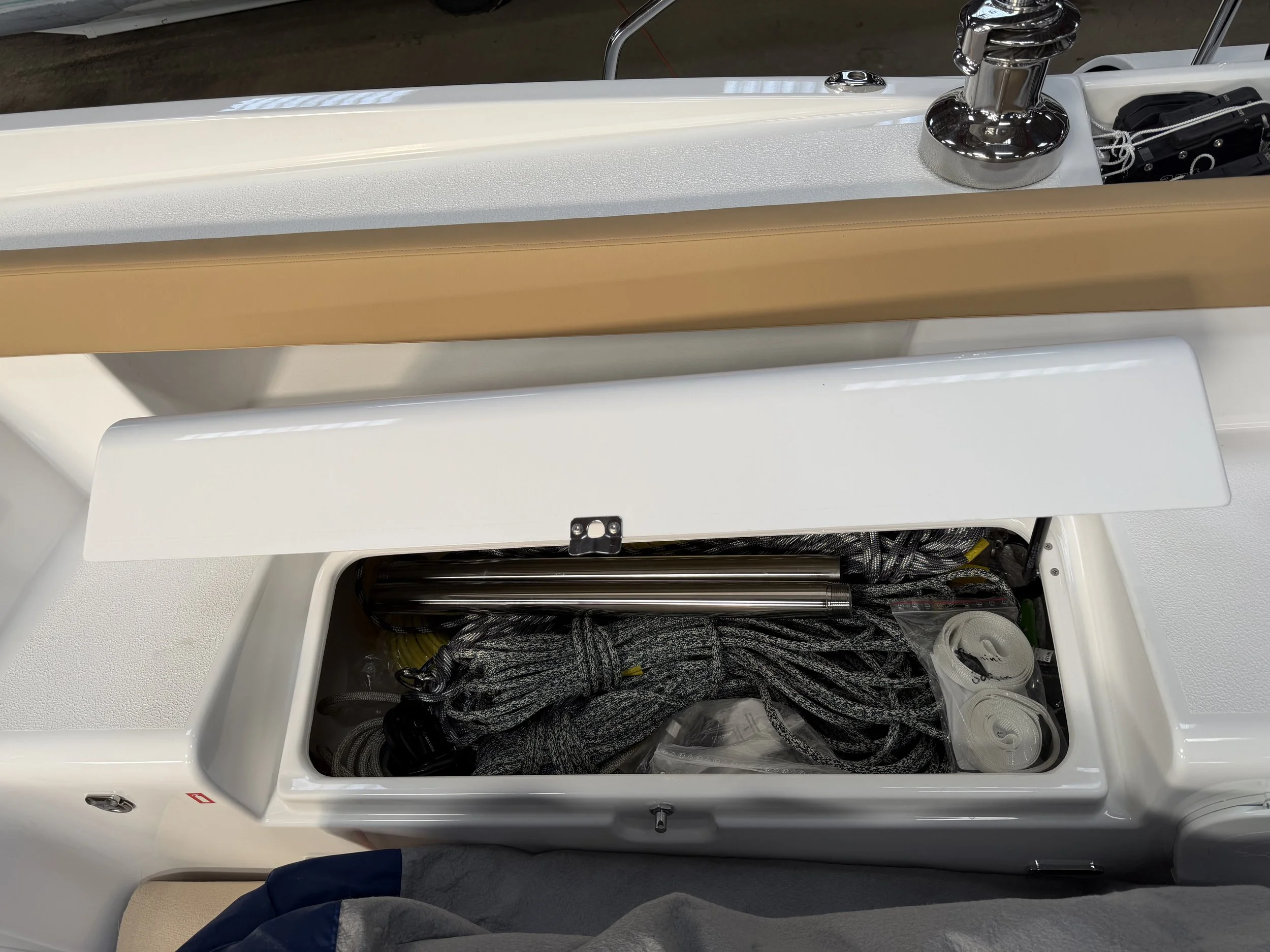
Cockpit Locker
Because there is an aft cabin under the cockpit, this locker isn’t as deep as some, but the good part of that is that you won’t lose that thing you’re looking for under a deep pile of whatever. There is a lot of storage for lighter items in the amas, too.
Companionway
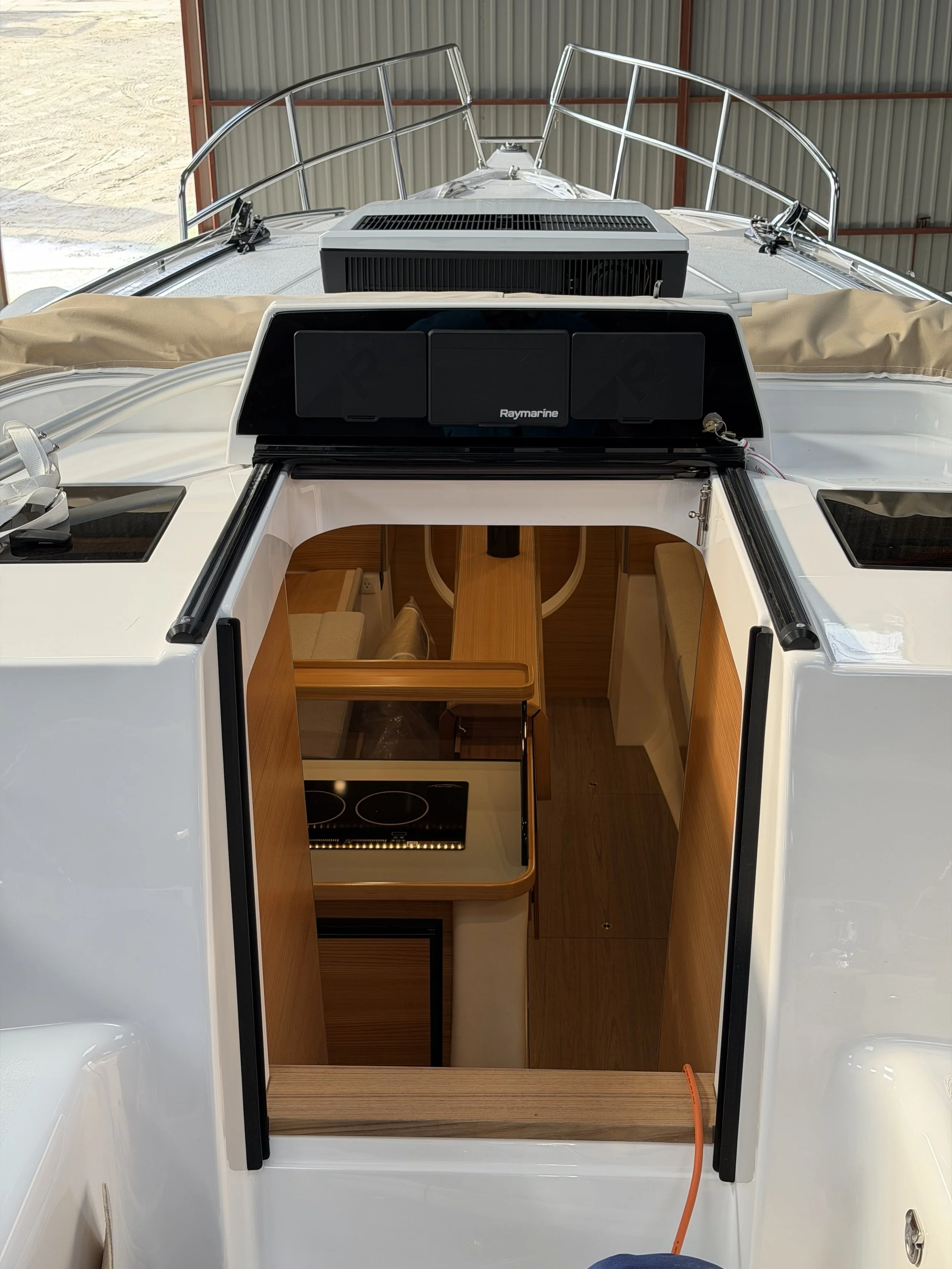
This is a super well designed hatch. the tinted plexiglass hatch boards stow up above, and there is a carbon fiber panel that has bug screens in it which can be put in place to keep the boat ventilated when out on the hook.
Note also the air-conditioning unit in front of the hatch for when it gets hot. I don’t think we’ll need that in the Baltic, but when we get the boat back to Spain it might come in handy.
Intruments
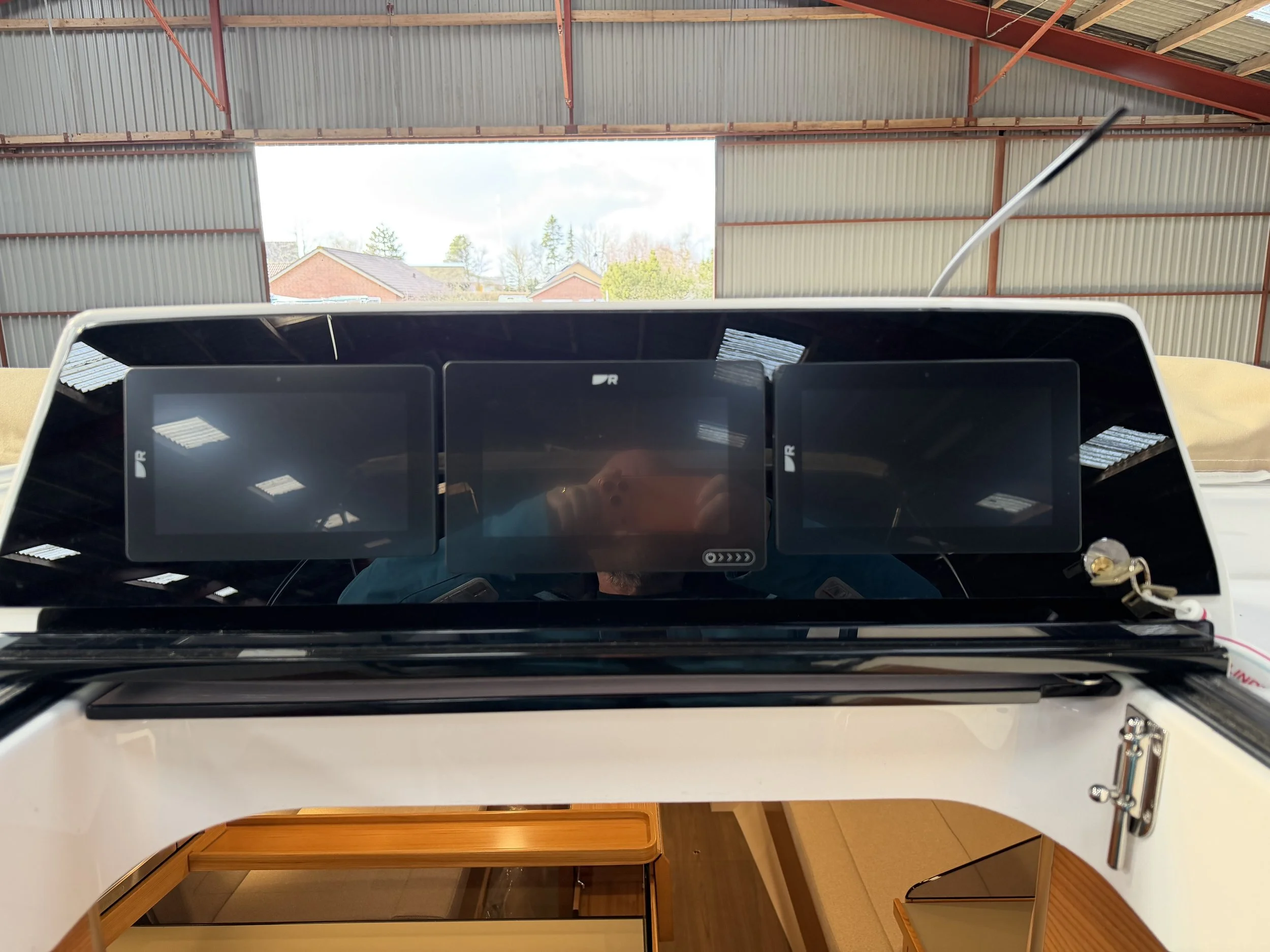
Orizuru will be very well equipped with the latest from Raymarine. There is a 12” chart plotter and an i70 multifunction display at each helm, and the starboard helm also has a p70 Autopilot control unit. Here above the companionway we see a 7'“ chart plotter in the center, flanked by two 7” Alpha displays. I think the first month will be spent playing with the configurations on all this.
Welcome Home!
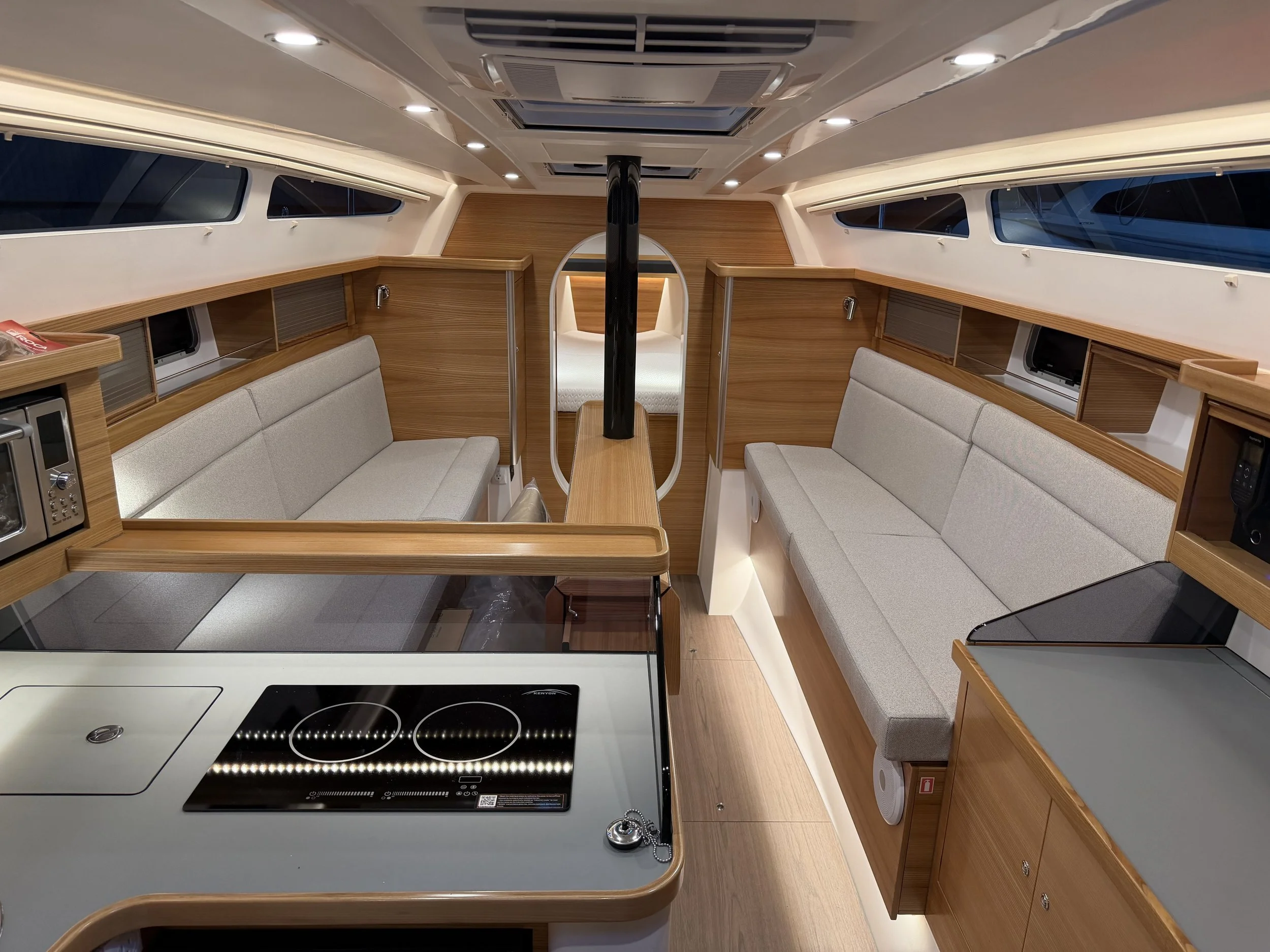
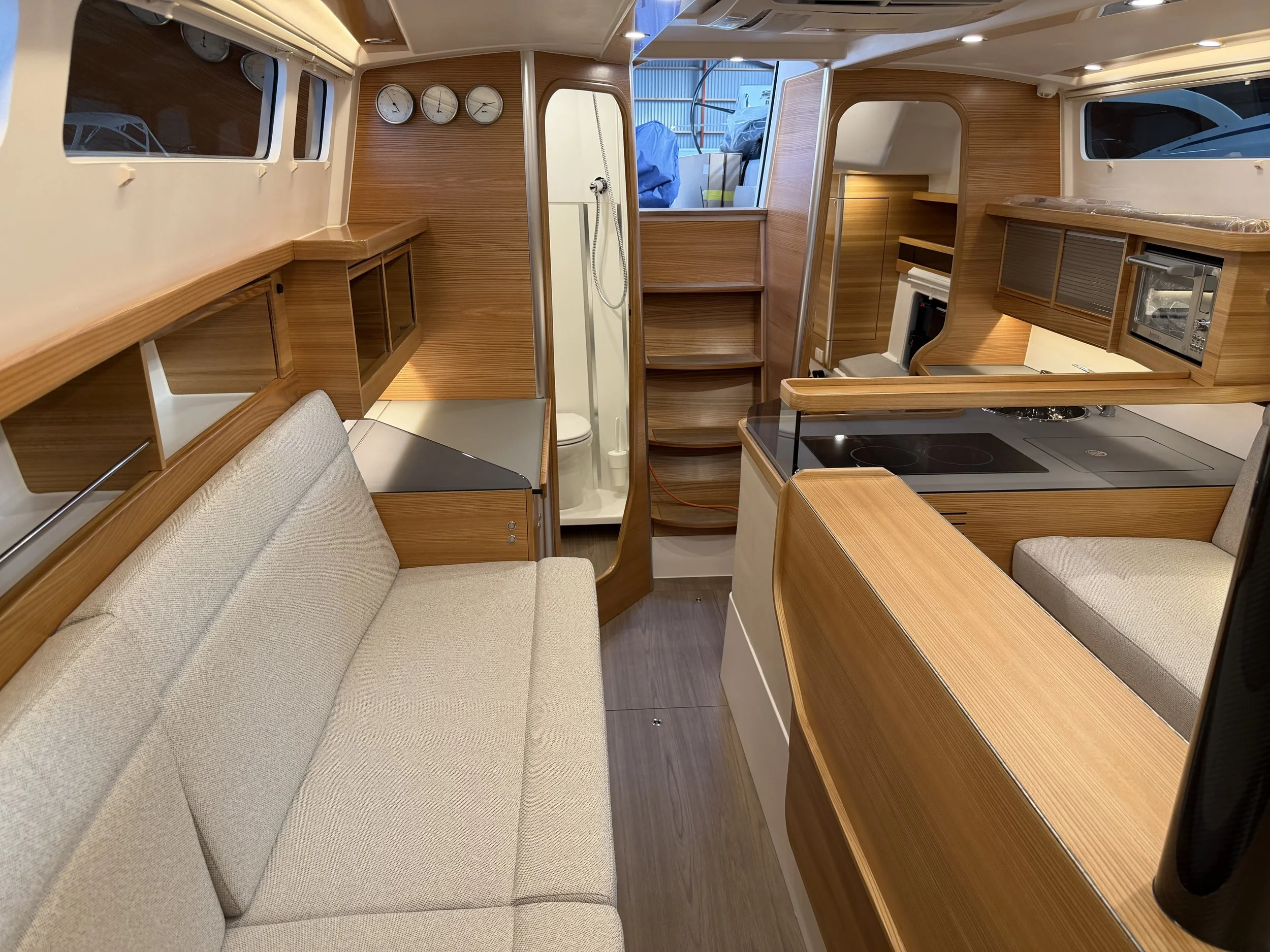
As you descend the companionway, you’ll see the Danish designed interior. Galley to the left, chart table to the right. In the center of the boat is the centerboard trunk, which holds up the folding table.
Guest cabin
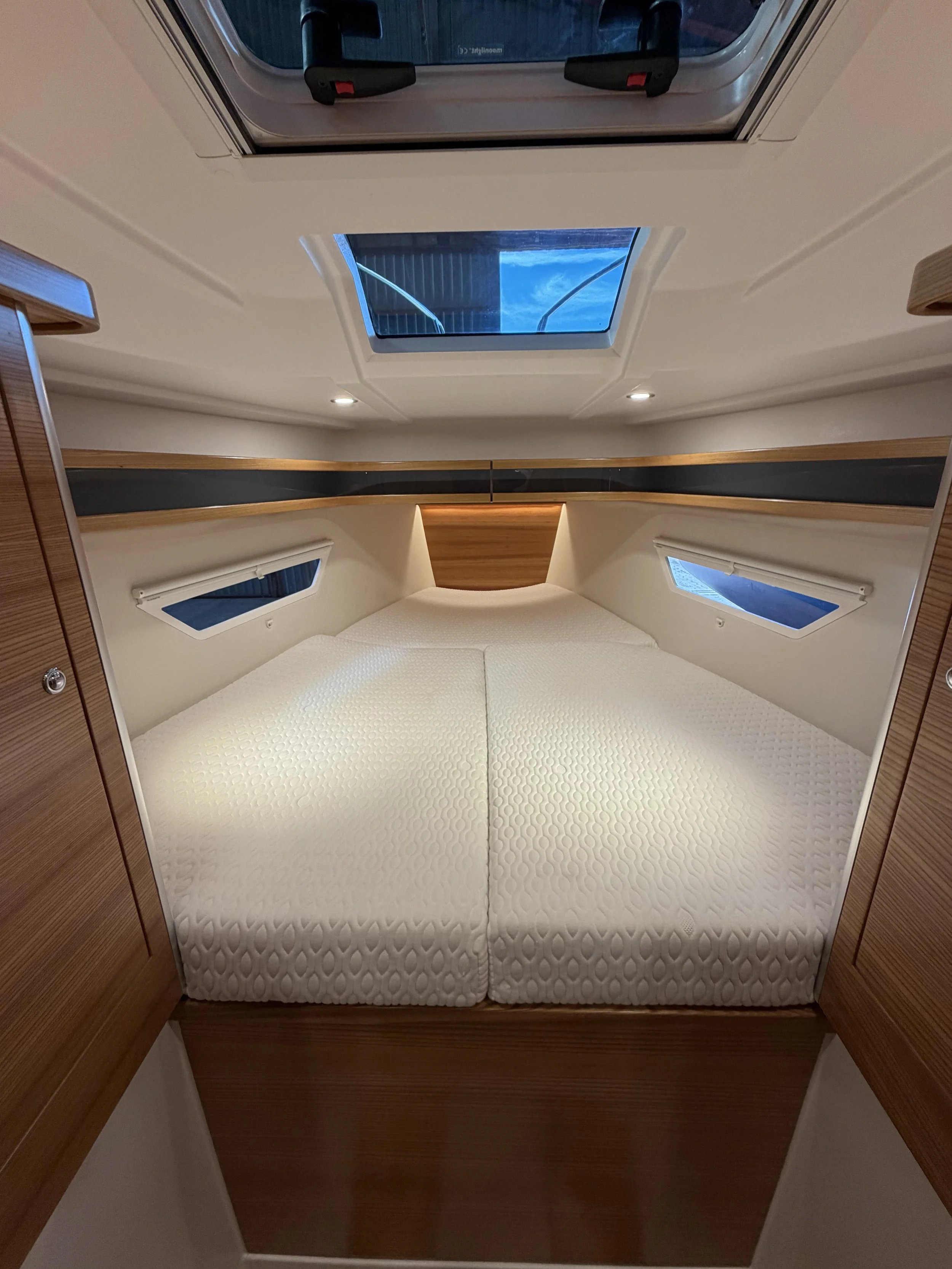
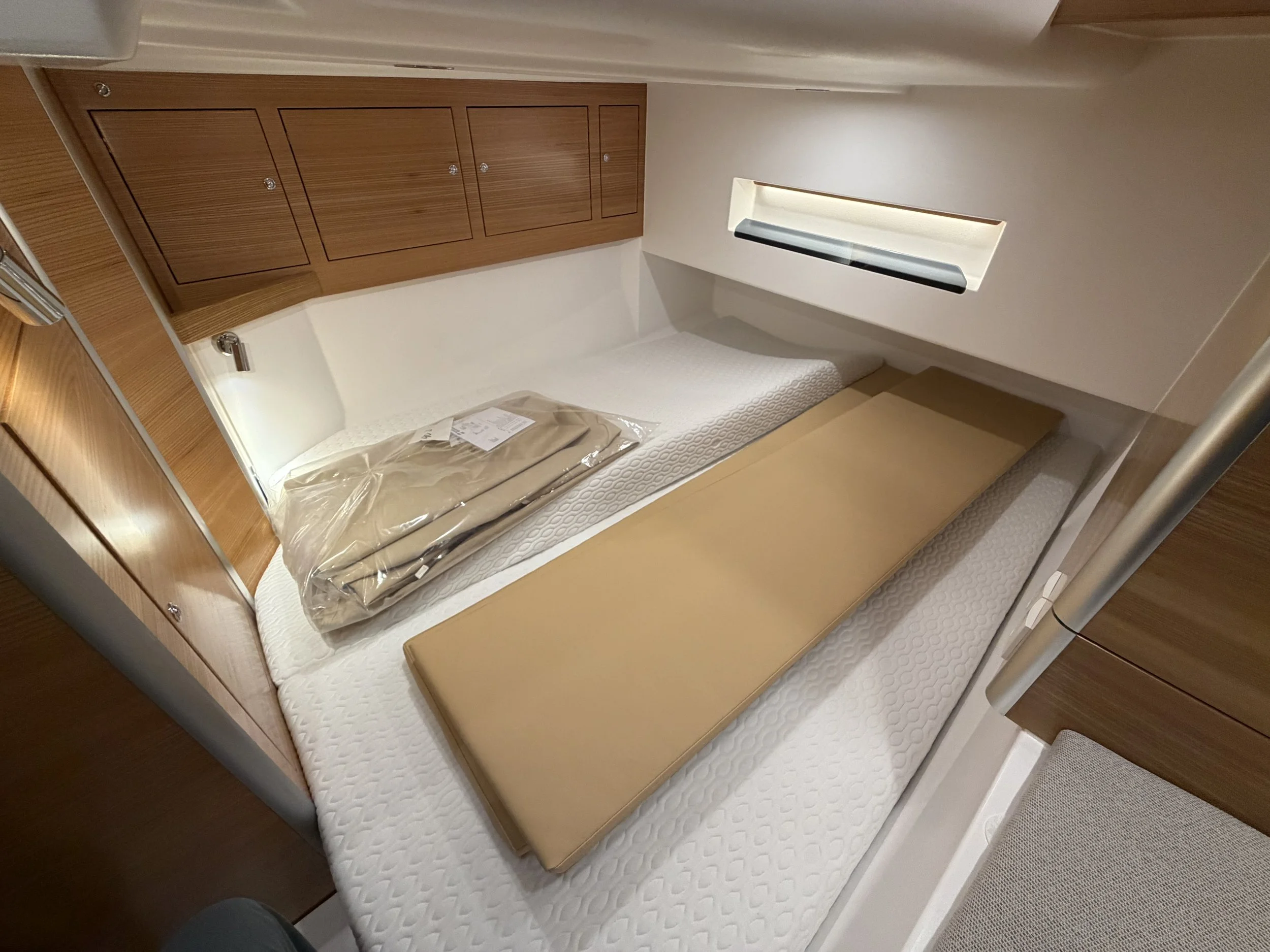
Forward of the main bulkhead is the v-berth, which will be our guest cabin. The doorway is a small oval because it is part of the main structural bulkhead between the forward beams. Once inside, however, there is a nice small cabin for sleeping two guests, including two cabinets and some shelf storage.
Facing aft
Looking aft from the forward cabin, you can see the companionway steps leading up to the cockpit. This is going to require some adjustment after living on a catamaran. On Sage the main cabin and living area was on the same level as the cockpit, and the indoor and outdoor space flowed together. This is more like a traditional monohull, where “going inside” means descending the steps down into the hull.
Clocks
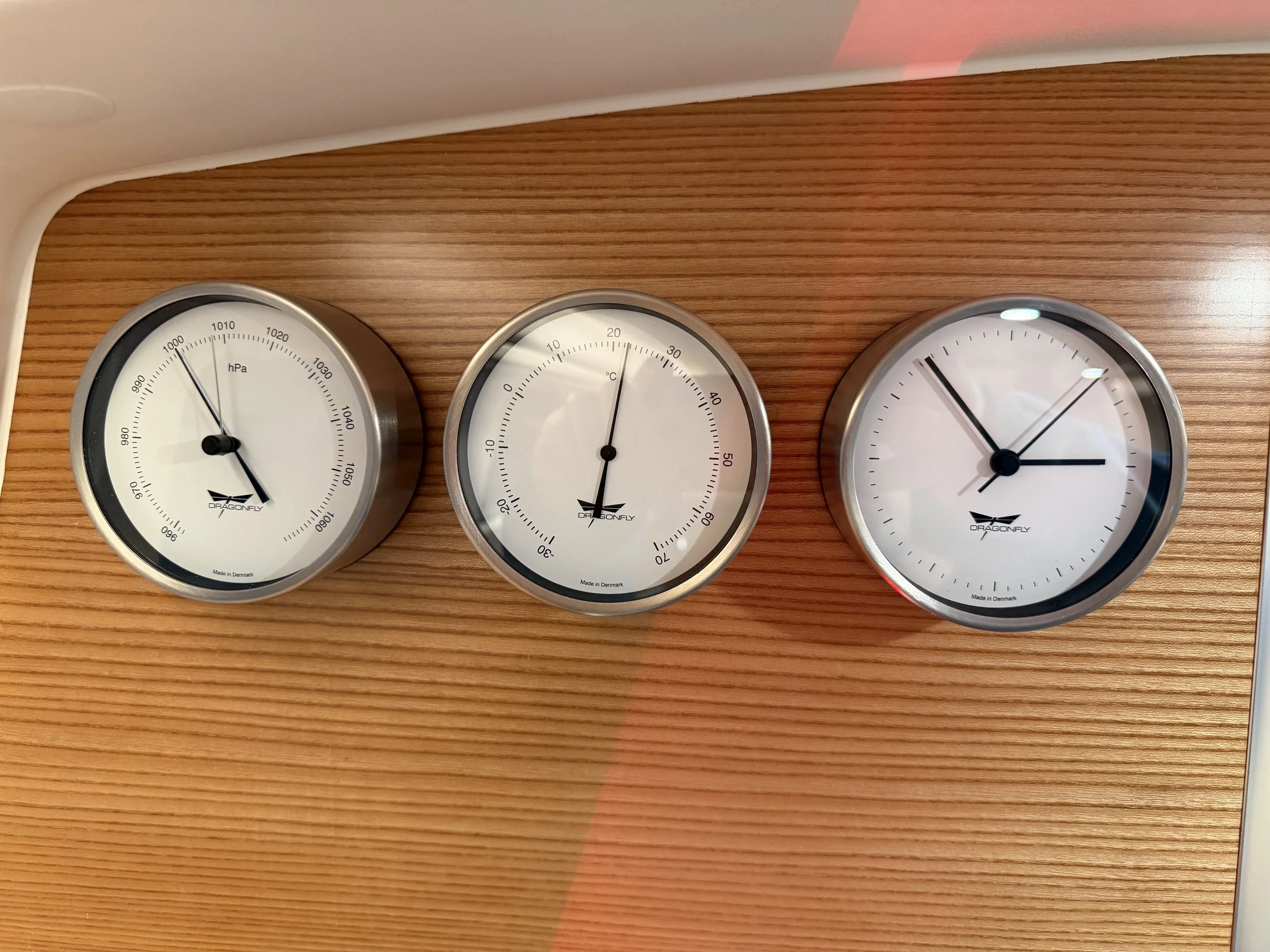
Close up of the Dragonfly branded barometer, thermometer, and clock above the chart table.
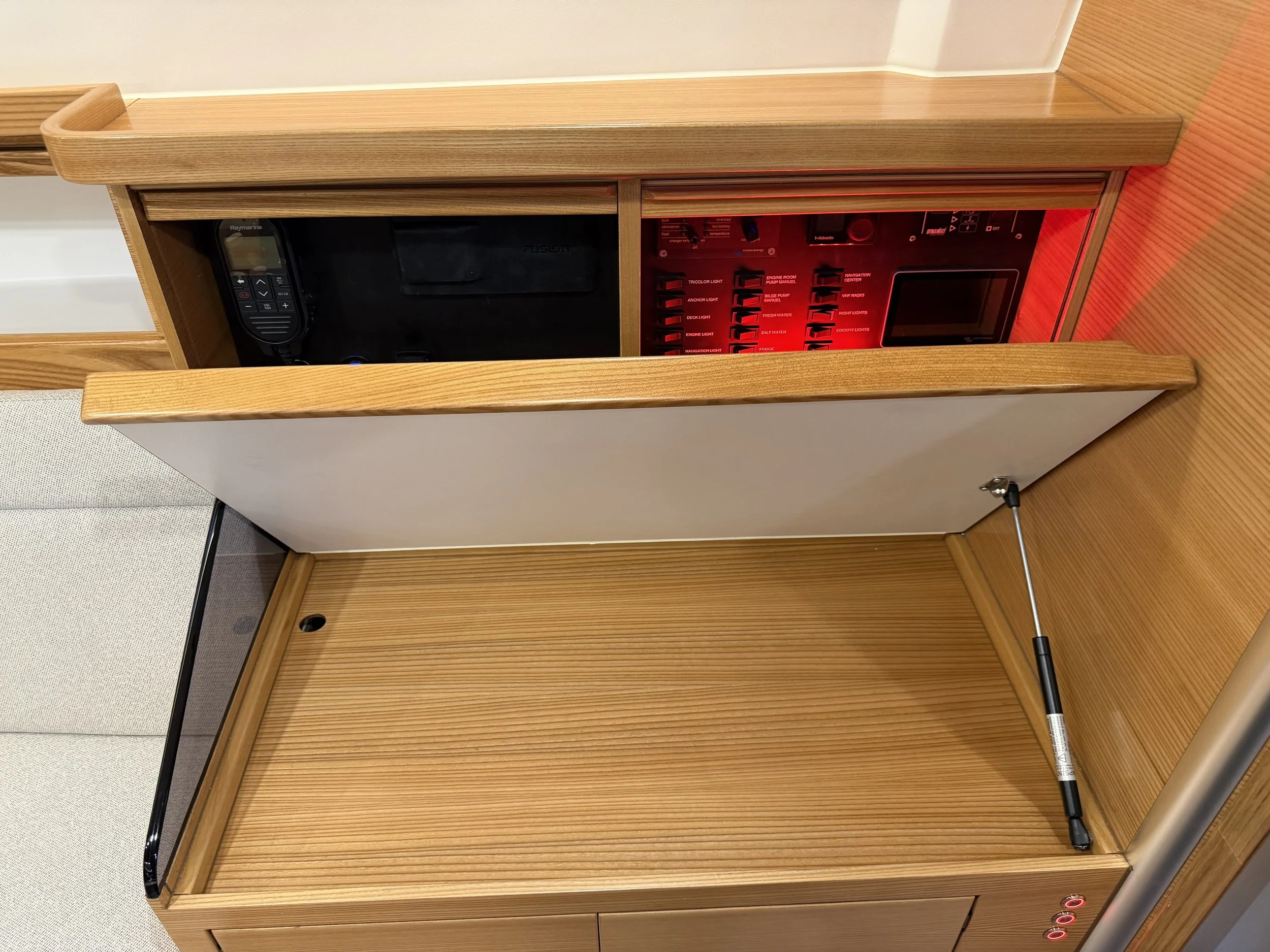
Chart table
The chart table is not deep, but has room for a few paper charts and maybe an iPad. to the left is access to let a charging cable up from the plugs in the cabinet underneath.
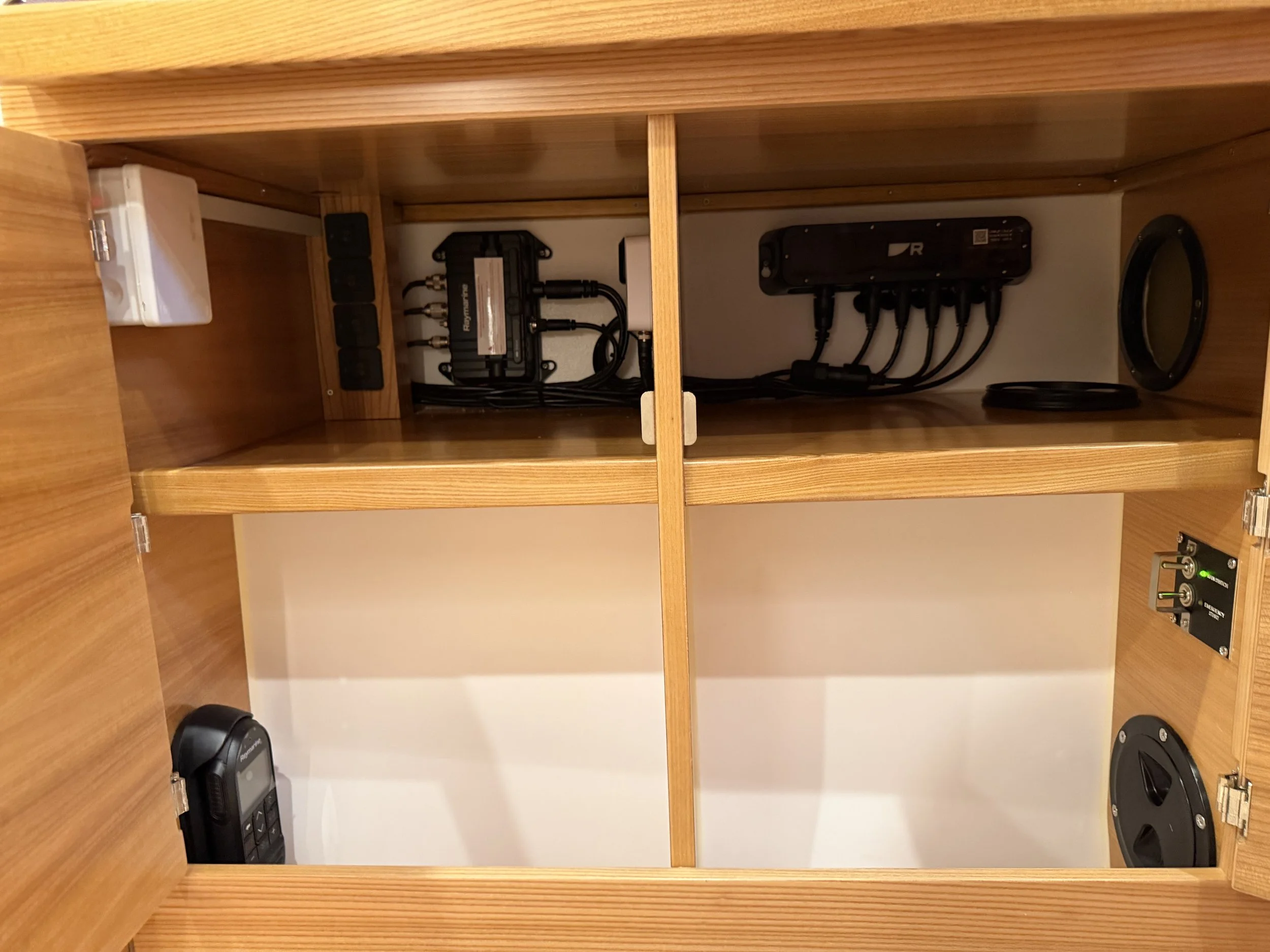
Underneath the chart table
The cabinet underneath the chart table contains some of the N2K and RayNet networking which ties all of the electronic systems together, as well as outlets for charging devices.
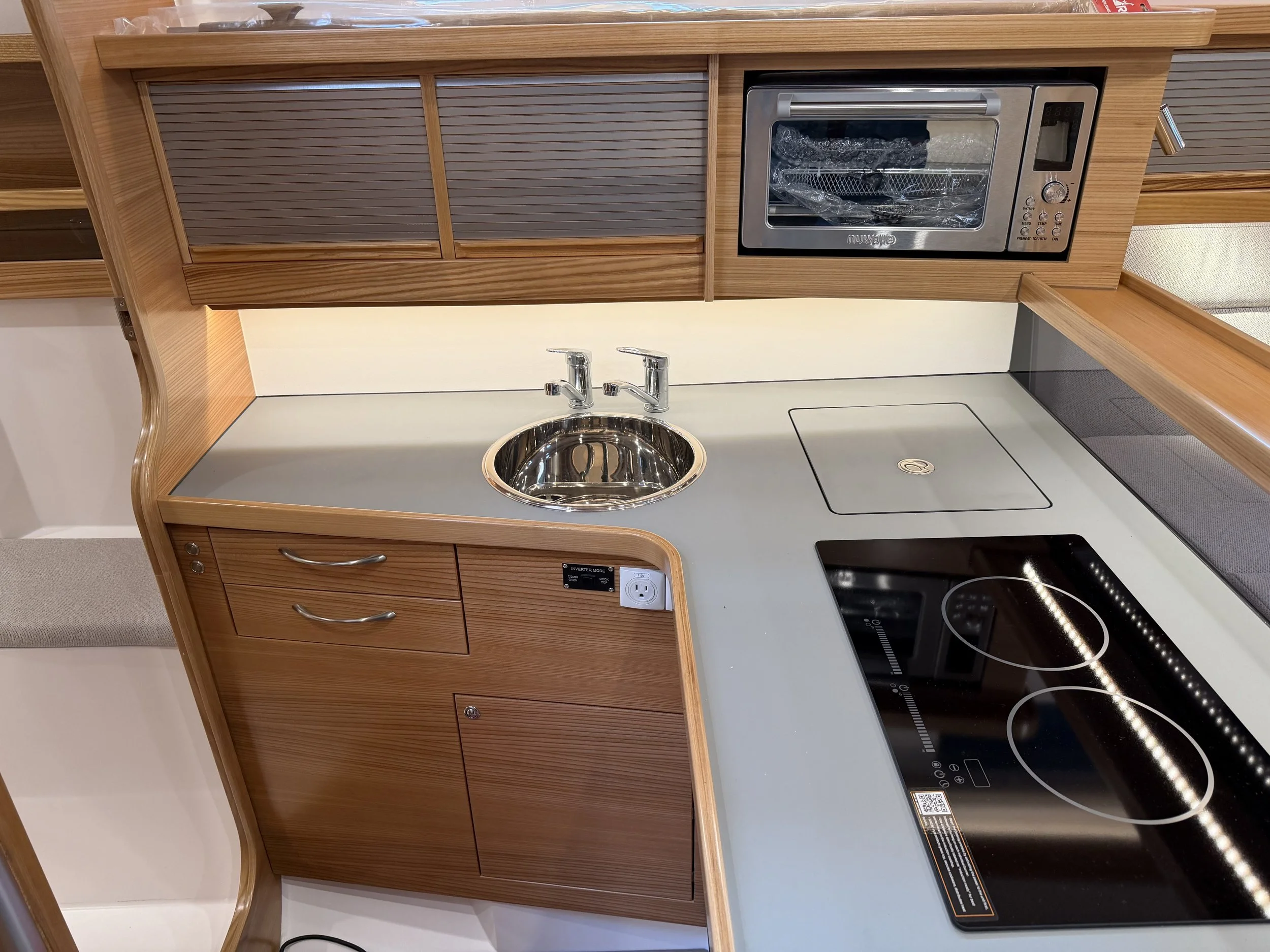
The galley
Across from the chart table is the Galley.
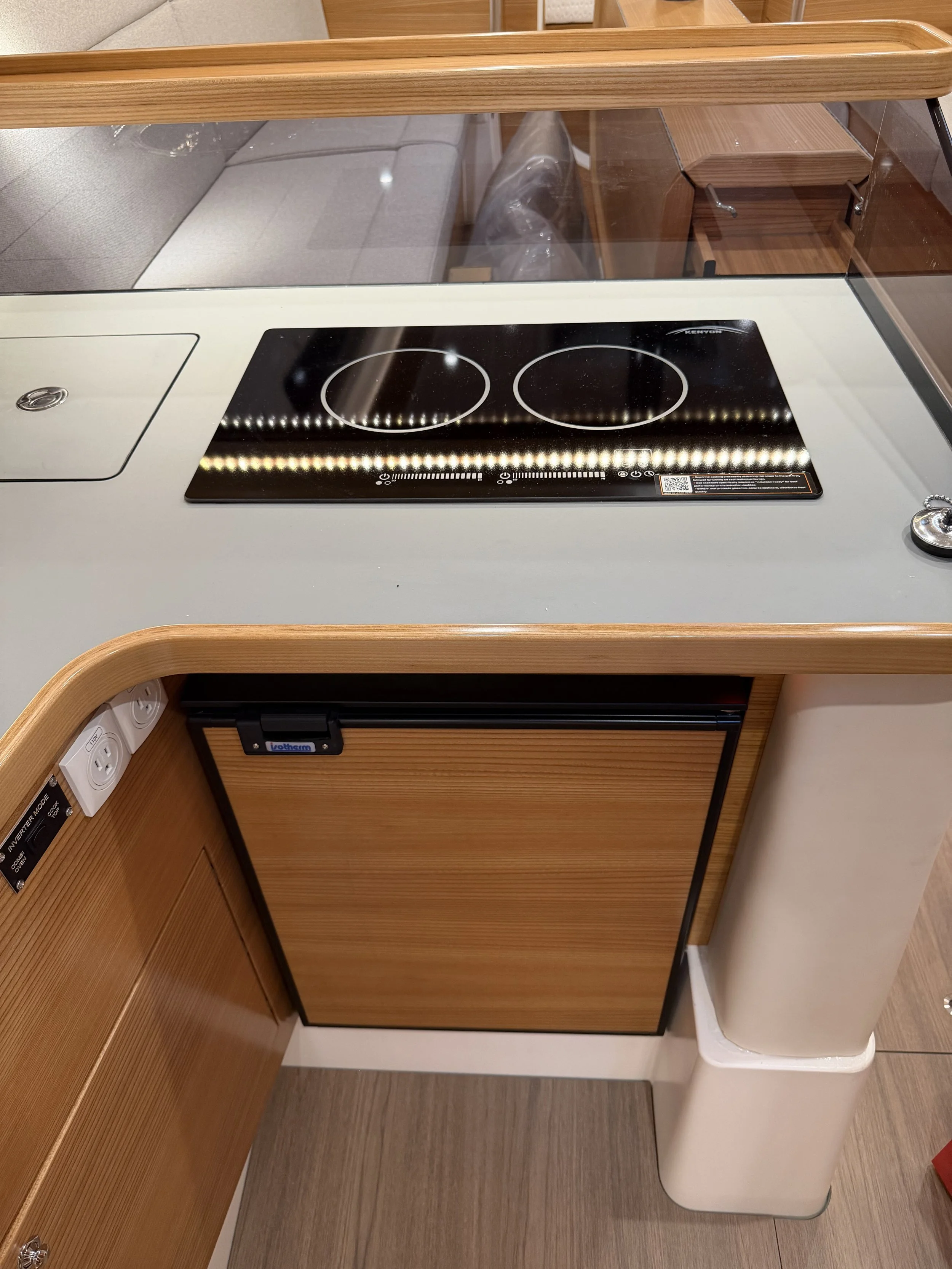
Induction Hob
As with Sage, we made the decision to not have any propane on board. Propane is the number one cause of fire on boats and it’s heavier than air so it pools in the bilge. I have induction at home, too.
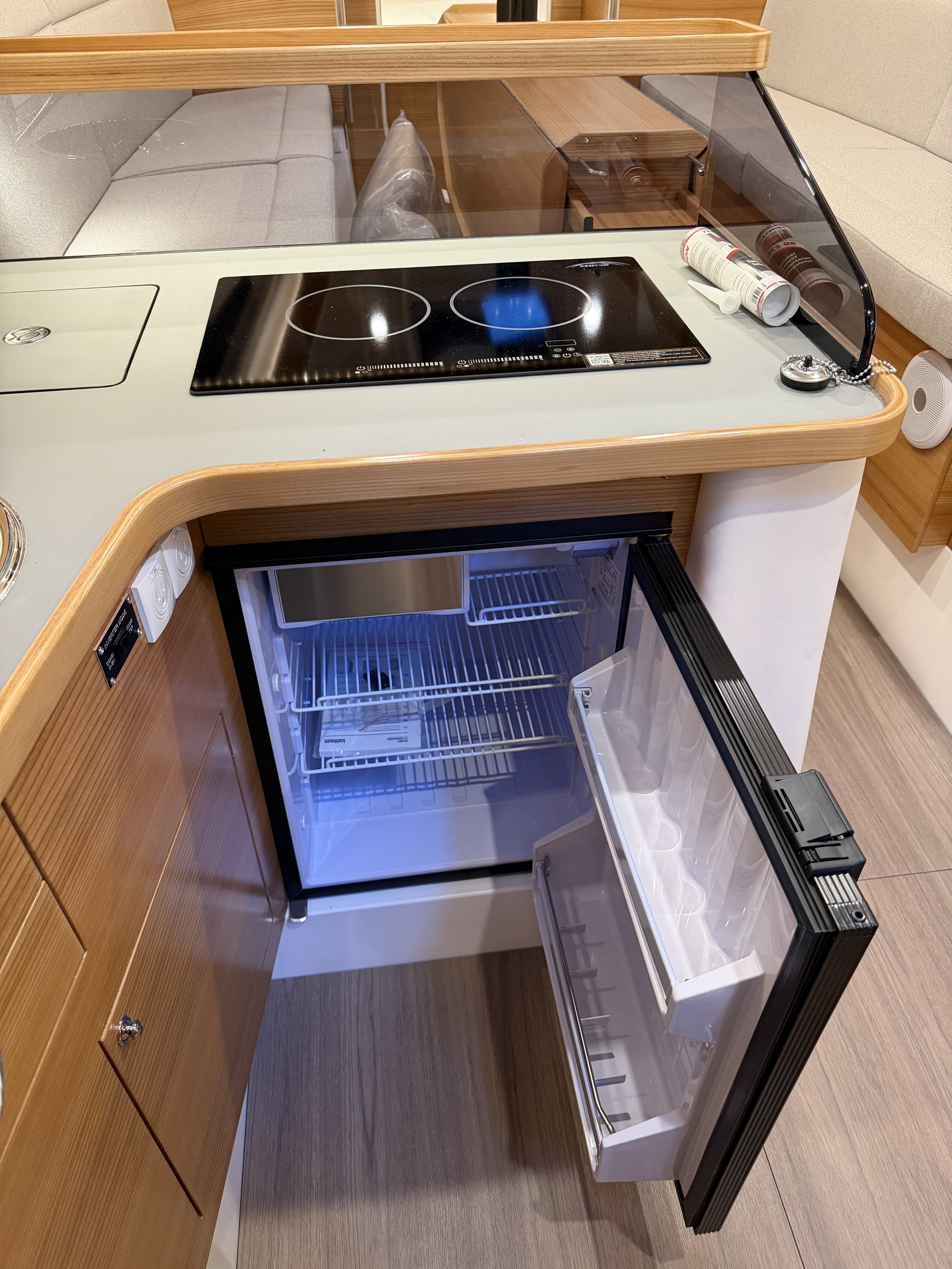
Refrigerator
We had a lot of refrigeration on Sage, which was very useful in the Caribbean where you provision for months and cook a lot on board. Now that we’re in Europe where we can eat ashore more often and we are not living aboard, this small refrigerator will be sufficient, except the freezer.
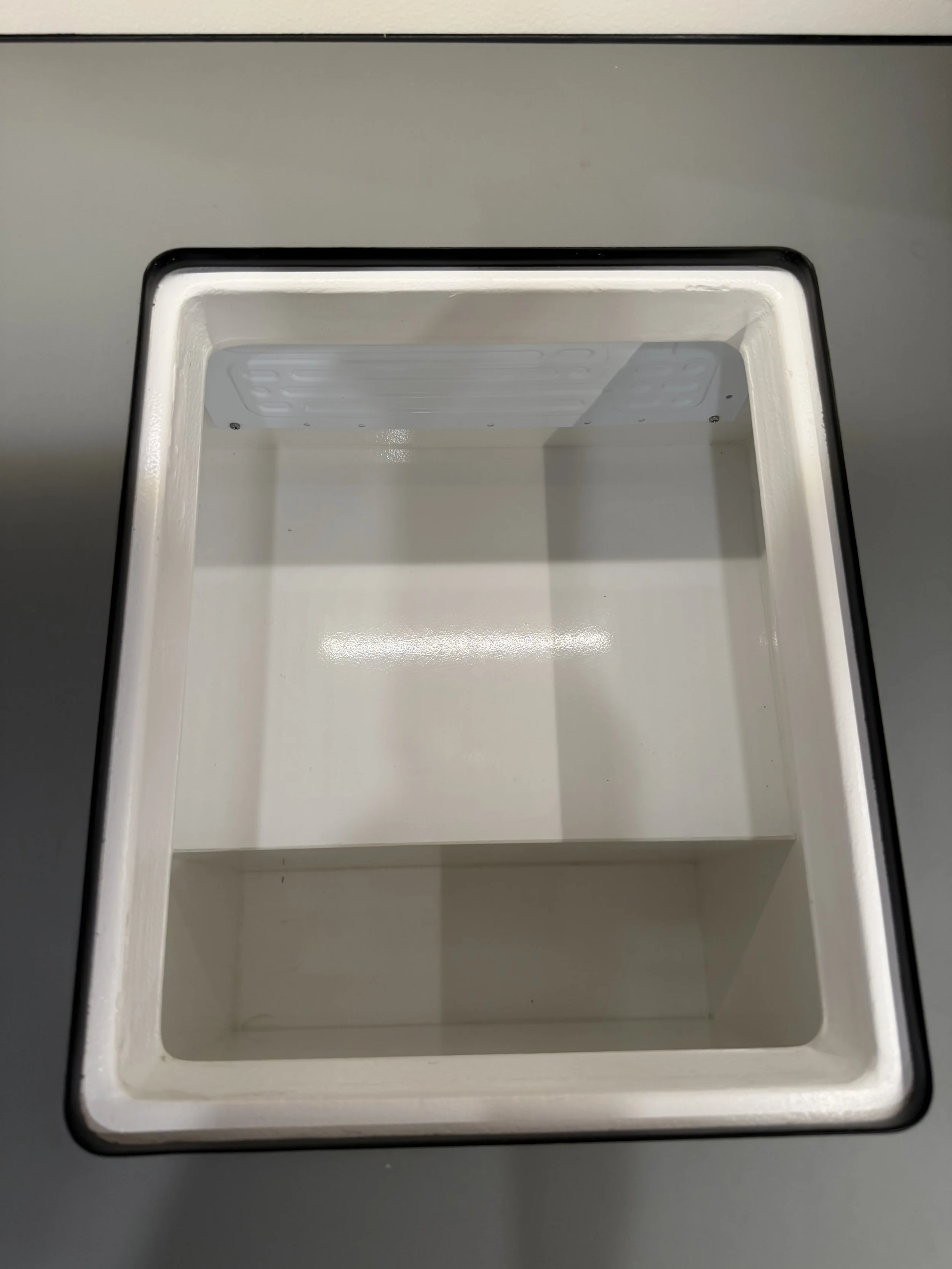
Added freezer
I added a custom top load freezer to the galley in Orizuru, so we can make and freeze food at home and store it.
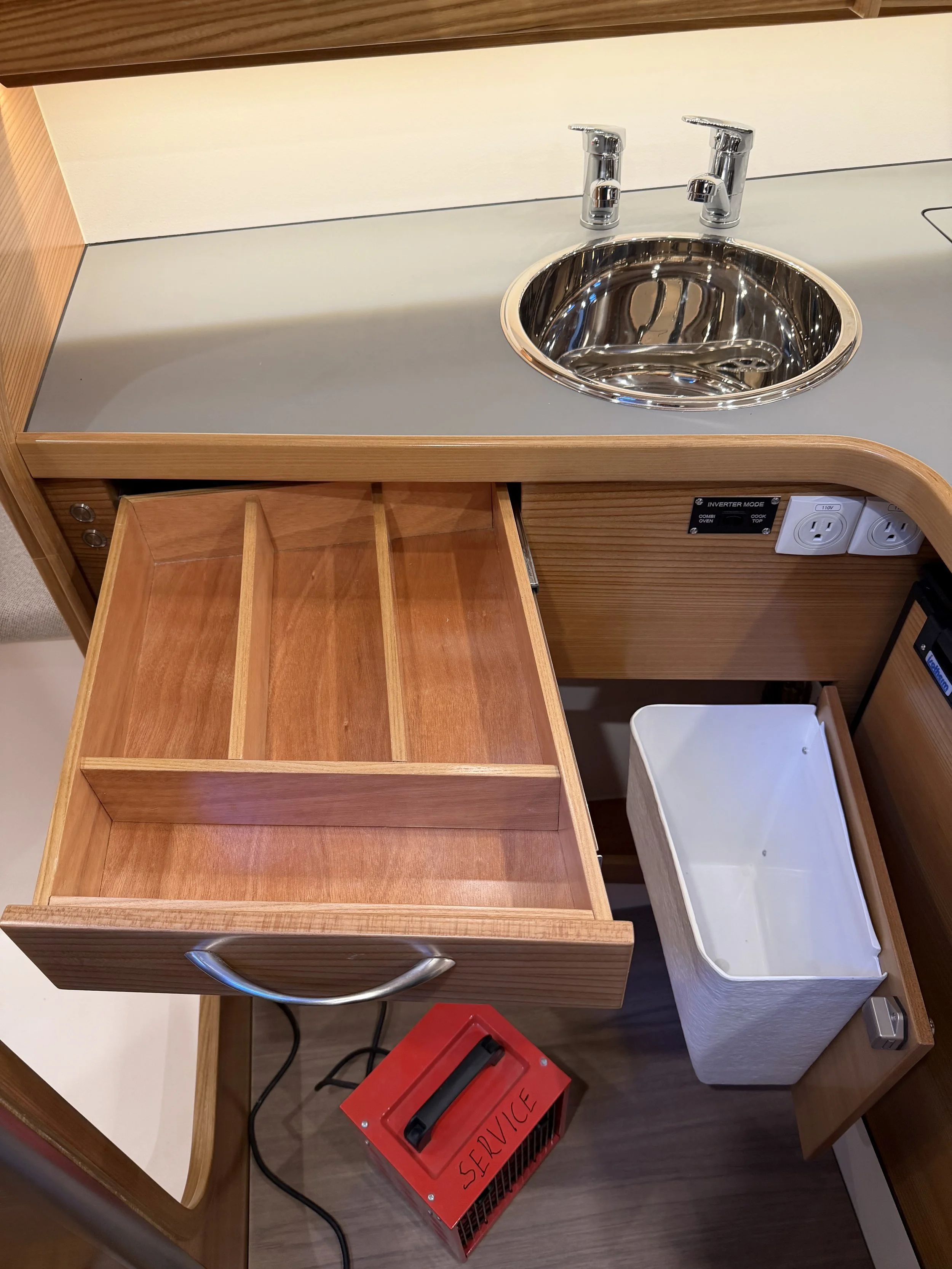
Galley drawers.
There are two galley drawers, the top one is divided for cutlery and the bottom one is open. Here also is the wastebasket in the cabinet under the sink.
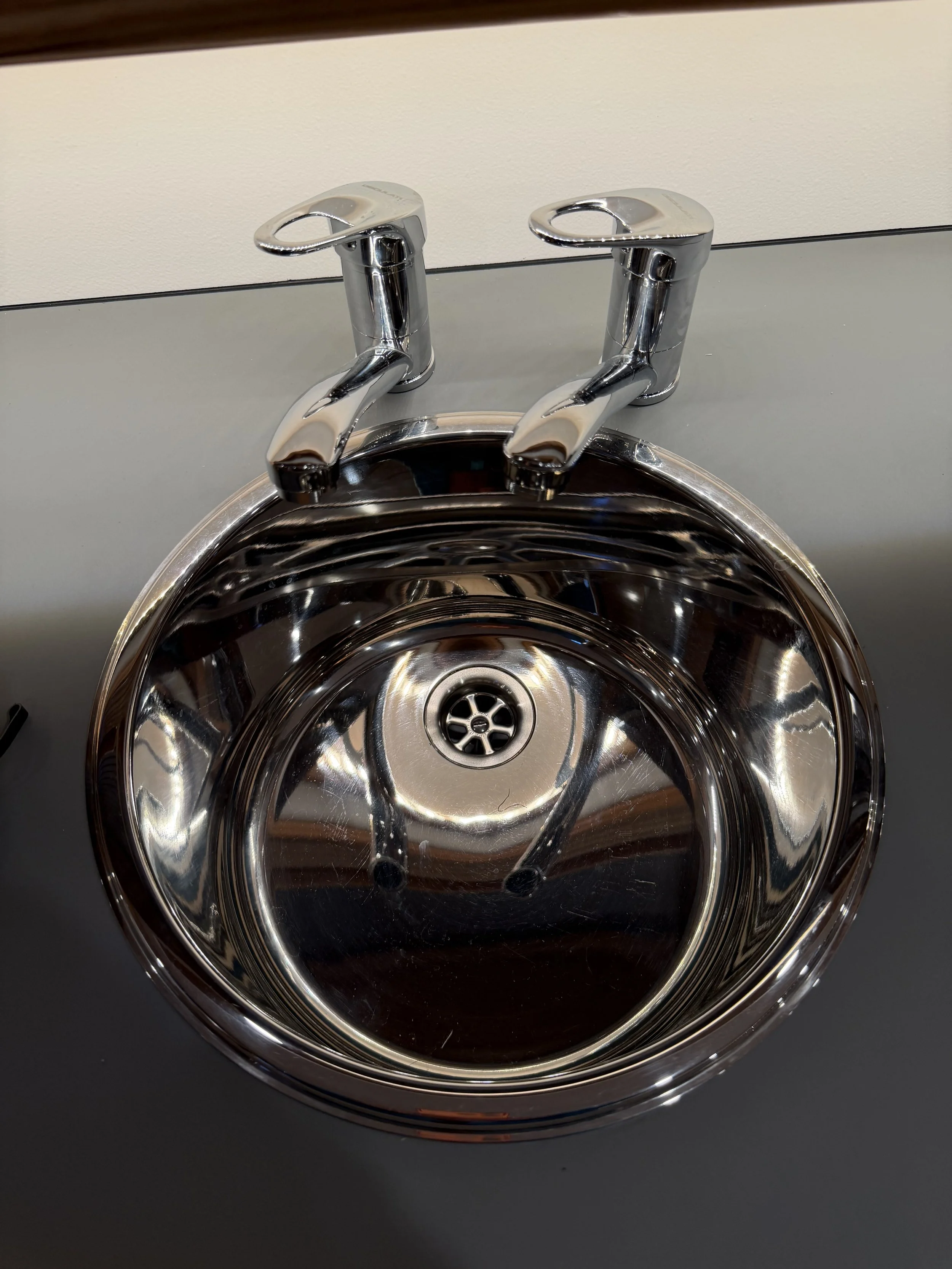
A compromise.
Adding the freezer meant that we had to use a smaller sink, so we will see how that goes. The left tap is a pressurized salt water tap for washing dishes without using up the fresh water supply. The right one is fresh water for a final rinse, and for drinking.
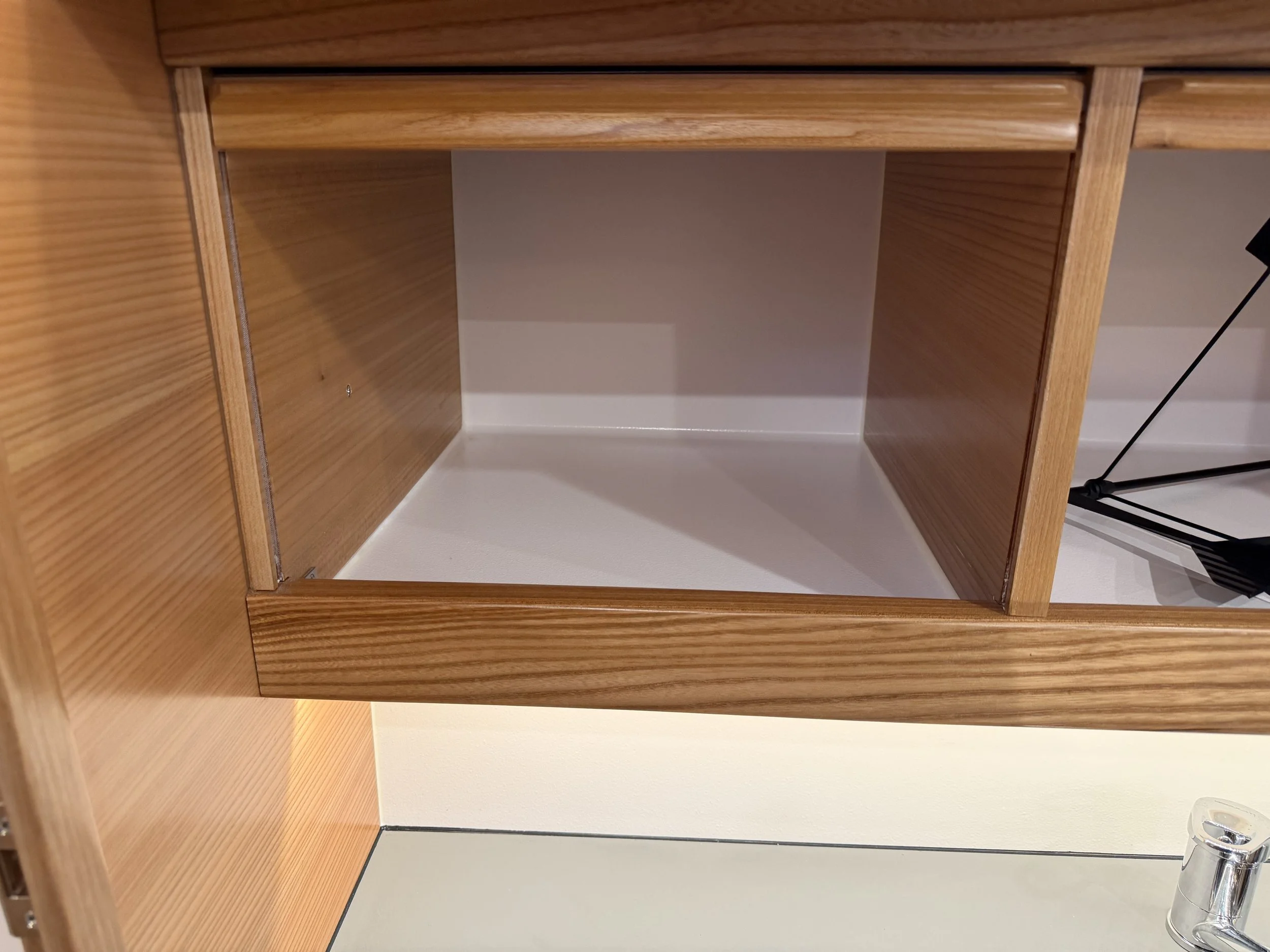
Galley Storage
Above the counter there are two cabinets. for pots and pans and dishes.
Aft cabin
Under the cockpit is the Aft Cabin. This is much more spacious than the V-Berth forward, and will be where we sleep on board. The aft end of the cabin is defined by the other carbon fiber structural bulkhead between the aft beams. Behind that is the Engine room.
Head
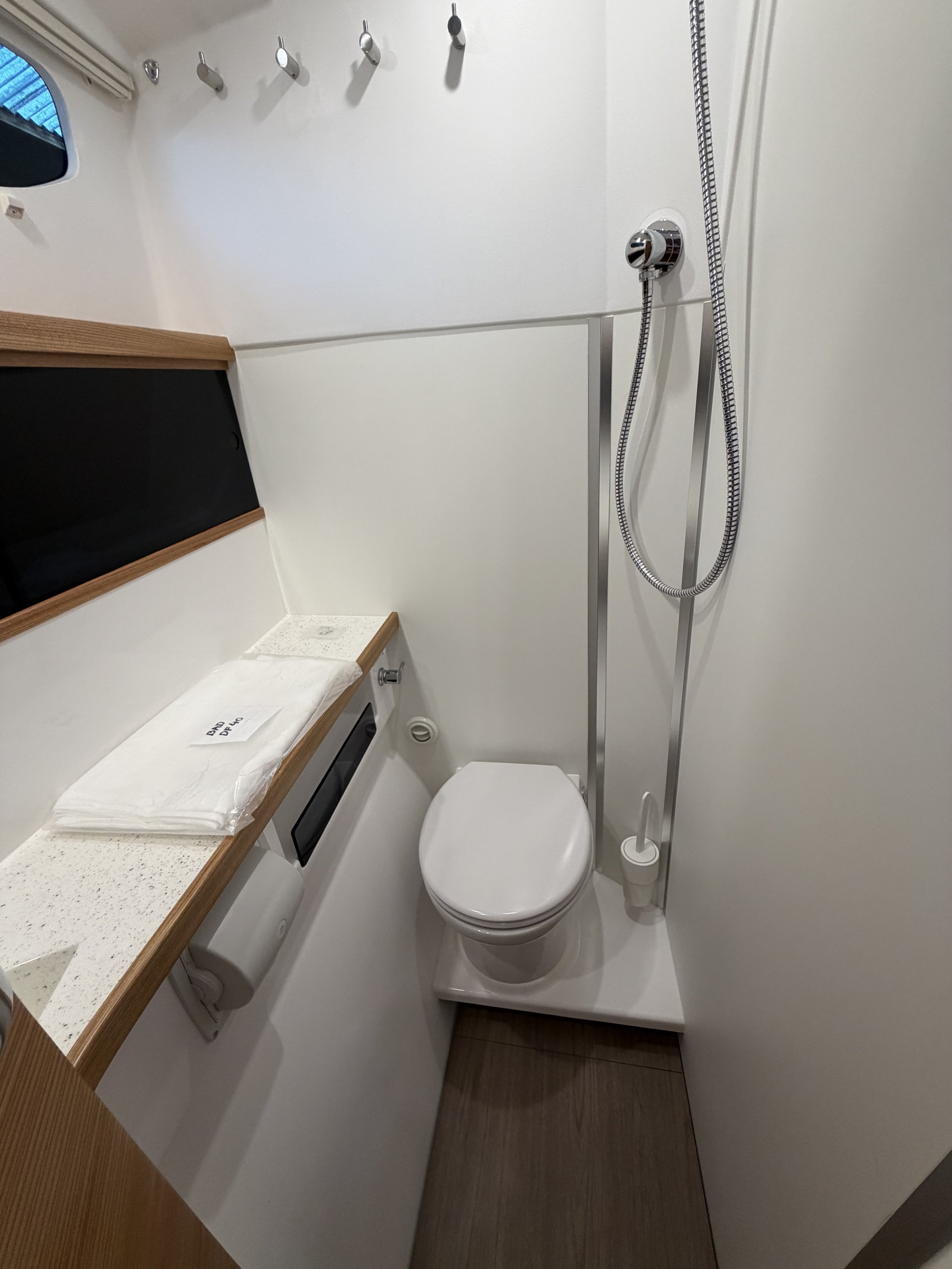
This is another compromise for the smaller boat, the head and shower are combined into one space. After the massive shower on Sage this will be an adjustment, but actually we usually used the outside shower on the sugar scoop on Sage. Again, we aren’t planning to live aboard full time, and there is a shower on deck here too that will get a lot of use.
Watermaker
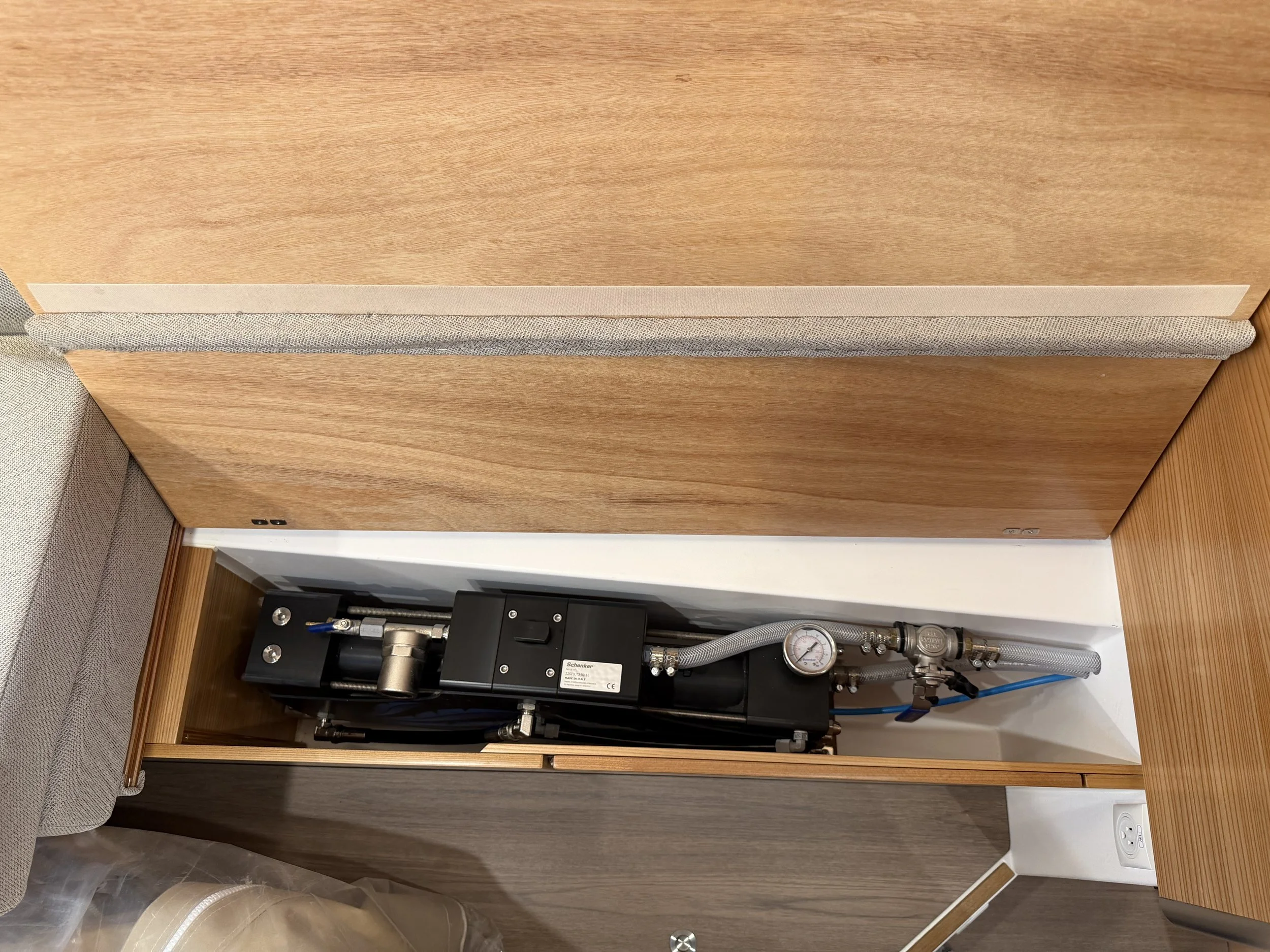
We have a Schenker Zen 30 water maker under the port settee. I don’t know how much we’ll use this in the baltic, or even in the Med, since we’ll be going into ports with reliable clean water often. Still I felt like it was worthwhile to install it in case we need it.
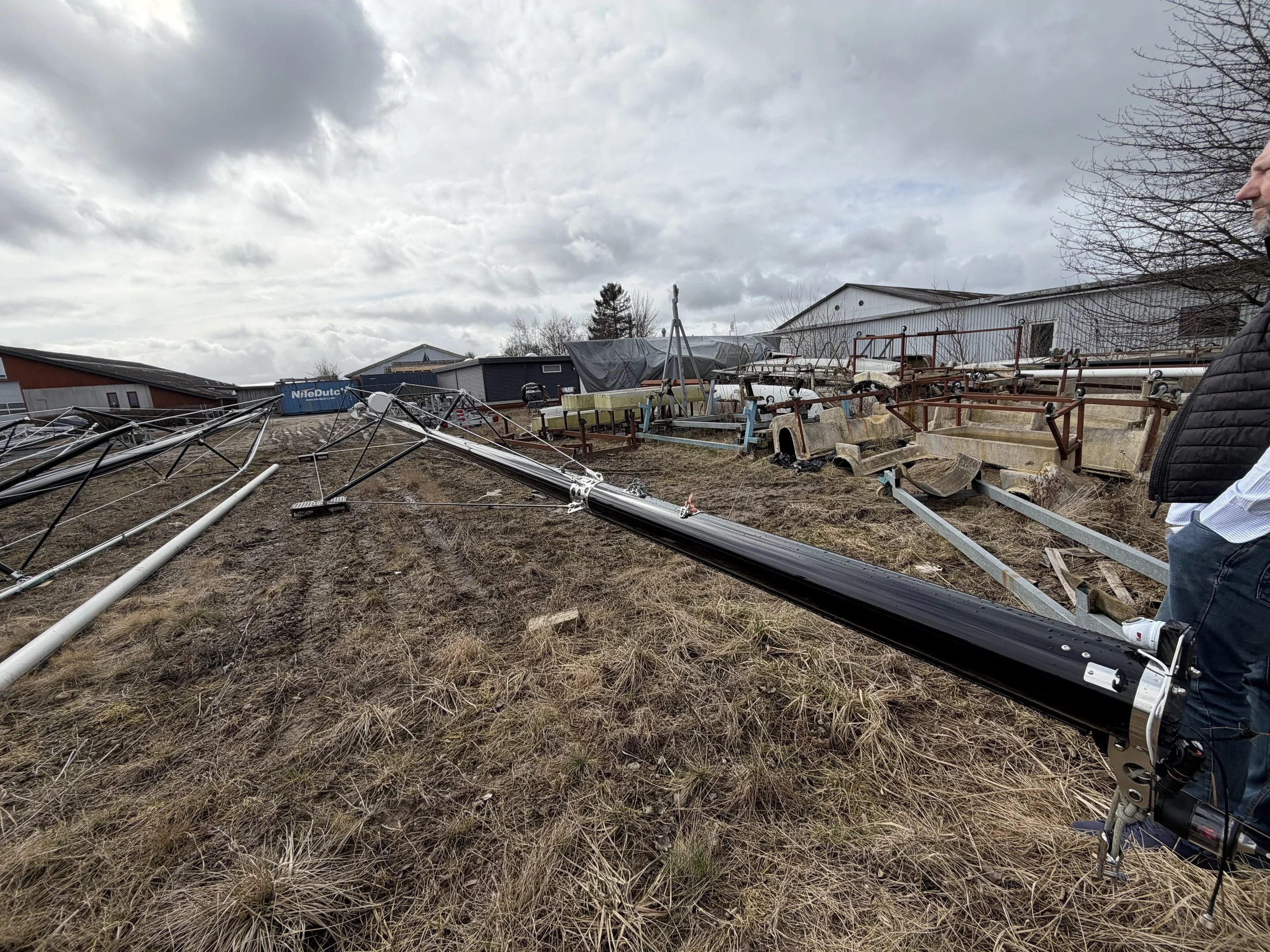
The mast
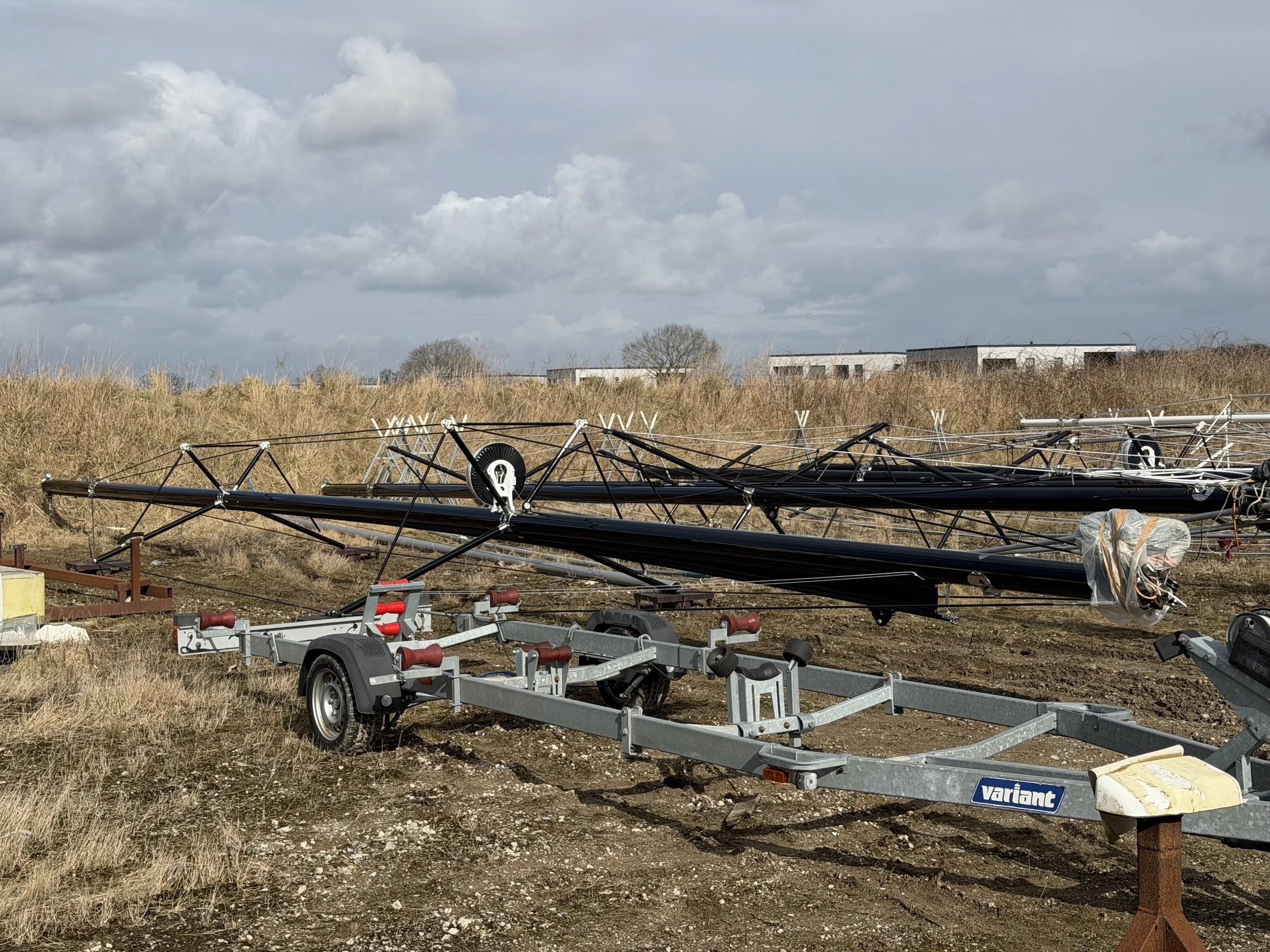
Dragonfly offers three mast heights on the DF40. I opted for the tallest version of the mast offered giving me an air draft of 22.3 meters, not including the windex and the VHF antenna. That’s a full 1.5 meters above the next size down, and a full 3.7 meters above the “touring” version. No ICW for me.
Bottom fitting
This fitting on the bottom of the mast mates up with the mast base on the cabin top. The halyards all run through here, then under the deck back to the cockpit workstations by the wheels.
Pride of workmanship
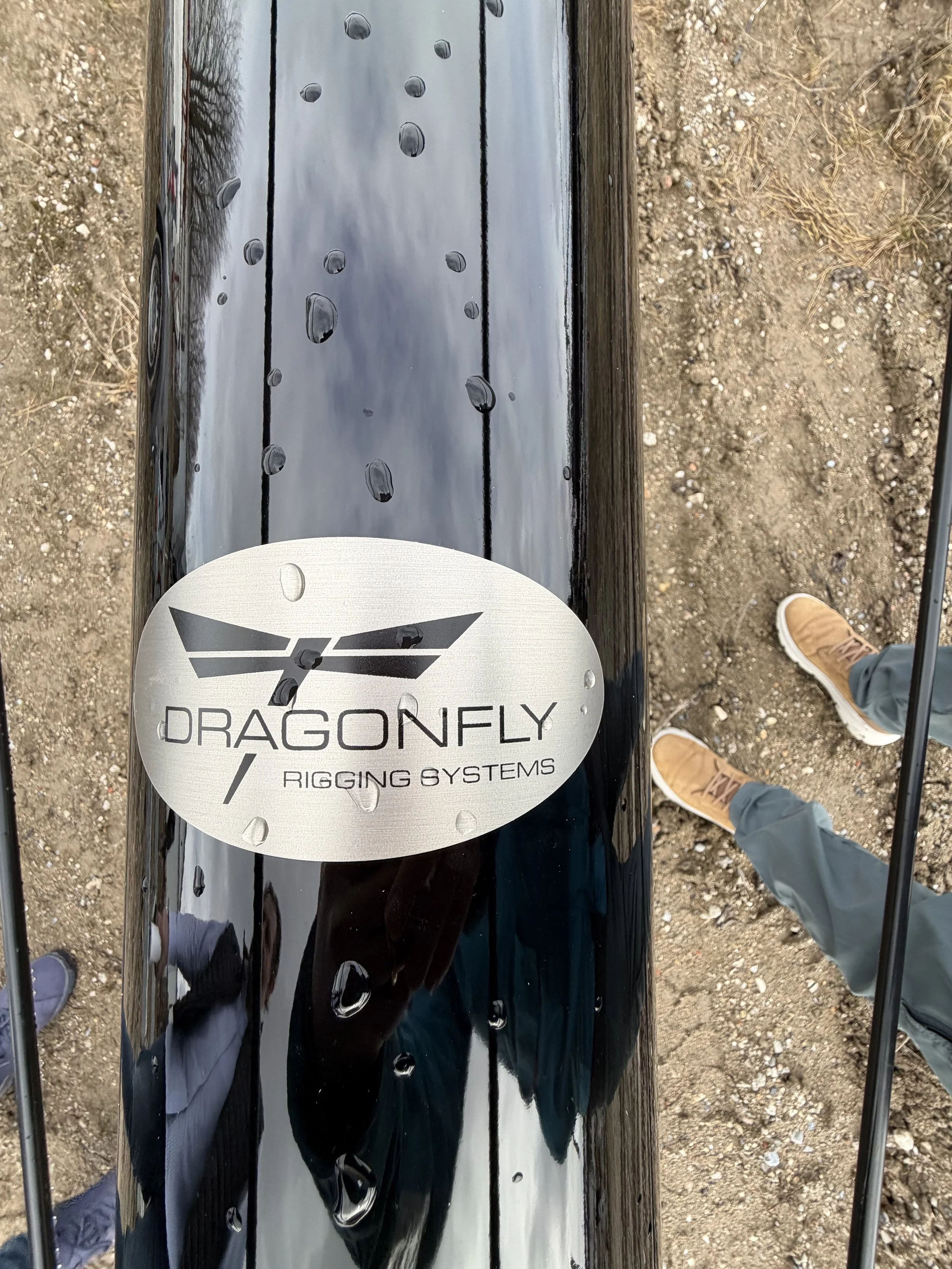
The carbon fiber mast is a round section for stiffness. They put their logo on the front.
Top Spreaders
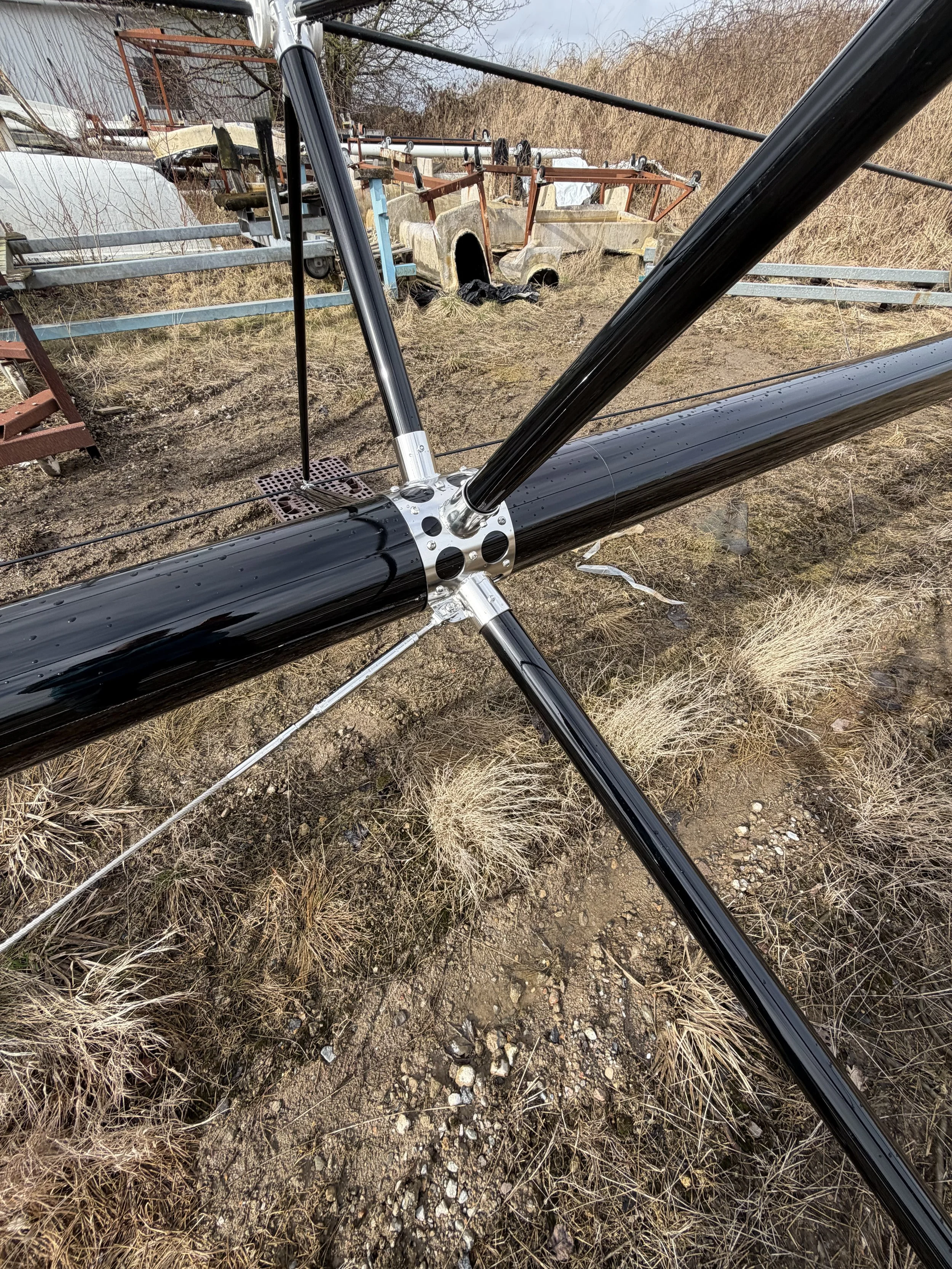
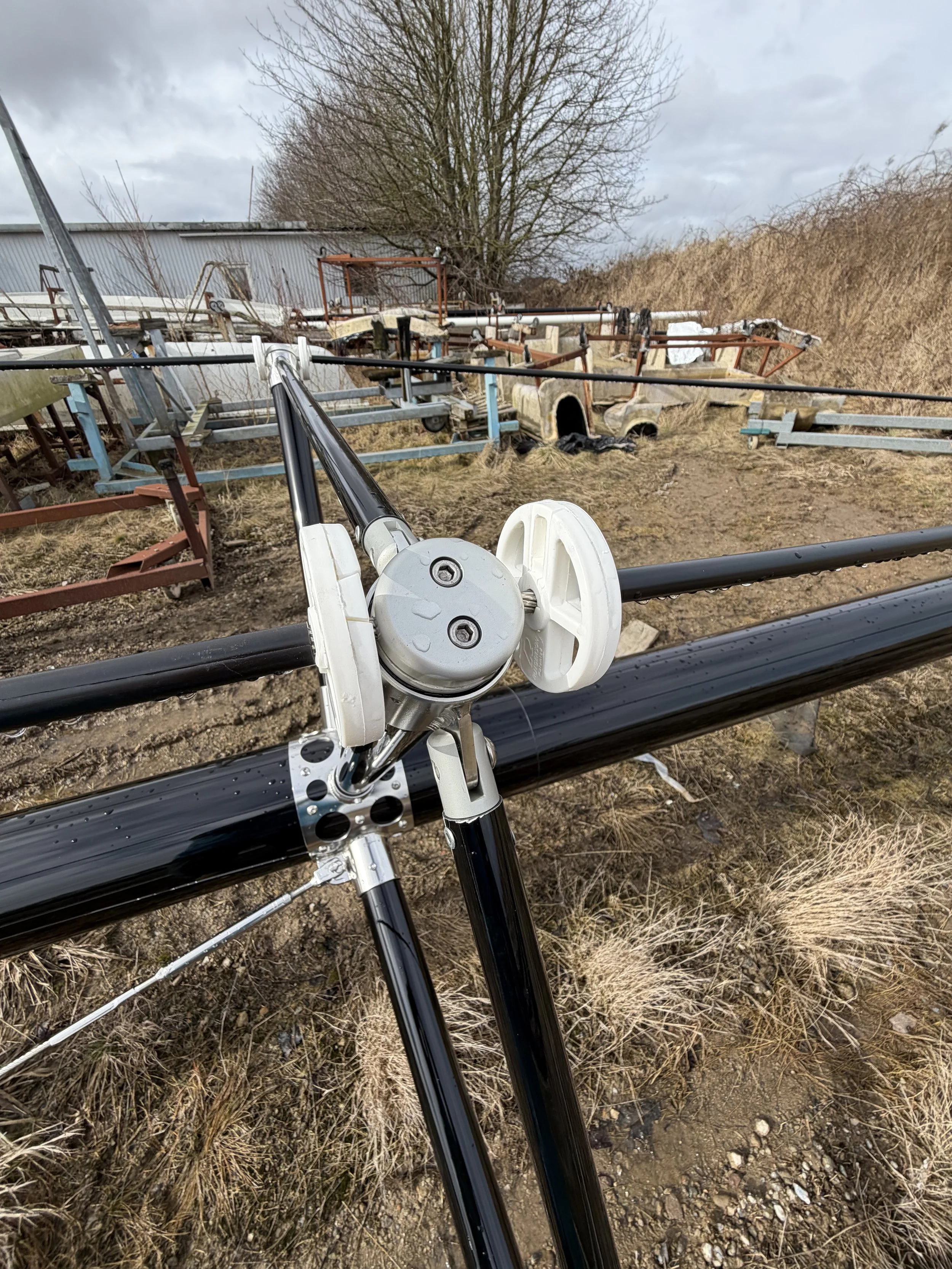
Dragonfly uses a a two level spreader arrangement, with four spreaders at each level. This allows tuning of the mast before stepping, and the adjustable cap shrouds that are necessary for the folding mechanism to work. These are the top spreaders.
Top Spreaders
Another view of the top spreaders showing the rollers on the front pair to protect the Genoa when tacking.
Lower spreaders
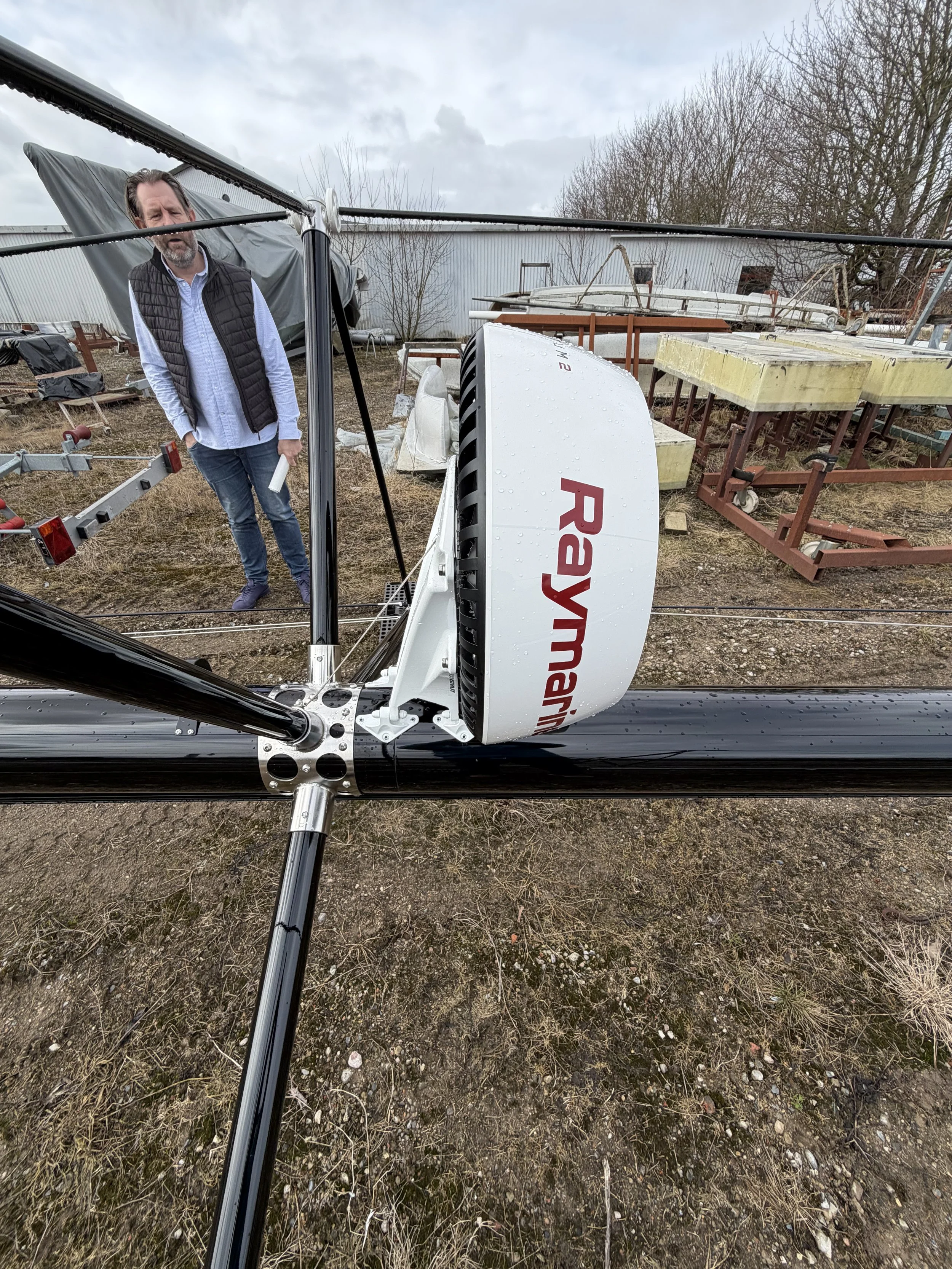
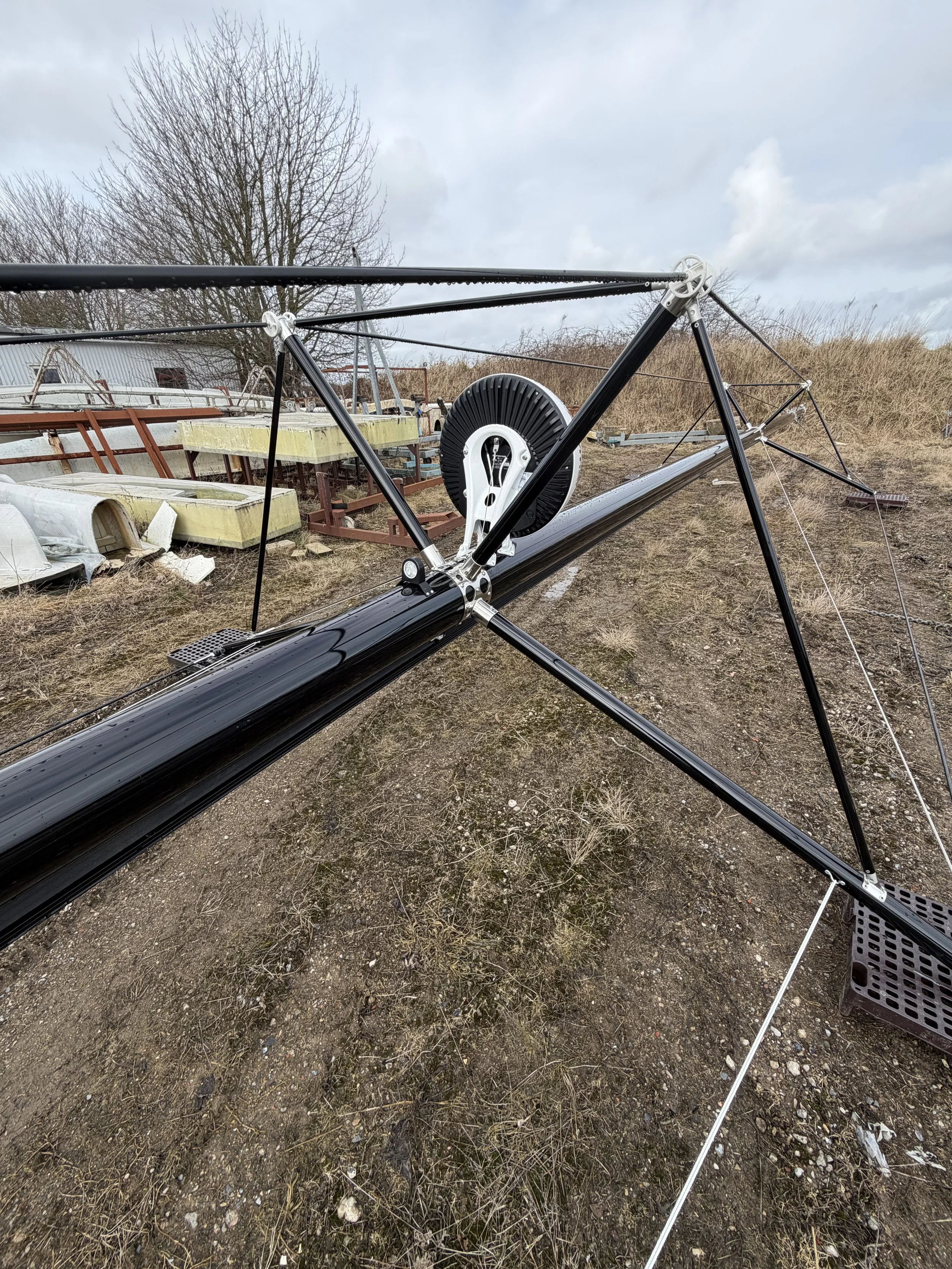
And these are the lowers, showing the Raymarine Quantum Doppler 2 radar.
Radar is one of those things that you don’t need often, but when you do need it, it’s very nice.
Lower Spreaders
The lower spreaders, showing the four spreader design, and the flag halyards.
Genoa Halyard
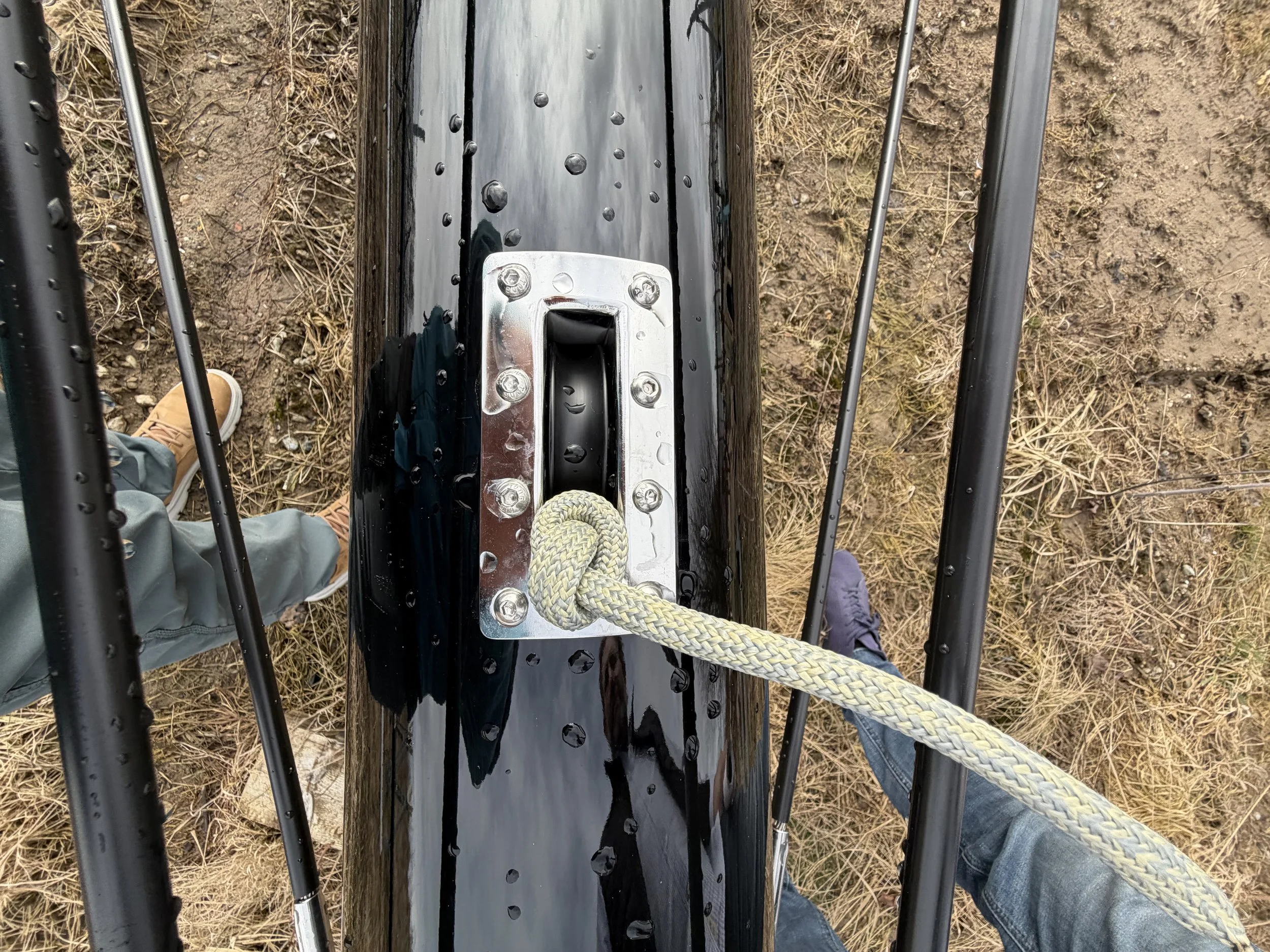
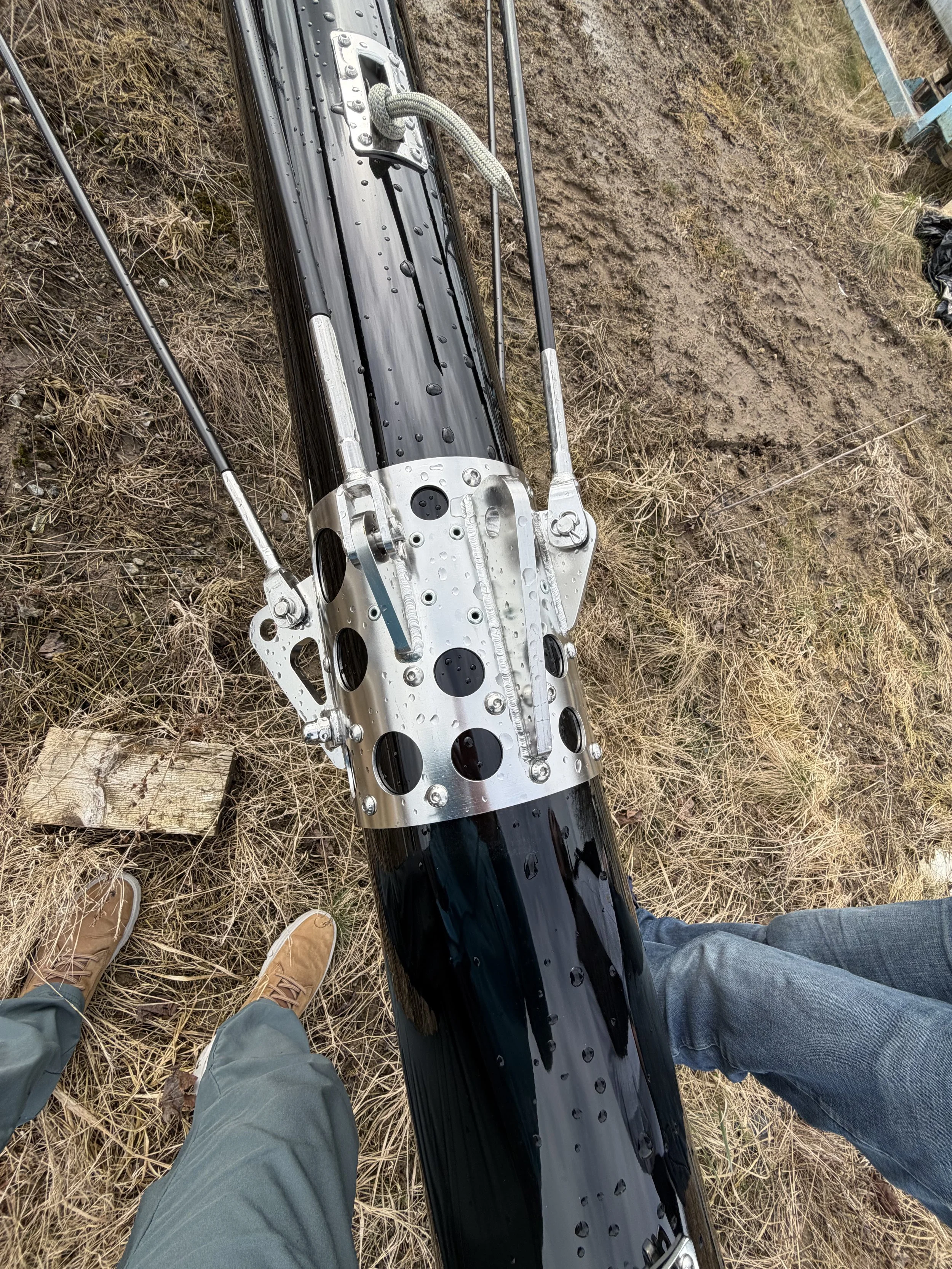
The Genoa halyard exits the mast below the forestay attachment. The top of the mast is at the bottom of the picture.
Fine Stainless
This is the attachment point for the forestay, and the Cap shrouds, which make up the triangle rig that holds the mast up, and also the top of the diamond stays that allow tuning of the mast. I’m very impressed with the quality of the stainless wok on the mast fittings.
Code halyard
The halyard for the Code 0 sail is a 2:1, allowing tension on the luff for better sail shape.
Good components
The 2:1 block on the halyard is an Antal, which is a very well built piece of boat jewelry.
Spinnaker Halyard
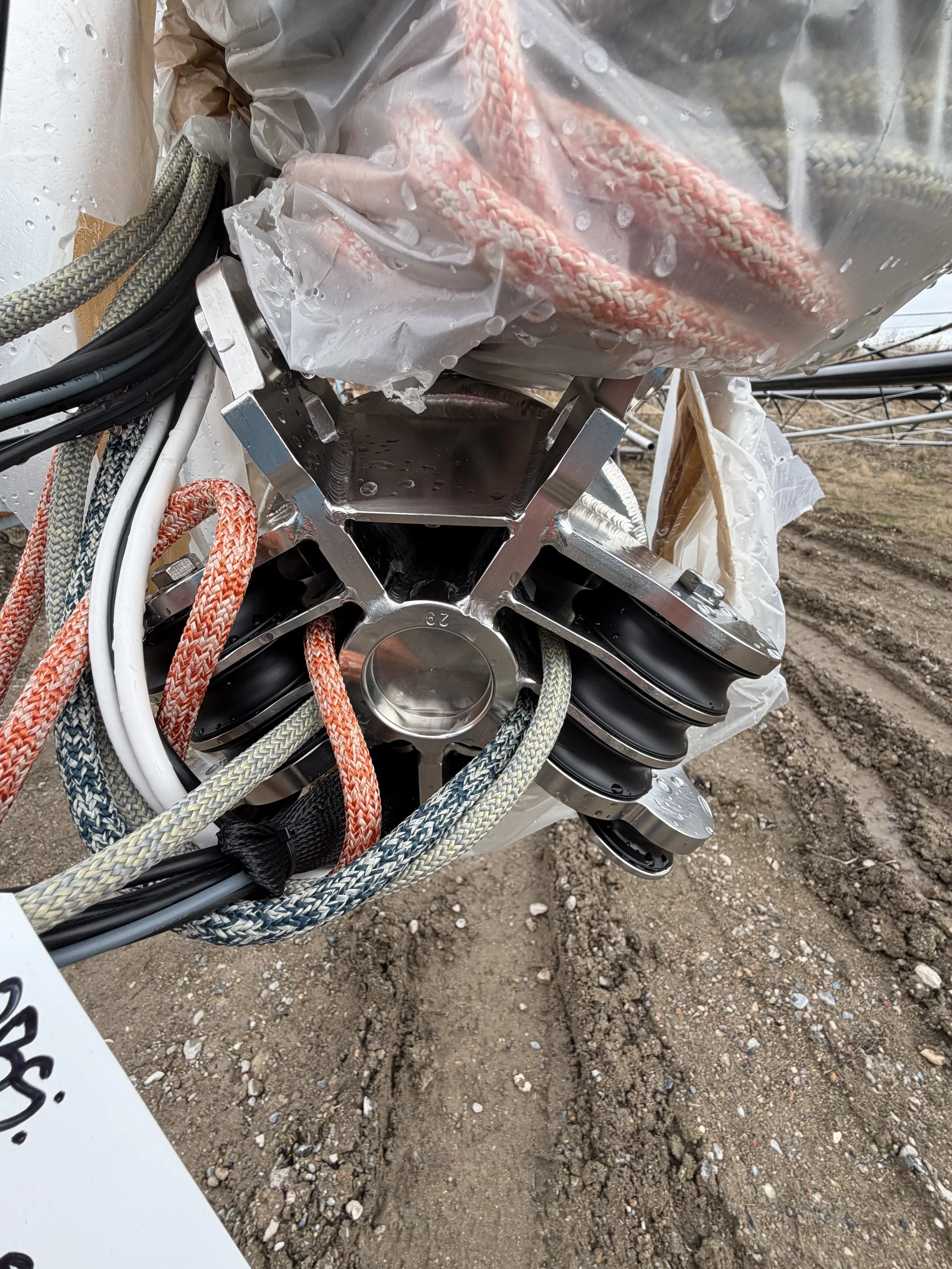
The spinnaker halyard is a 1:1, because speed is more important than tension when hoisting or dousing a large spinnaker. It exits the mast almost at the top. Top of the mast is to the right.
The tippy top...
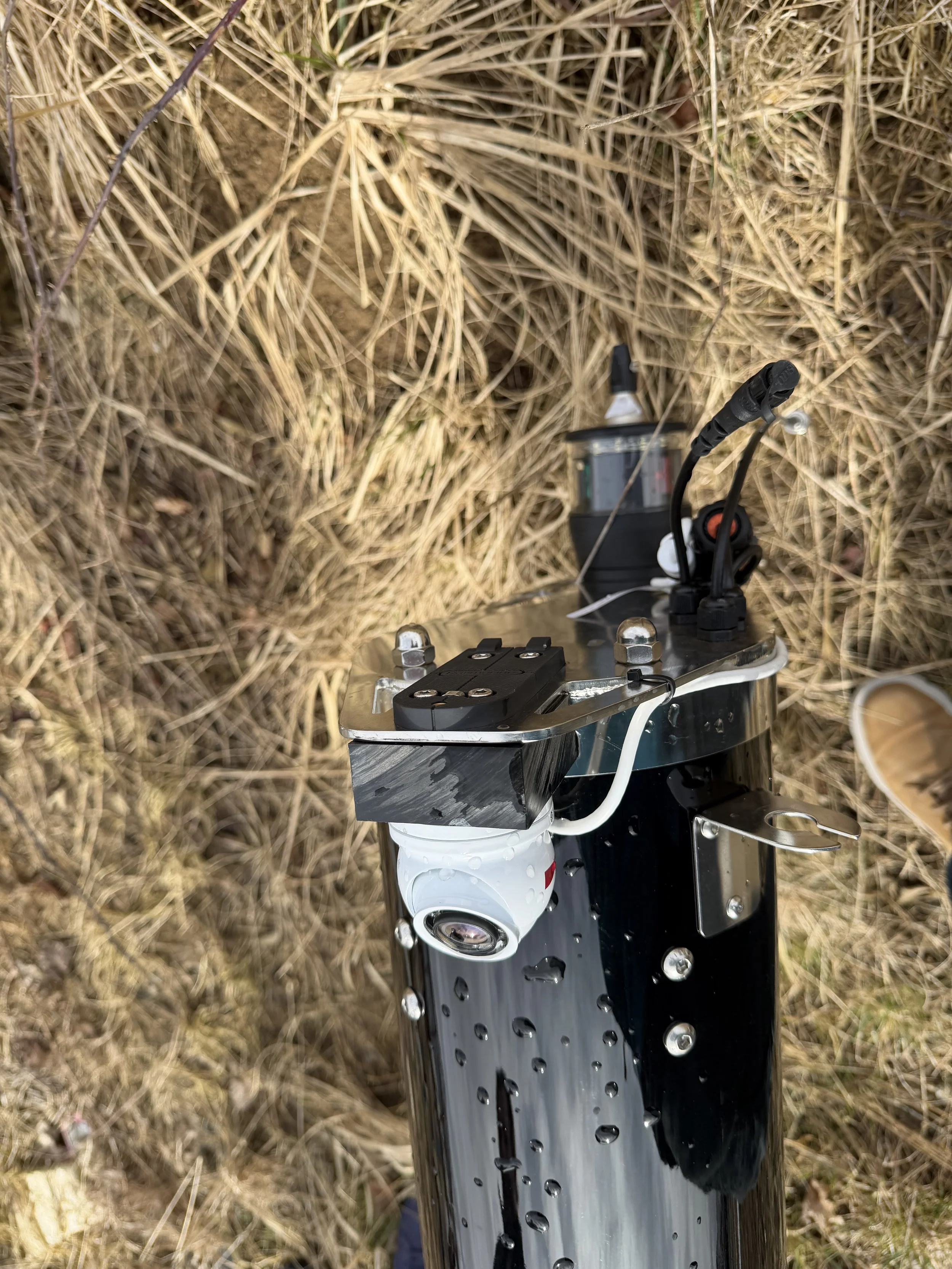
This is the very top of the mast. There is a Raymarine camera looking down which allows you to see all three bows when docking, anchoring, or other maneuvering. There is a masthead light that includes a 360° white anchor light and a masthead tricolor to be used when sailing at night.
The wind sensor, a windex, and a VHF antenna will be added just before the mast is stepped.
View from the top
The carbon mast is long.