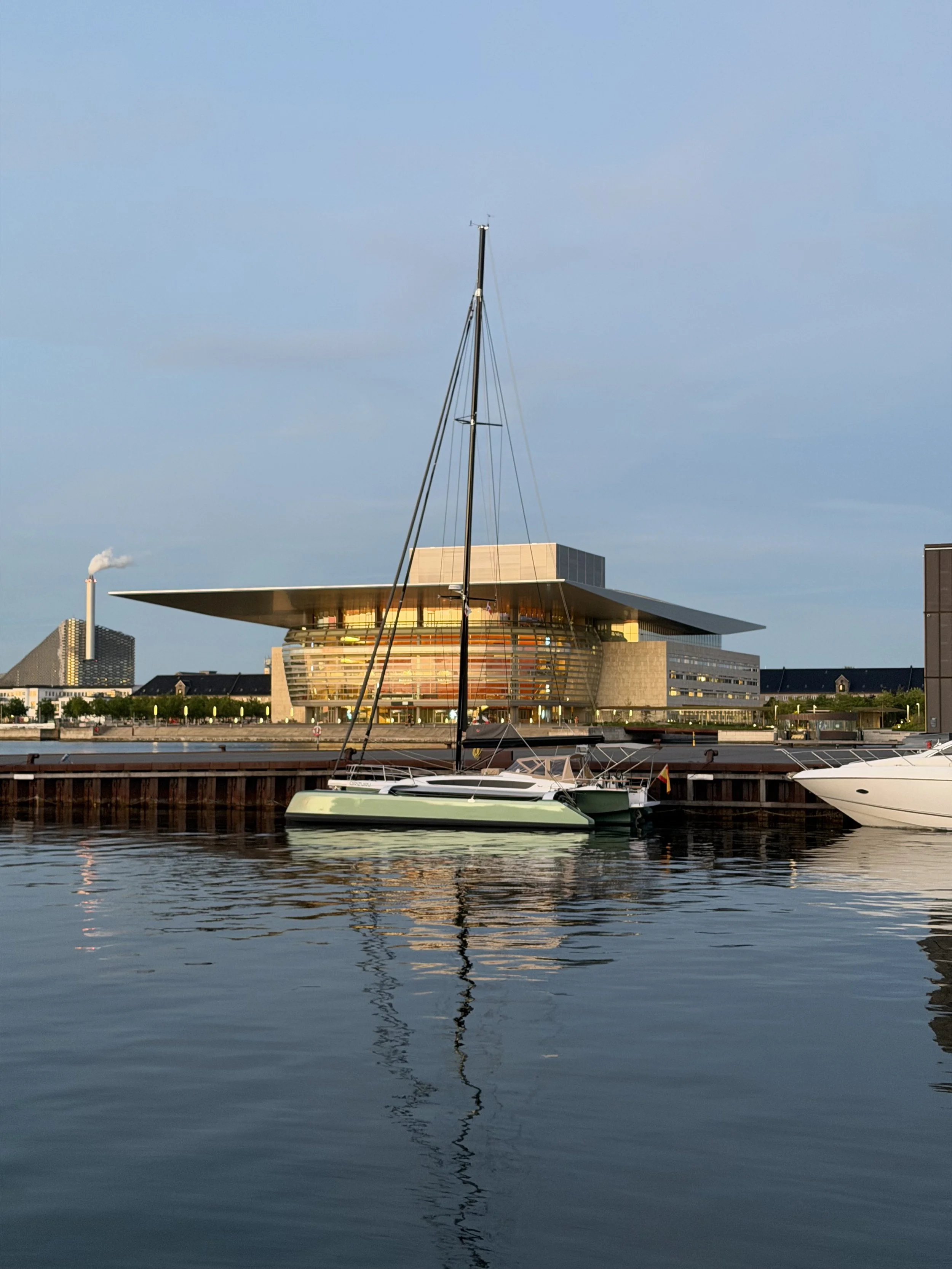
Denmark - Skaerbaek Shakedown and first cruising impressions
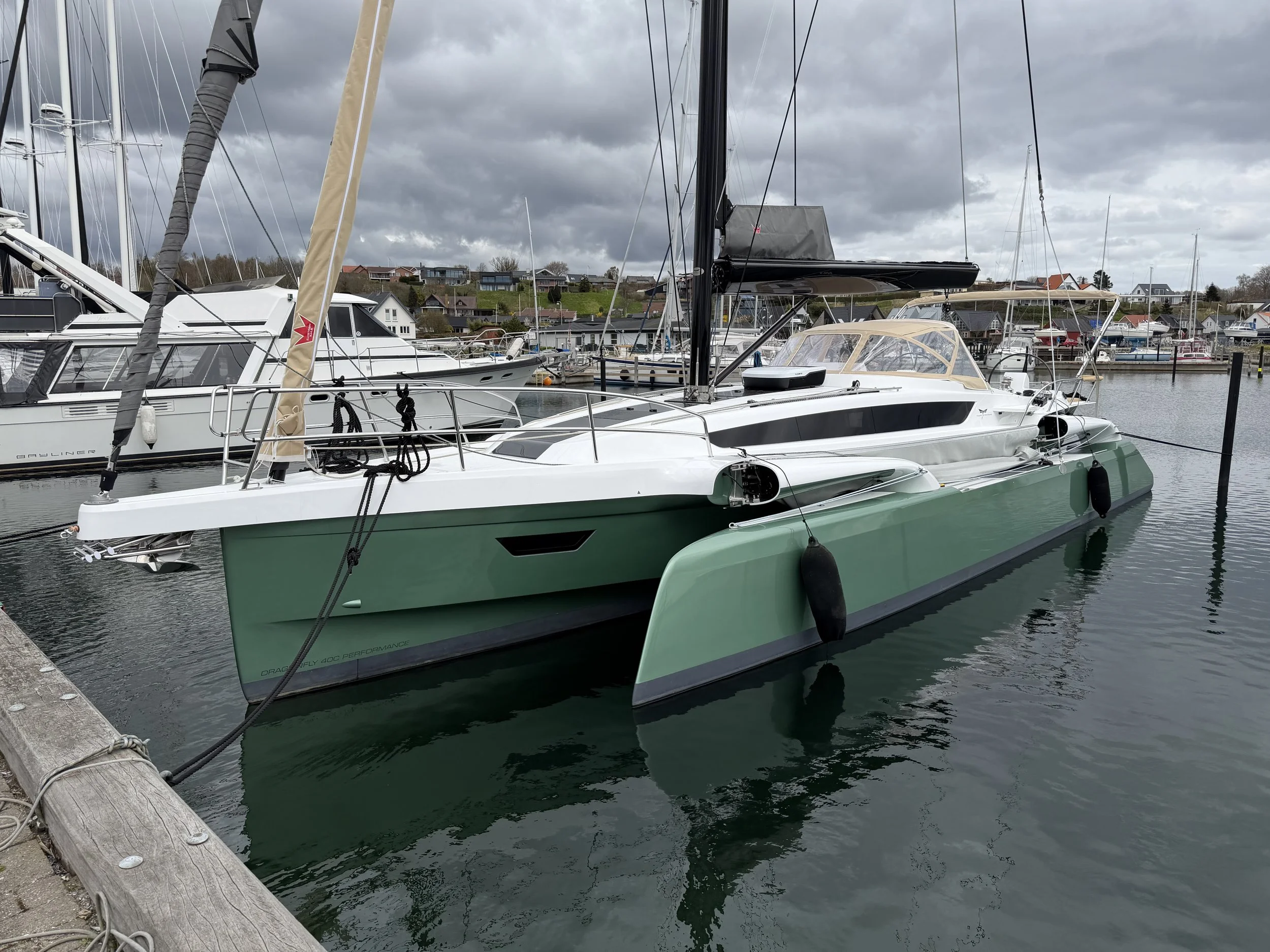
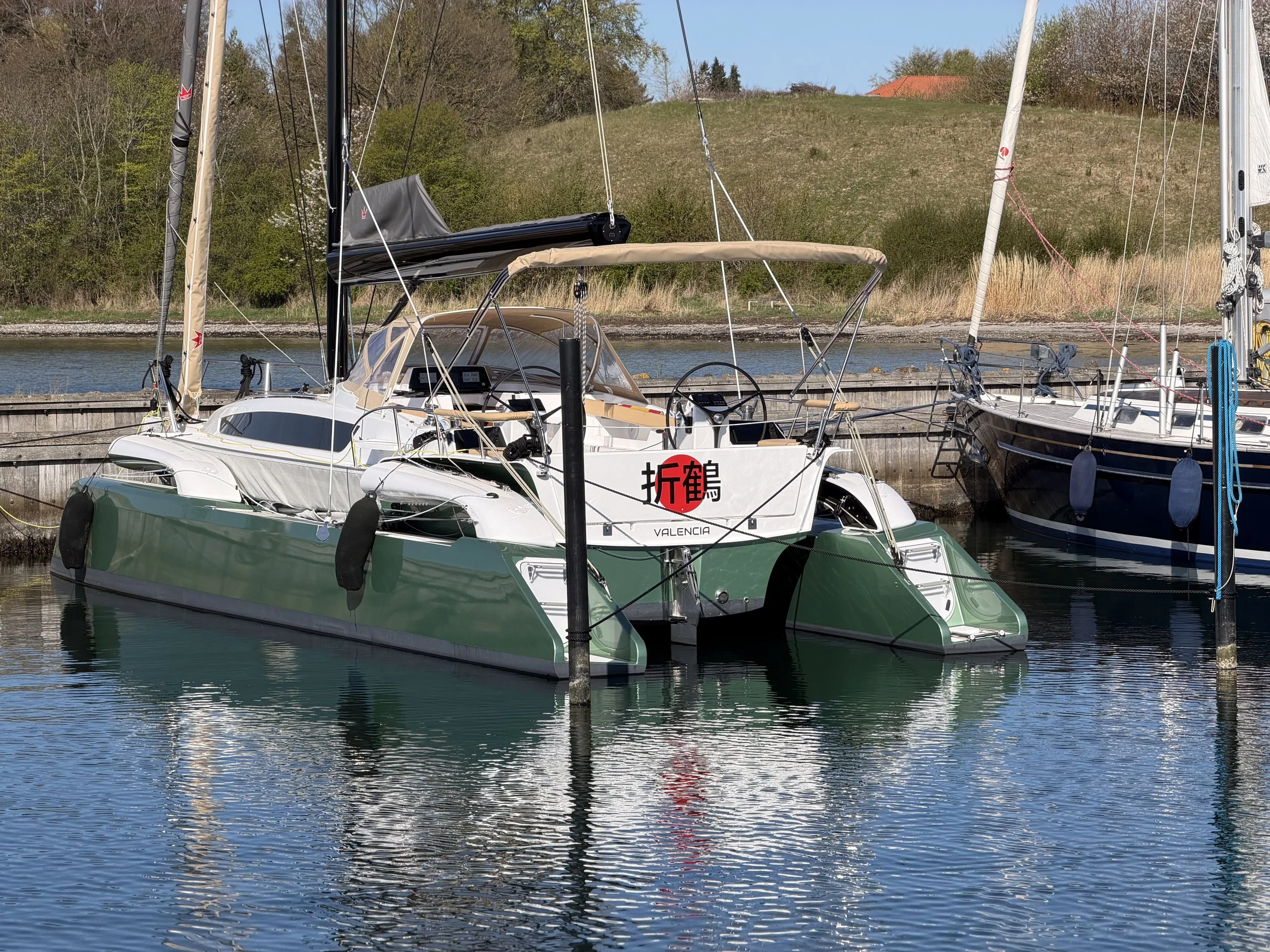
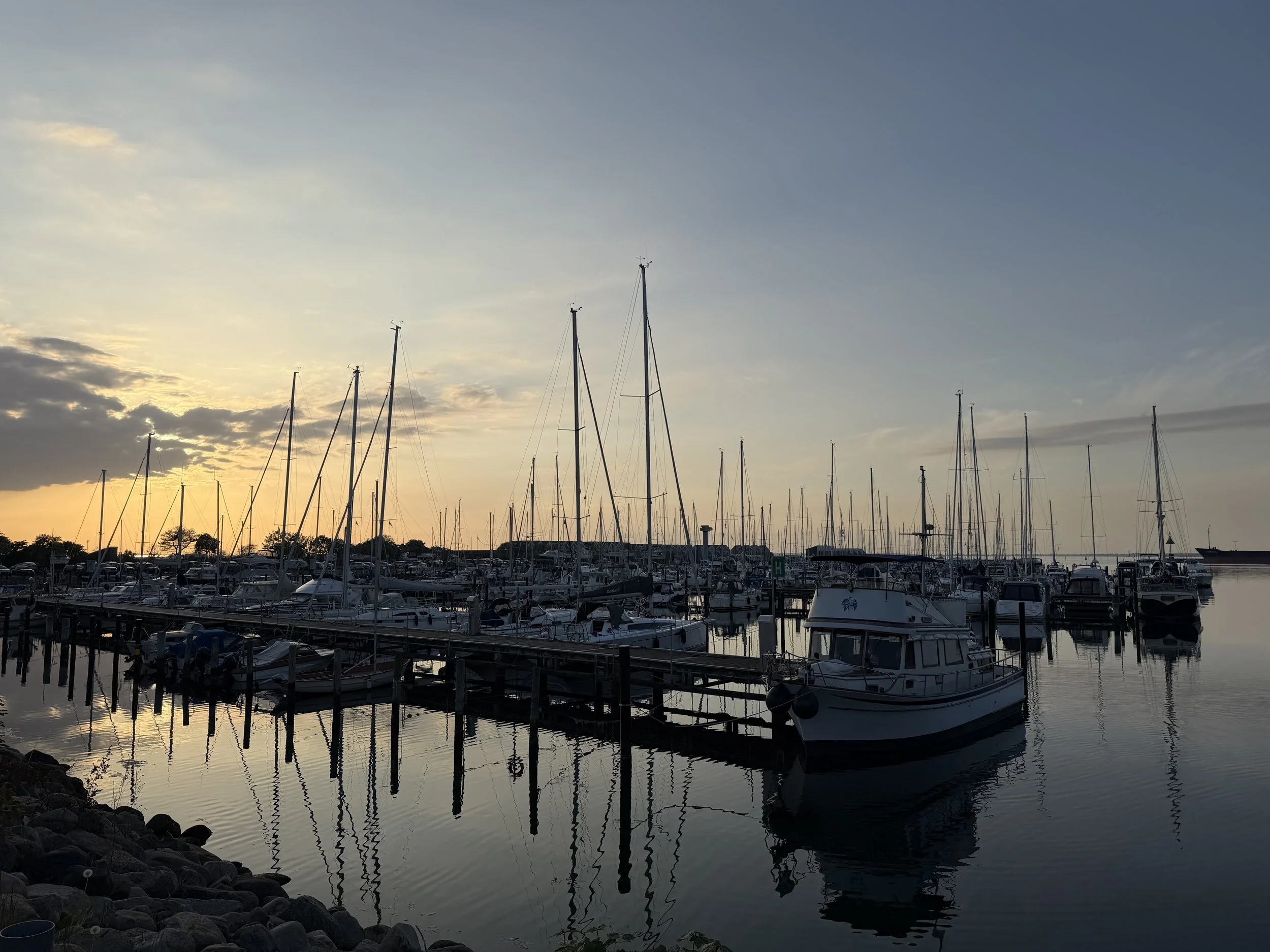
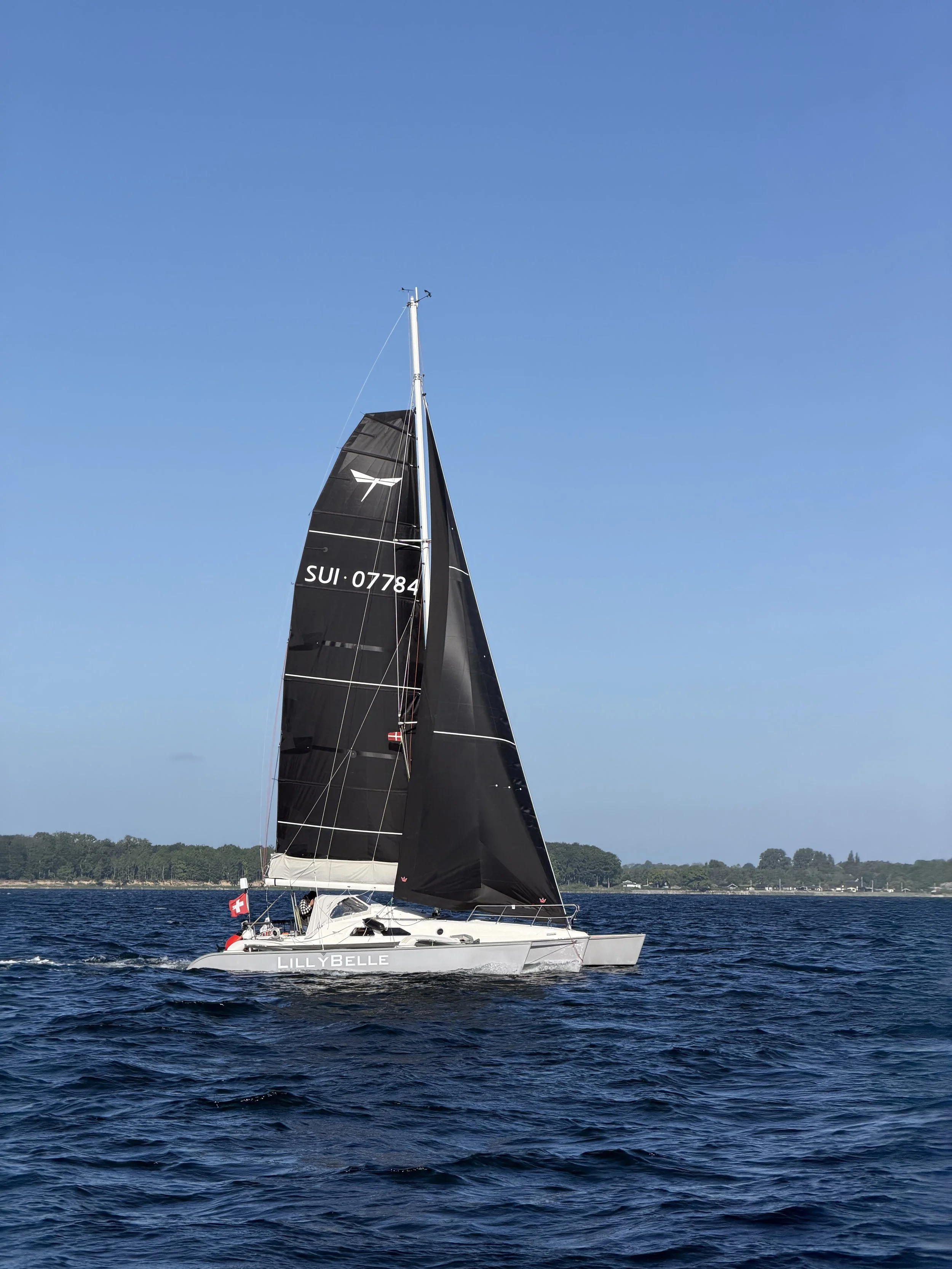
We arrived back in Denmark on Saturday April 18 to grey weather. We picked up a car at the airport and headed to Kolding, out in Jutland. On the way into town I couldn’t resist stopping by the Skaerbaek Lystbaadehavn to get a look at Orizuru in the water.
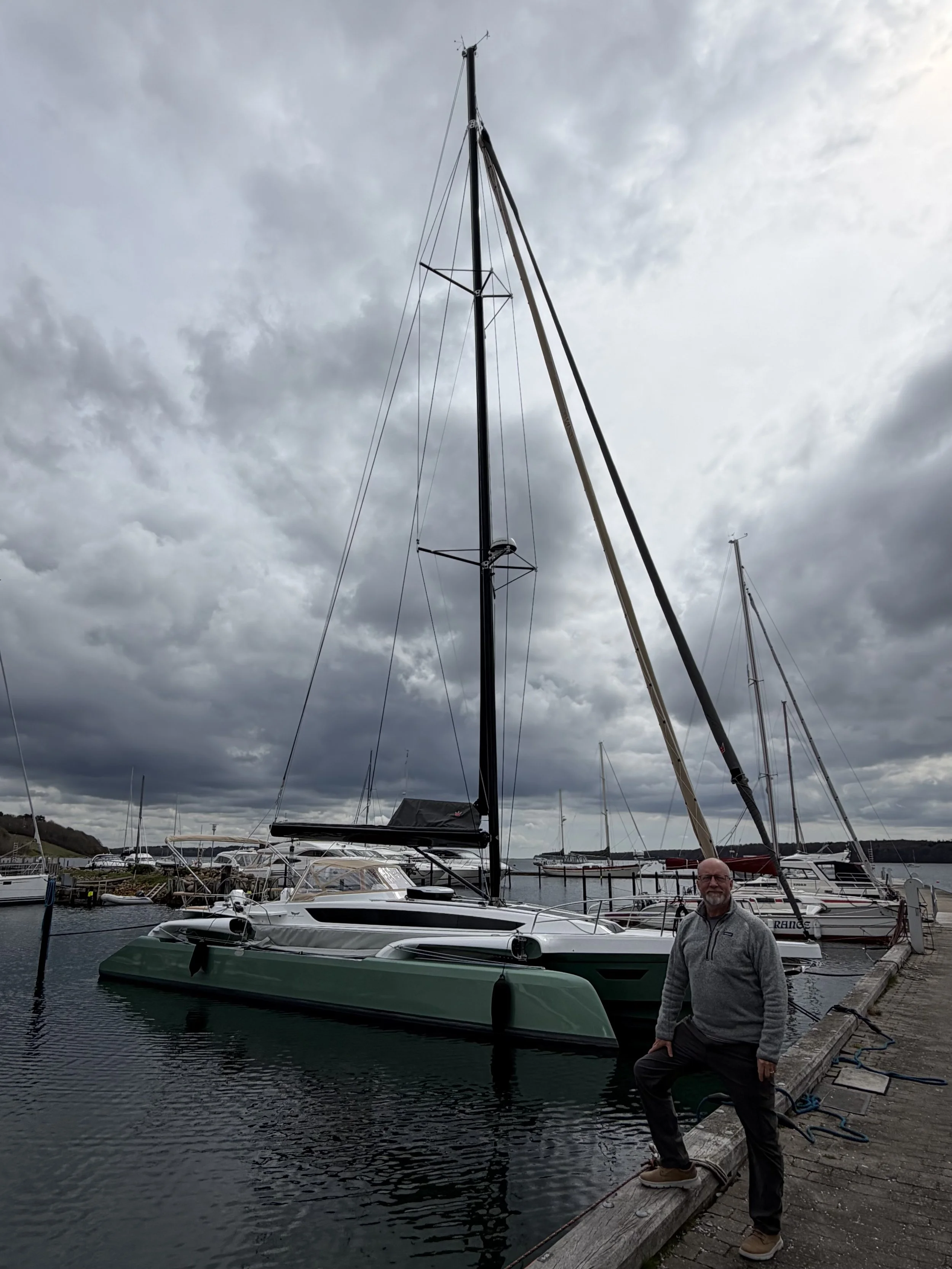
The first time seeing the boat in the water… so excited!
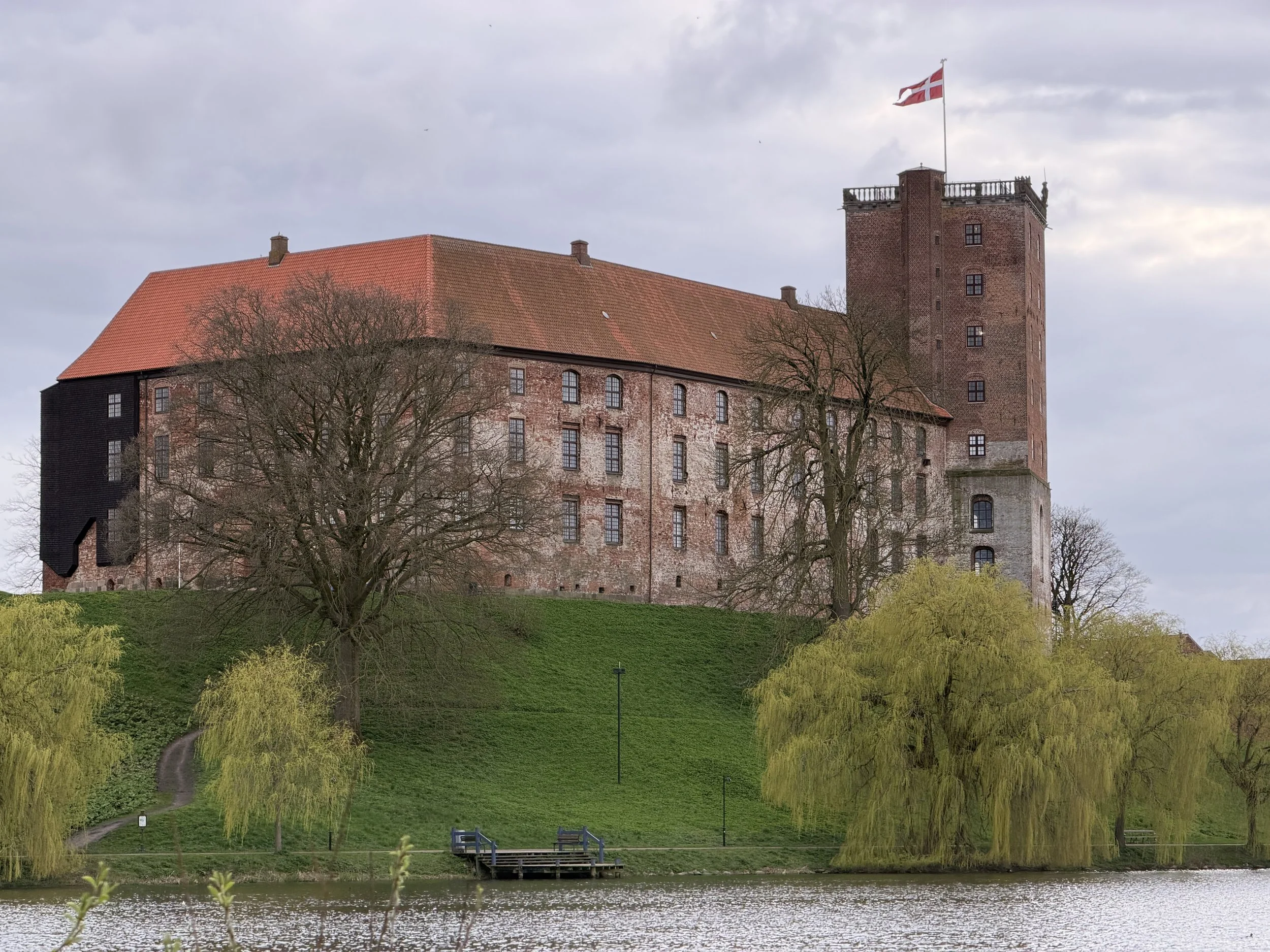
After that stop we went into Kolding to check into our usual place, the Kolding Hotel Apartments, which is on the shore of a lake at the foot of the hill on which sits the Koldinghus, a royal castle started in the 13th century. It’s a nice spot where every room has a kitchenette, so you can cook a little meal rather than eating out every night. There are a few very good restaurants in Kolding, but we had been there before and tried many. We were looking forward to meeting with the Dragonfly team on Monday to do the first sail.
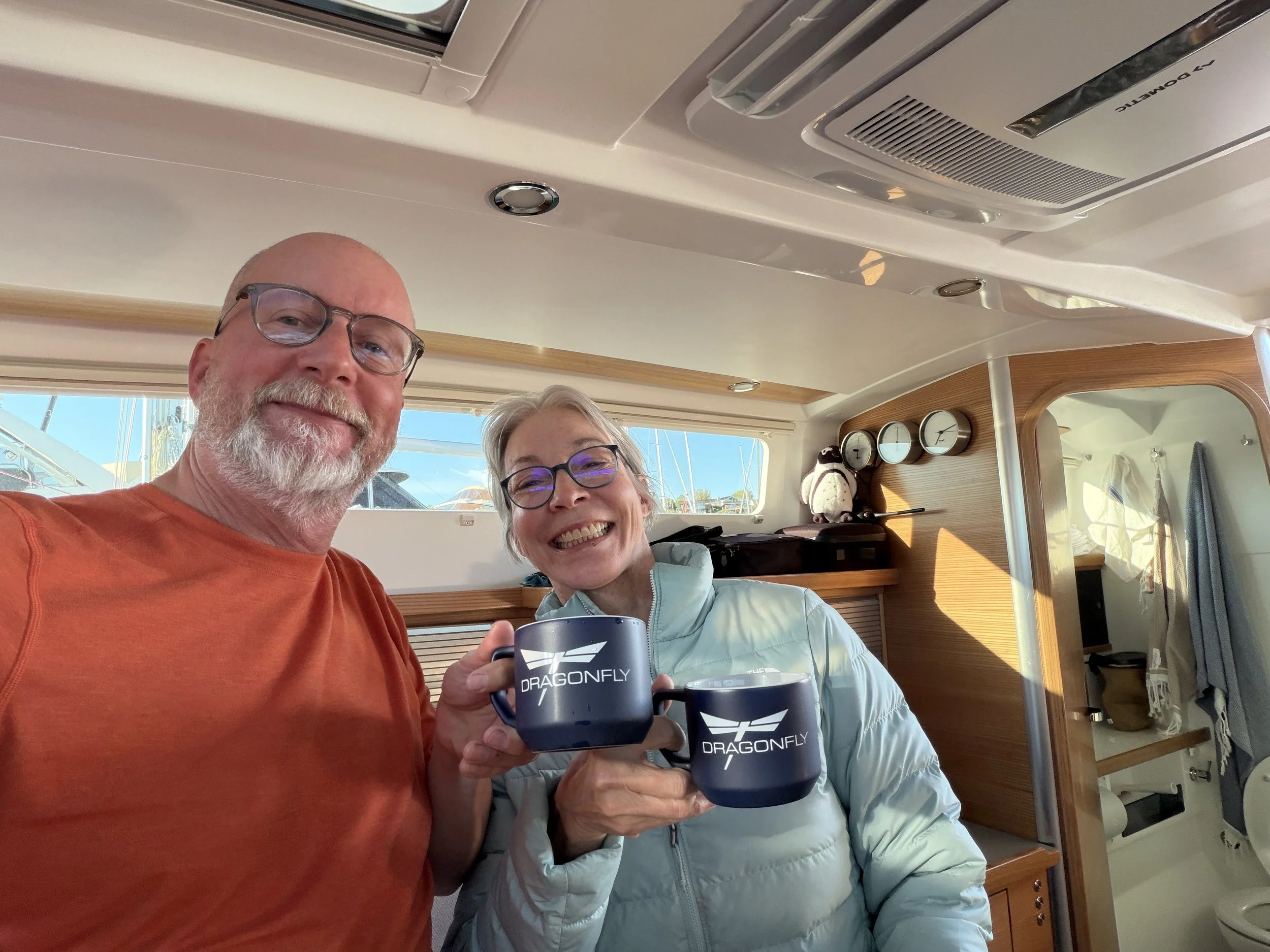
Monday morning we met at the Dragonfly factory for a coffee and to get all the documentation before heading over to the boat to meet with the electrician to go over the systems. Electrically, Sage was a very complicated boat. Orizuru is less so, but there are some things that are different about this boat that I needed some help to understand. I’ve never had a boat with a bow thruster, for instance. Thrusters draw a whole lot of power, and need a separate battery that is set up for that. Overall, I feel like this is a well thought out design, and the electrics are also well designed, and the installation looks very clean, but when it comes to electrical systems every boat is a little different based on the owners needs.
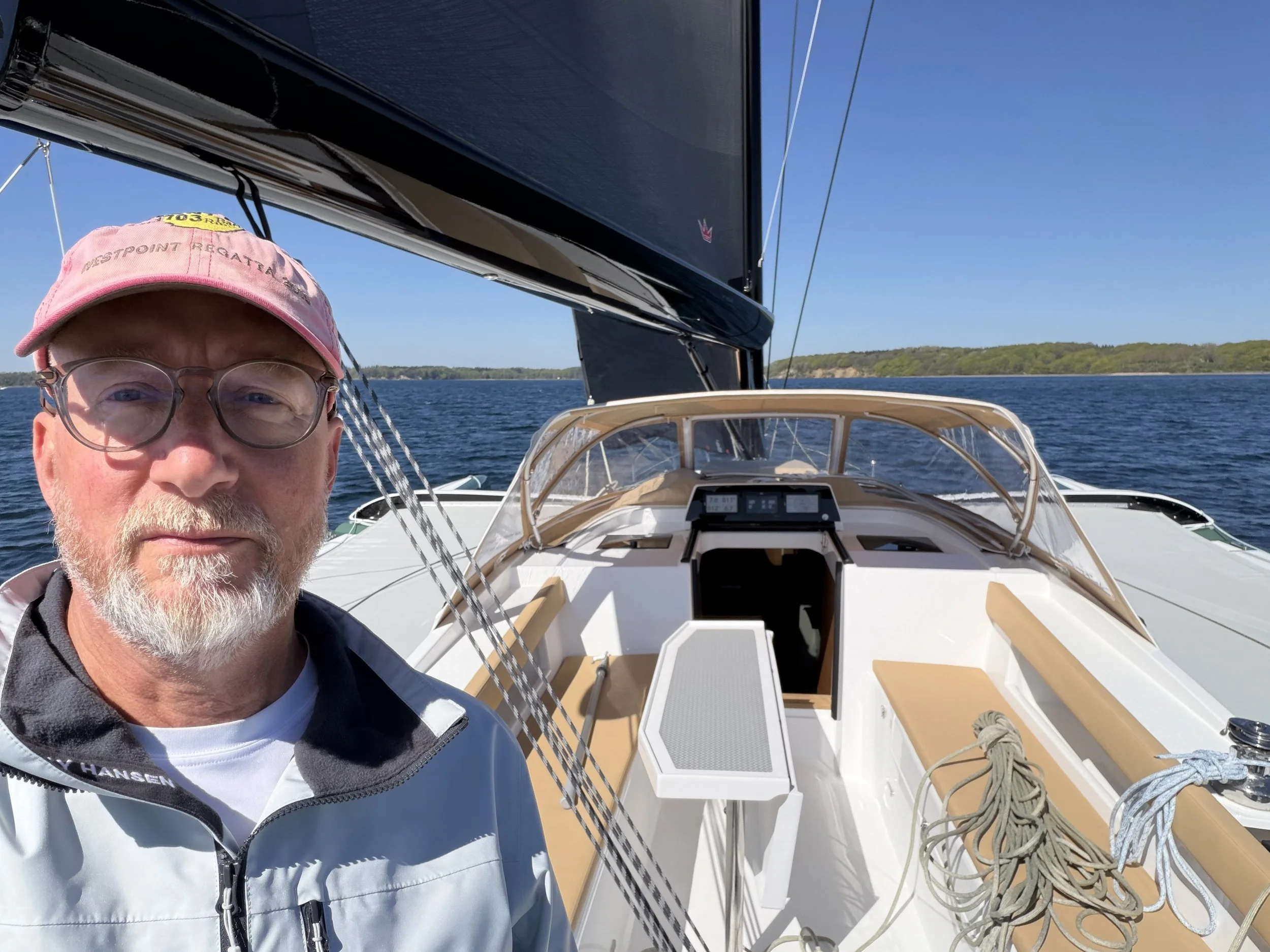
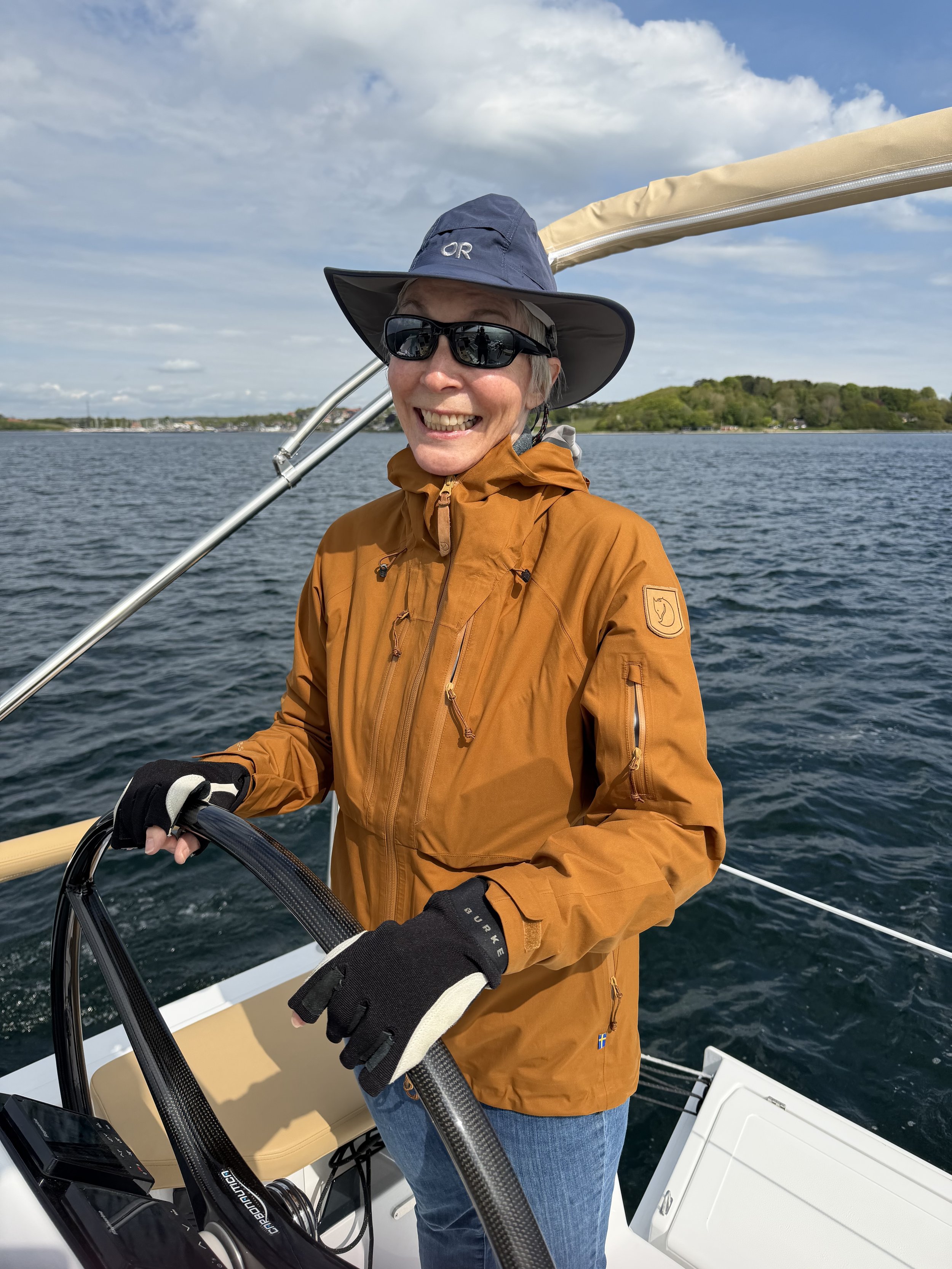
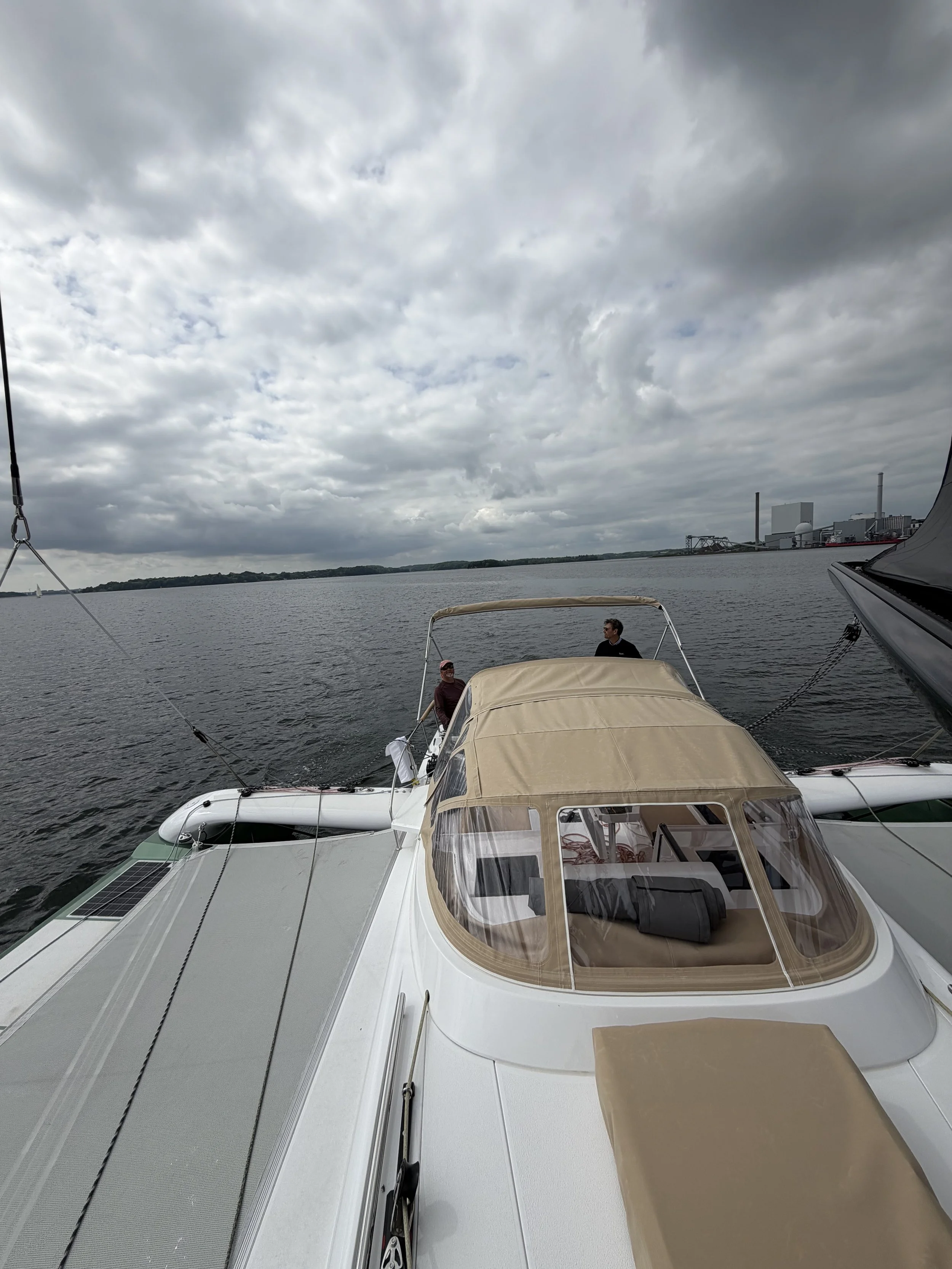
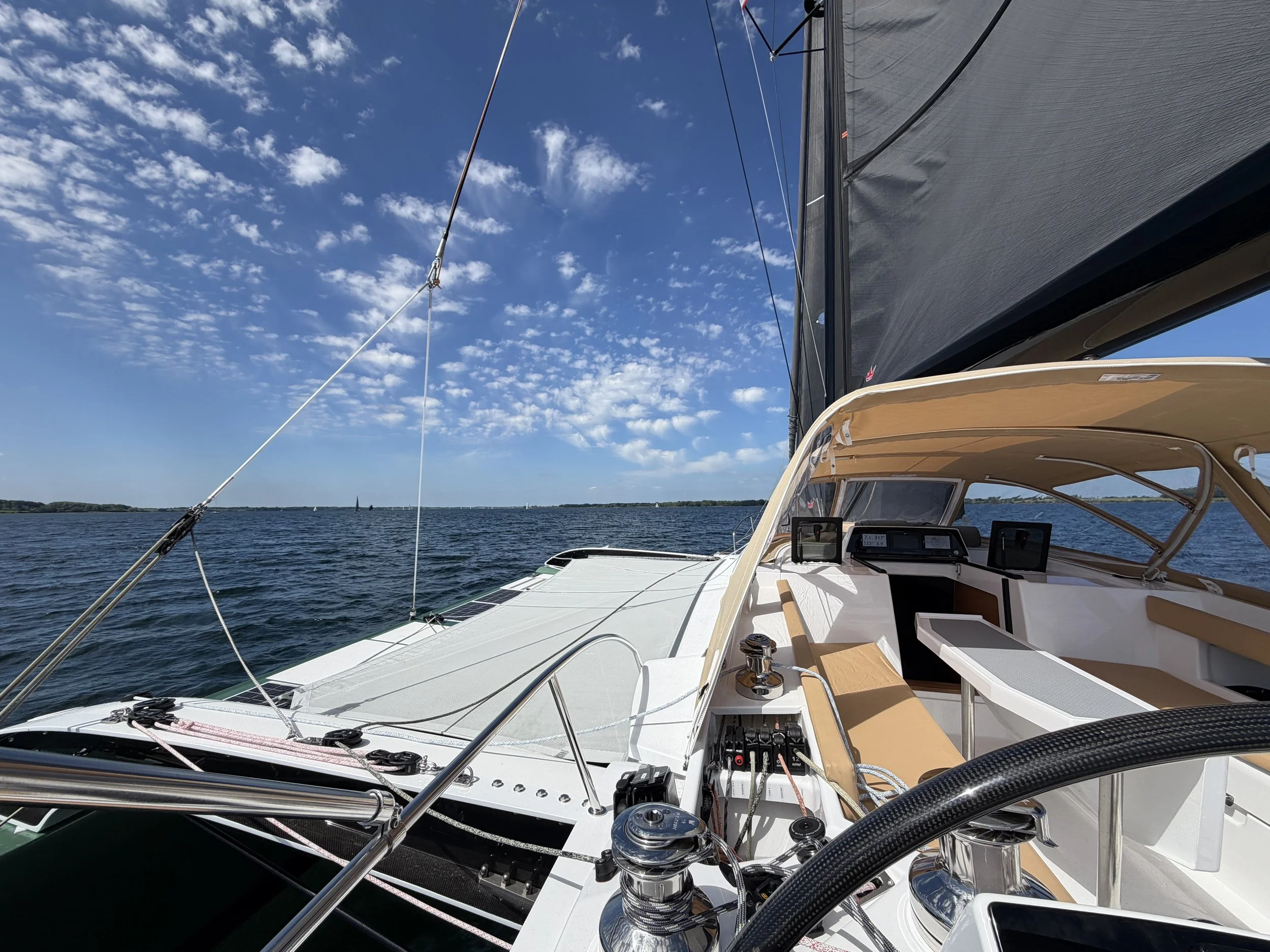
Monday afternoon, we got an introductory sail from Peter Quorning, the third generation of Quornings to own the family business of Quorning Boats, the builders of Dragonfly Trimarans. It was sporty, gusting to 24 knots, and the boat is very powerful, so we started by learning how to reef the main. At the second reef we could still feel the quick acceleration and speed that these boats are capable of. We intend to sail very conservatively, but it’s nice to know that she’s got a lot of speed in reserve. We had a glass of bubbly on the boat to celebrate completion of the handover, and went back to the hotel.
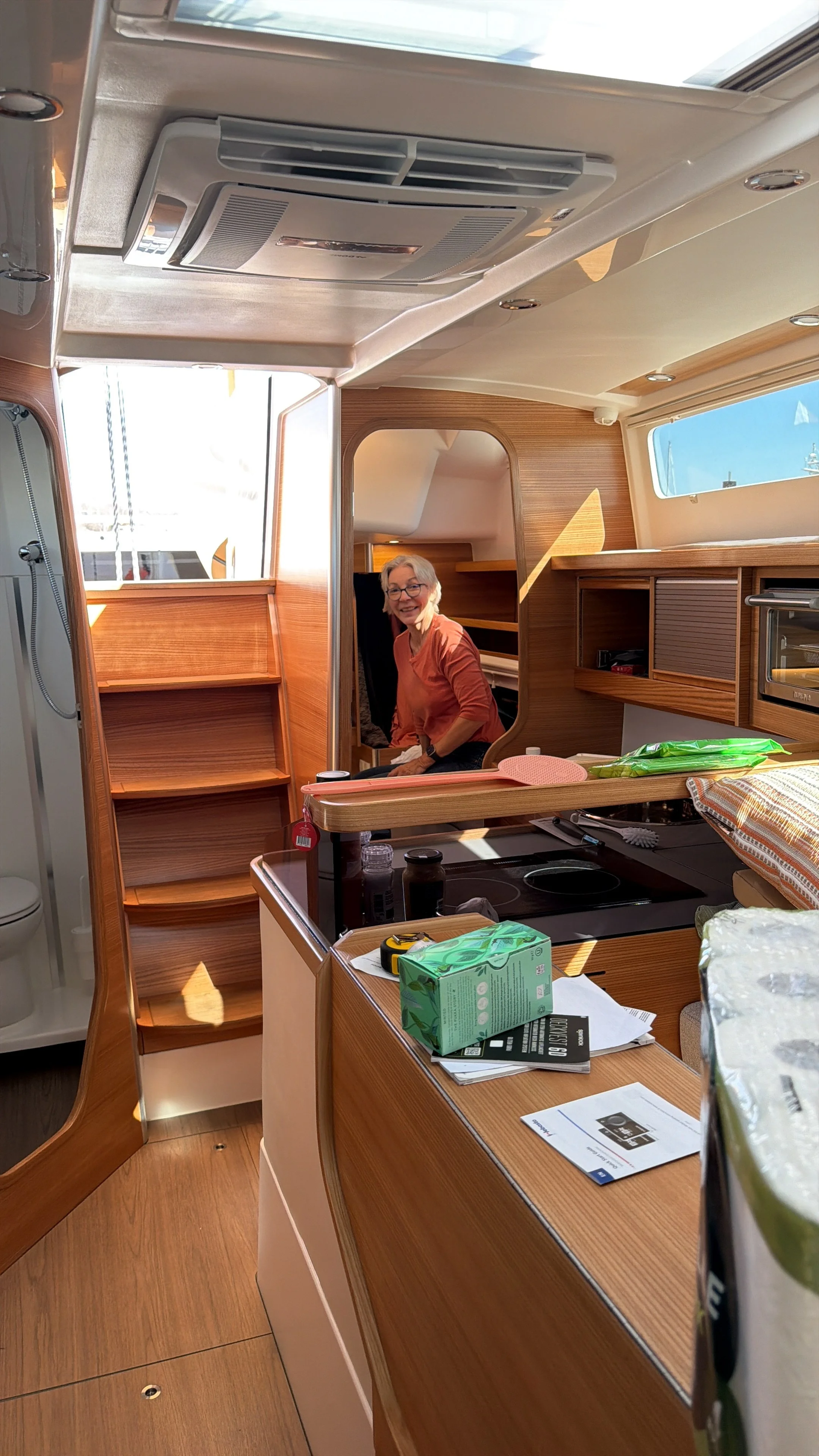
Liz had arrived directly from California, bringing many purchases we had gotten there for the boat, so we spent a week at the hotel getting stuff moved onto the boat for the summer, on Saturday she had a flight back to Valencia for 14 days to gather her own stuff for the summer before moving onto the boat. I took her into Copenhagen on Friday, we spent one night in a hotel in Kastrup close to the airport.
Kastrup is also the beach, and there’s a beautiful park and walking area, as well as the usual ice cream vendors. The weather was still quite cold, though so the gelato stands weren’t very busy if they were open at all. The one great find was a very good bakery.
Friday evening we had dinner with some friends we knew from back in California. Saturday I dropped Liz at the airport, spent one more night in Copenhagen, and headed back to Skaerbaek to spend the first night on the boat.
The first night on a new boat is always interesting. Each boat has its own creaks and groans and little noises which have to be discovered. You have to decide if it’s a problem or not, and learn to pay attention to the new boat so you can hear new sounds as they arise, and decide if it is a new problem or just a new noise. Boats talk to us, we have to learn to listen!
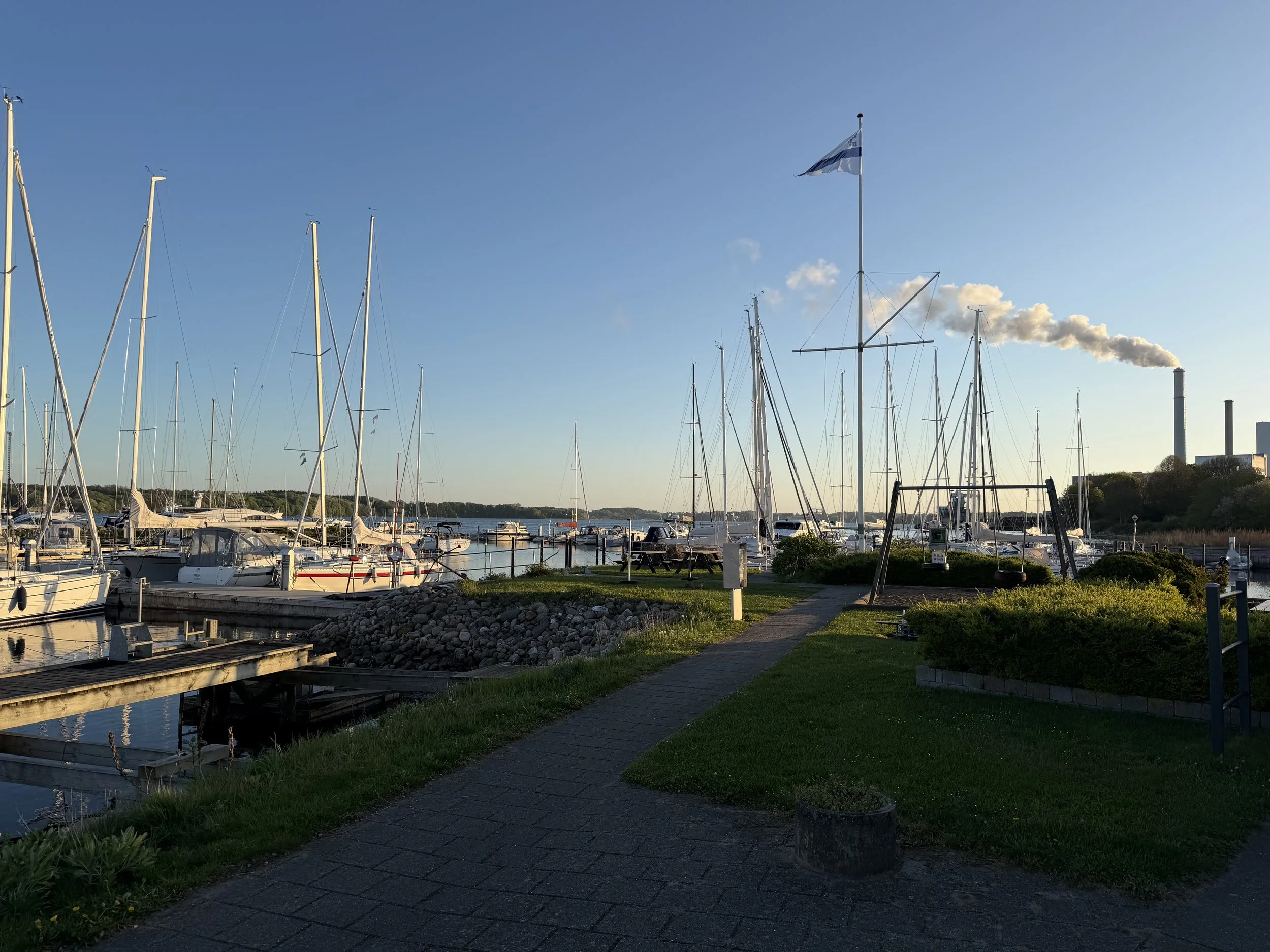
While Liz was gone, the weather turned very nice, and the harbor at Skaerbaek buzzed with activity. It’s amazing how Scandinavian countries really come alive in the spring. As a native Californian, I don’t do winters, and years seem to pass without notice. How did I get so old? But here, after snowy winters where they have been struggling to get by on root vegetables and gløg, the first sunny day has people out sunbathing in what is essentially winter weather in Valencia.
In the harbor, the boats were all getting launched from their winter storage, rigged up and prepared for the season. The individual owners do most of the work to prepare the boat. People were painting bottoms, using the harbor crane to step their masts, adjusting standing rigging, jobs that in many countries would require a professional, but here they are very DIY, and owners help each other out, lending tools, expertise, and a hand as needed.
Many of the harbors in Denmark are run entirely by volunteers, and don’t have a full time harbormaster. Instead they have a system where there are flippable signs, red on one side and green on the other, at the end of each slip. You pull into any slip that has the sign set to green and can fit your boat. You then go to pay for your slip at a machine at the head of the dock, or the office or somewhere close. Most marinas provide power and water for free.
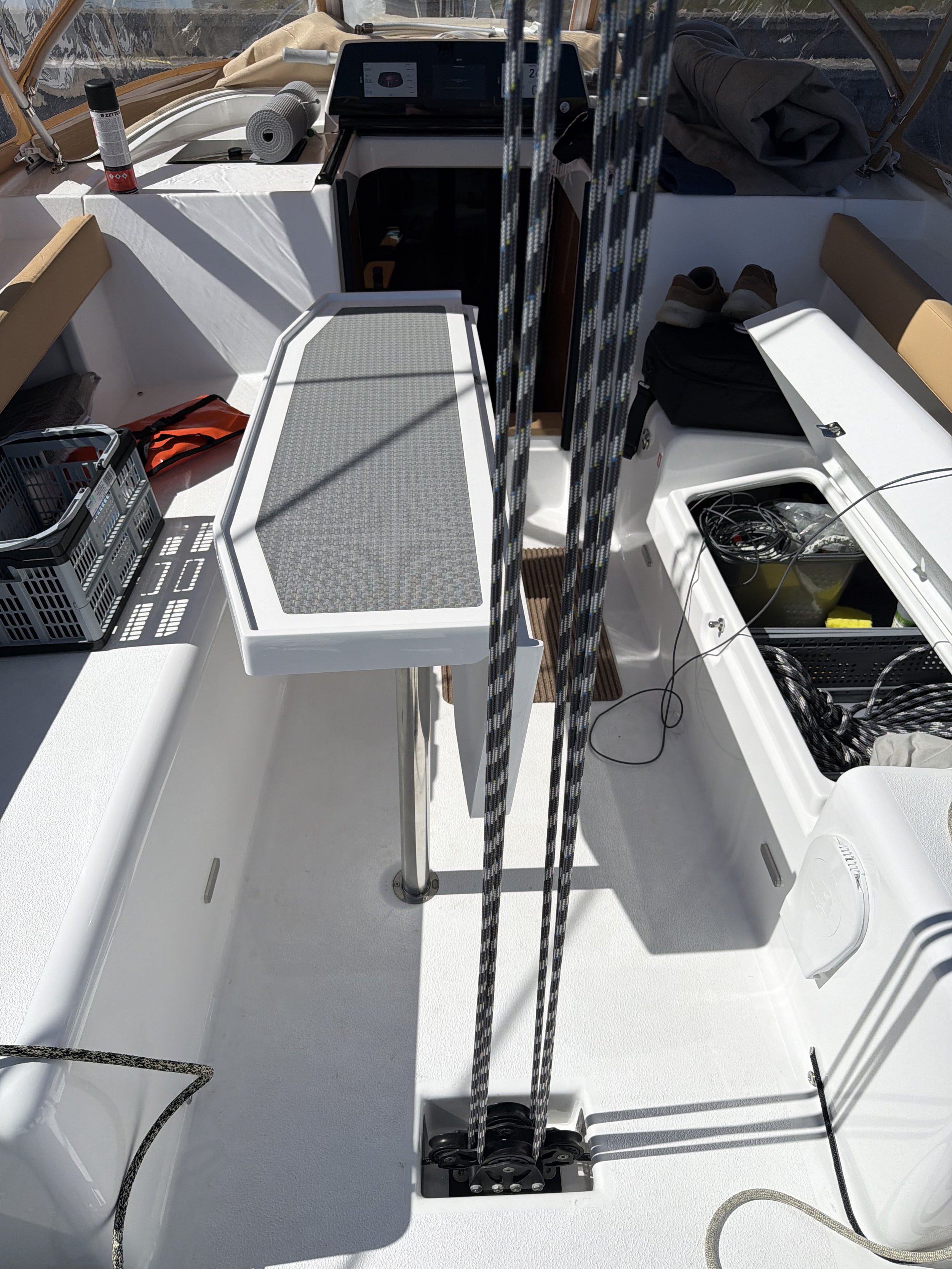
While liz was gone, I took the boat out once by myself. It was easy to sail solo, all lines are close to the helm and the autopilot works as expected. Docking, however is a challenge. Pulling out I made a hash of it, I got the dock line under the port float and had to go back in to clear it. Fortunately for me there were no boats in either slip beside me, and the bow thruster works well, so I was able to get it cleared and got free of the slip on the second attempt. Coming back in was less dramatic.
Also while Liz was gone I was asked to let Dragonfly use my boat to demo for a couple from the UK. I asked for only one thing in return: a sail with Jens Quorning, the owner of Dragonfly. I really wanted to soak up some of his tips and tricks for operating the boat efficiently and safely, as well as perhaps some of his “feel” for getting the boats moving well. The demo sail went great and the couple wound up buying a DF40.
On Friday May 8 I went back into Copenhagen, traded the rental for another one which we could leave in Kolding at the end of our stay, and picked Liz up at the airport. After Liz got back the weather turned cold and wet and we made good use of the cockpit enclosure as a “mud room” for shoes and wet gear. We didn’t do as much sailing as planned because of the weather, but we did get the boat out for a quick sail around to Fredericia and back one day.
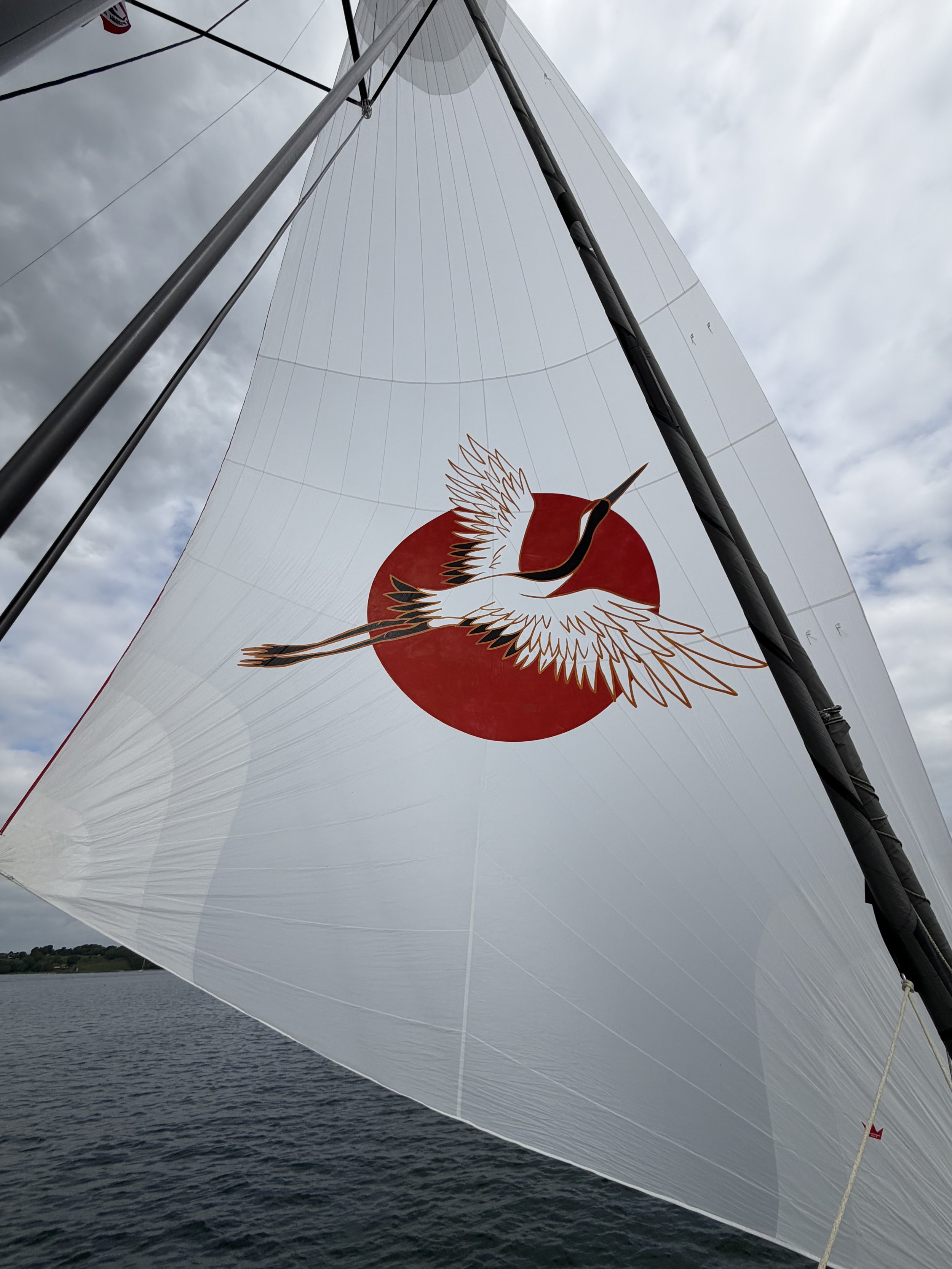
Eventually the weather got good again, and we planned our departure from Skaerbaek for Saturday May 23rd to begin our cruising. On Friday the 22nd, we collected on our deal with Jens and had a lovely sail around the sound, even getting to put the spinnaker up at one point. It turns out we were able to learn a whole lot from Jens, and we are grateful to him for taking the time to go sailing with us. He helped us get more comfortable with this new and complex boat, and even got up on the boom and tightened the outhaul, which he noticed was too loose. I never would have seen that, or known that it needed attention. At the end of the sail, Jens offered to come back in the morning before departure with a map of his favorite spots around Denmark for cruising stops. There is no subsitute for this kind of local knowledge, and we have made great use of his map over the last week.
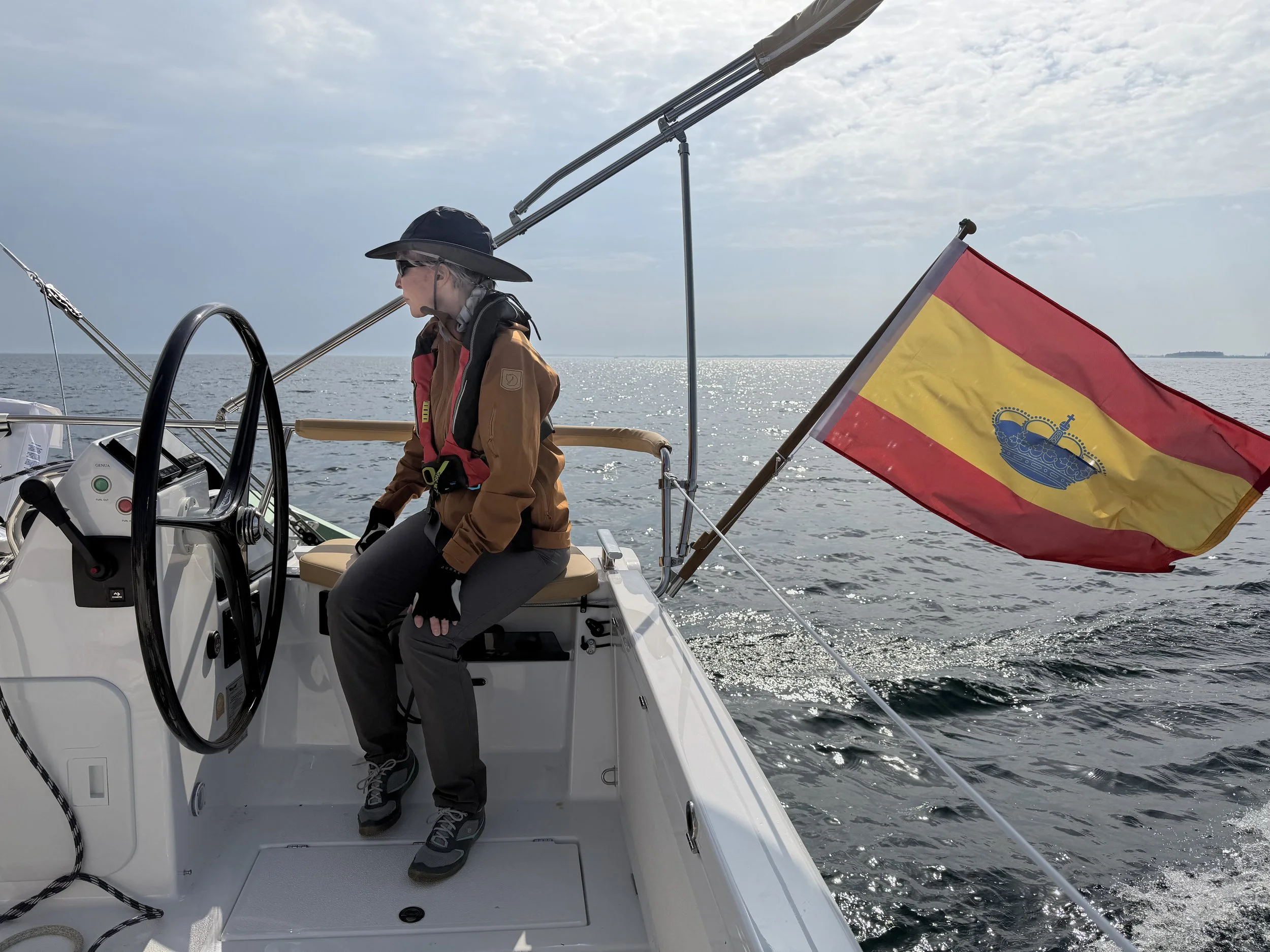
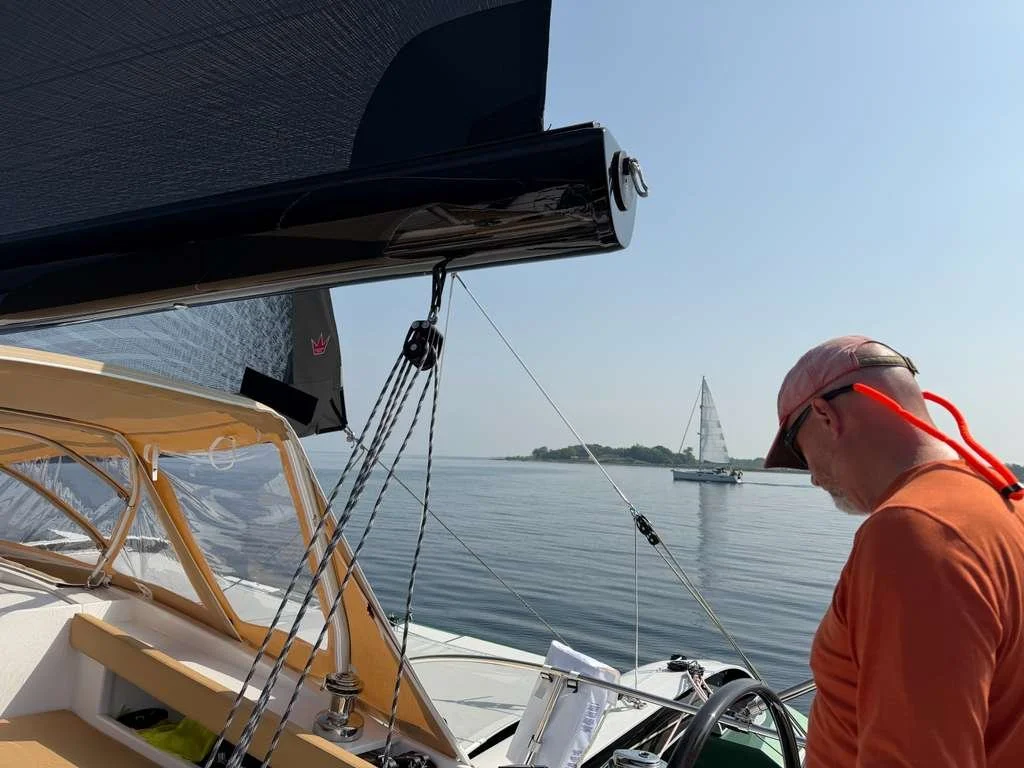
Saturday we departed for Assens, with the hope of eating at a Vietnamese restaurant that got stellar reviews. The sail was delightful, wind 10-14, occasionally gusting to 17. The boat was easily able to sail 9-10 knots most of the day, and we made it there quickly enough that we did a few extra tacks just for fun. We then slowly motored around outside the harbor while we took the sails down and folded up the floats so we could fit into a slip. The slip I chose was 4.5 meters wide, and the boat, when folded is 4 meters. It was tight and we had to make a couple of runs at it to get it right, but eventually, with the help of a nice German owner of a Dragonfly 28 that was tied up at the end of the dock. Sometimes you watch the show, sometimes you are the show!
The Vietnamese restaurant turned out to to be permanently closed, so our reason for stopping there was mooted, but we enjoyed a walk up the Main Street and settled on a small pub for supper. Assens as a town is interesting, and the Marina is large, and surrounded by holiday cabins and RV parking, all because the outside of the breakwater is a very nice beach. There is a commercial ferry dock and a shipyard, which I imagine can get noisy during the week, but our Saturday night there was pleasant. We departed on Sunday morning with a plan to anchor somewhere that night.
Consulting Jens’ map we settled on anchoring near Kalvo. We dropped the anchor in about 4 meters of water, and it bit immediately into the mud bottom. This was good news for our first night at anchor. There were a few other boats around, and we were all swinging with the shifty winds and currents, but in the shallow water nobody had a lot of rode out and so there weren’t any close calls like sometimes happened to us on Sage in the crowded and deeper anchorages of the Caribbean. Our first night sleeping at anchor, and it was hygge!
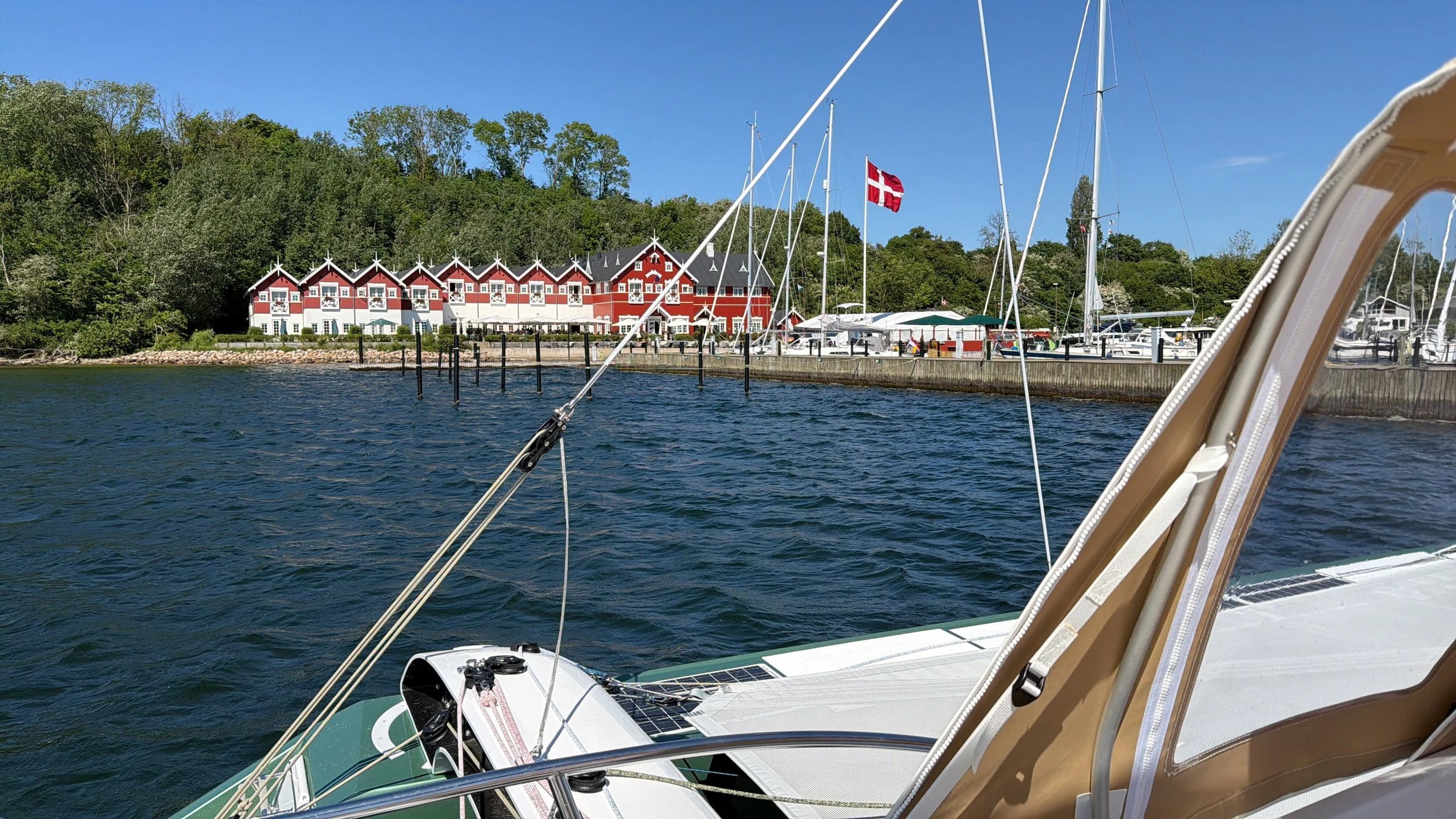
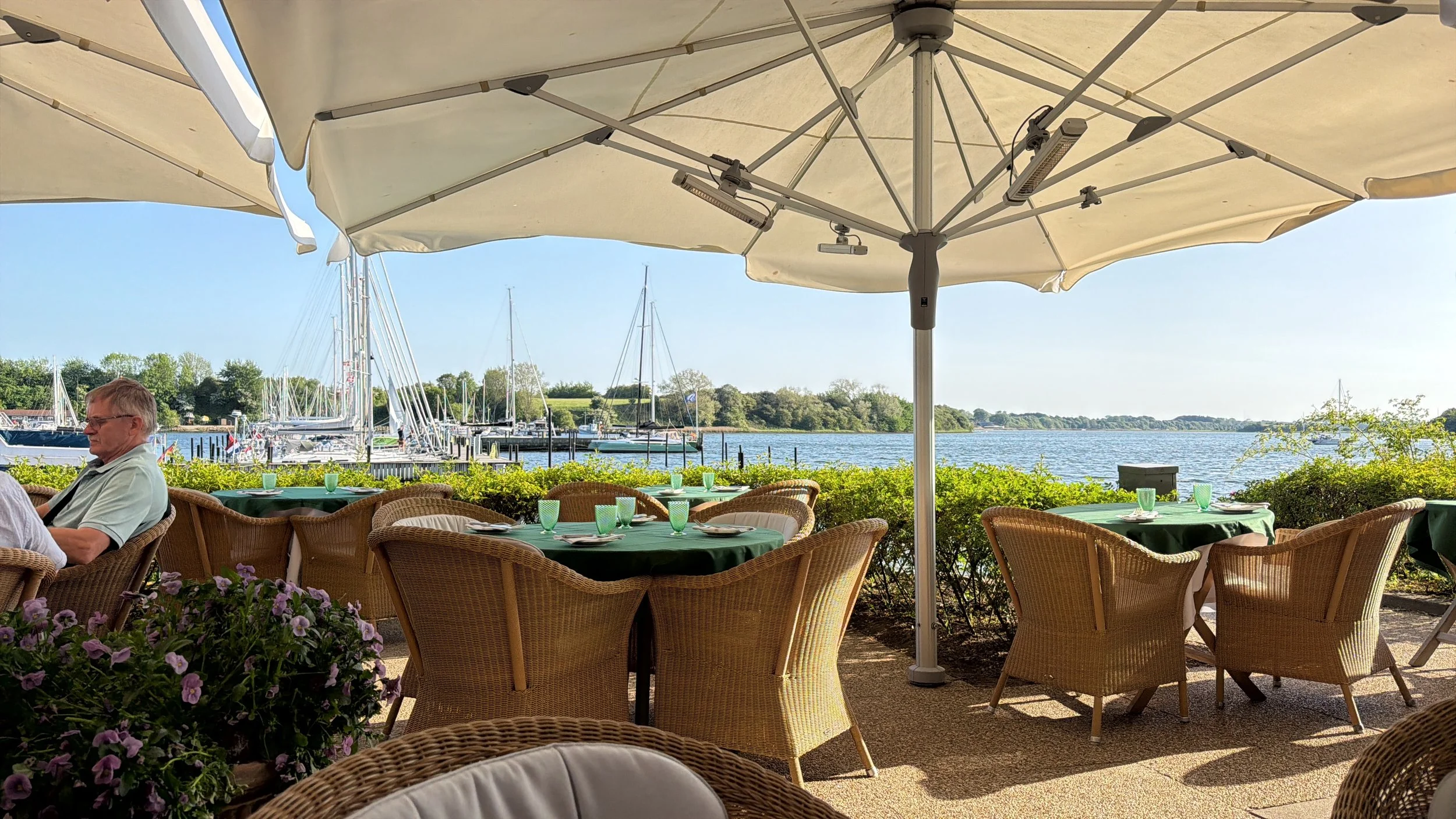
Again consulting Jens’ map, we decided to go to his “must see” destination of Dyvig. There is a 5 star hotel there, and the marina is just in front of the hotel, so we planned to have dinner at the hotel restaurant that night. The only trick is that the entrance channel. While deep enough, it is very narrow, and the boat is 8 meters wide. Jens warned us that we needed to go through when there was nobody coming the other way. He was right! Once inside, there are two marinas and a very pretty anchorage. We paid for a night in front of the hotel, where there is a long dock so we could tie up alongside and not have to fold up. The dinner was absolutely marvelous, and we would recommend it as a stop on anyone’s Danish cruise.
In the morning they offer at the dock fueling, but it is cash only. We pooled our money and were able to get enough together to get our tank up to 71%, which is pretty good on a boat that sails as well as Orizuru. So, after a visit from the nice lady with the mobile tank, we cast off with the plan to visit Svendborg, another recommendation on Jens’ list.
By now we were cognizant of a deadline. We needed to be in Copenhagen by Friday the 29th to meet arriving crew, and it was now the 25th and we hadn’t gone far enough east. Svendborg would be a long daysail, but the days here are long right now, so we went for it. Sadly that meant skipping some of the other spots on Jens’ map, including many in the Archipelago of south Fyn.
We arrived in Svendborg that evening after a great sail, but found the harbor quite full. I spotted an anchorage nearby which looked promising called the Thuro Bund, and we went in there for the night. There was a small sailing club who were out teaching a junior program in Optis in the evening, and a couple of foiling wing sailors tearing around when we arrived. Two mooring balls were available close to the southern shore, but we opted to anchor a bit further from shore.
We got up really early on Thursday in Klintholm to get to Copenhagen. Had a great morning, but the wind shut down in the afternoon so much that we had to motor, and when it filled in it was right on the nose in a busy shipping channel so we didn’t really want to be tacking back and forth. Motored most of the last bit and arrived about 3:30 PM to a sunny harbor. We waved to the Little Mermaid on the way in to our spot at Ofelia Plads pier, where we could tie up alongside with plenty of fenders.
They appear to be setting up for some sort of festival over the weekend, which will be interesting. It may get crowded!
This has been our goal for the last few days to arrive early enough to pick up Karl, who will be aboard for a few weeks. We’re not sure where we will go from here.